Car Accident Mistakes to Avoid After a Crash
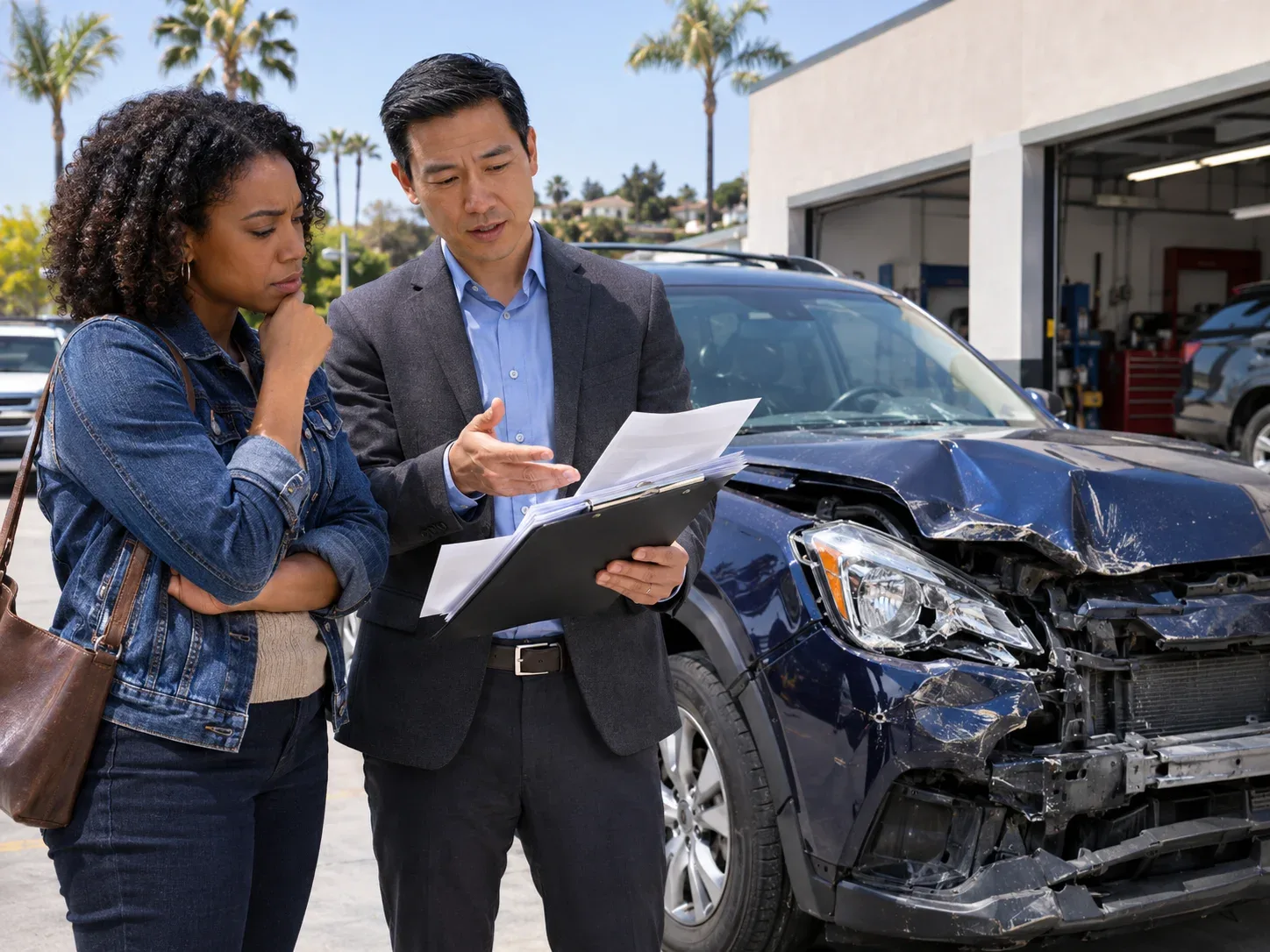
The car accident mistakes to avoid after a crash fall into two groups: what you say and skip at the scene, and what you let slide in the weeks after. The costly ones are admitting fault, skipping a medical check, missing the DMV SR-1 deadline, treating the first estimate as final, letting the rental run out, leaving the car at a tow yard, and signing a release too early.
This guide is for California drivers who want to avoid the errors that slow a claim down or cost money later. Collision Assistant works on the vehicle side of the claim, and the mistakes below are the ones drivers most often describe when they first call us, before they had help.
Most mistake lists stop at the scene. The repair-side mistakes, like storage fees, rental cutoffs and unchecked total loss comparables, happen days or weeks later, when most people think the hard part is over.
What are the most common car accident mistakes?
The most common car accident mistakes are small choices made under stress: an apology at the scene, a skipped doctor visit, a missed form, or trusting the first number an insurer or shop gives you. The table shows when each one happens and what to do instead.
| Mistake | When it happens | What to do instead |
|---|---|---|
| Admitting fault | At the scene | Stick to facts and exchange the information Vehicle Code 16025 requires |
| Leaving without required steps | At the scene | Stop and meet the duties in Vehicle Code 20001 and 20002 |
| Skipping a medical check | First days | Get checked by a doctor, even if you feel fine |
| Missing the SR-1 | Days 1 to 10 | File the SR-1 with the DMV within 10 days when required |
| Leaving the car at a tow yard | First week | Move the car to the shop you choose |
| Picking the first shop you find | First week | Compare reviews and check the shop's BAR registration |
| Treating the first estimate as final | During repair | Expect supplements when teardown finds hidden damage |
| Letting the rental lapse | During repair | Ask for an extension before the cutoff, backed by the shop's timeline |
| Signing a release too early | Settlement | Check the estimate, invoice or total loss comparables first |
Mistakes at the scene
The costliest scene mistakes are admitting fault, leaving too early and leaving without photos. Our car accident checklist covers the right order of steps; these are the errors to avoid along the way.
Admitting fault or guessing about what happened
Do not say "it was my fault" at the scene, even to be kind. Fault is decided later from photos, the police report, witness statements and the damage. California follows pure comparative negligence, so fault can be split between drivers, and each driver's damages are reduced by their own share of fault.
Leaving before you have done what the law requires
Leaving the scene too early is the most serious scene mistake. Vehicle Code 20001 requires a driver in an injury crash to stop immediately and meet the duties in Vehicle Code 20003 and 20004. Vehicle Code 20002 requires a driver who damages property to give their name and address or leave a written note, and violating it is a misdemeanor.
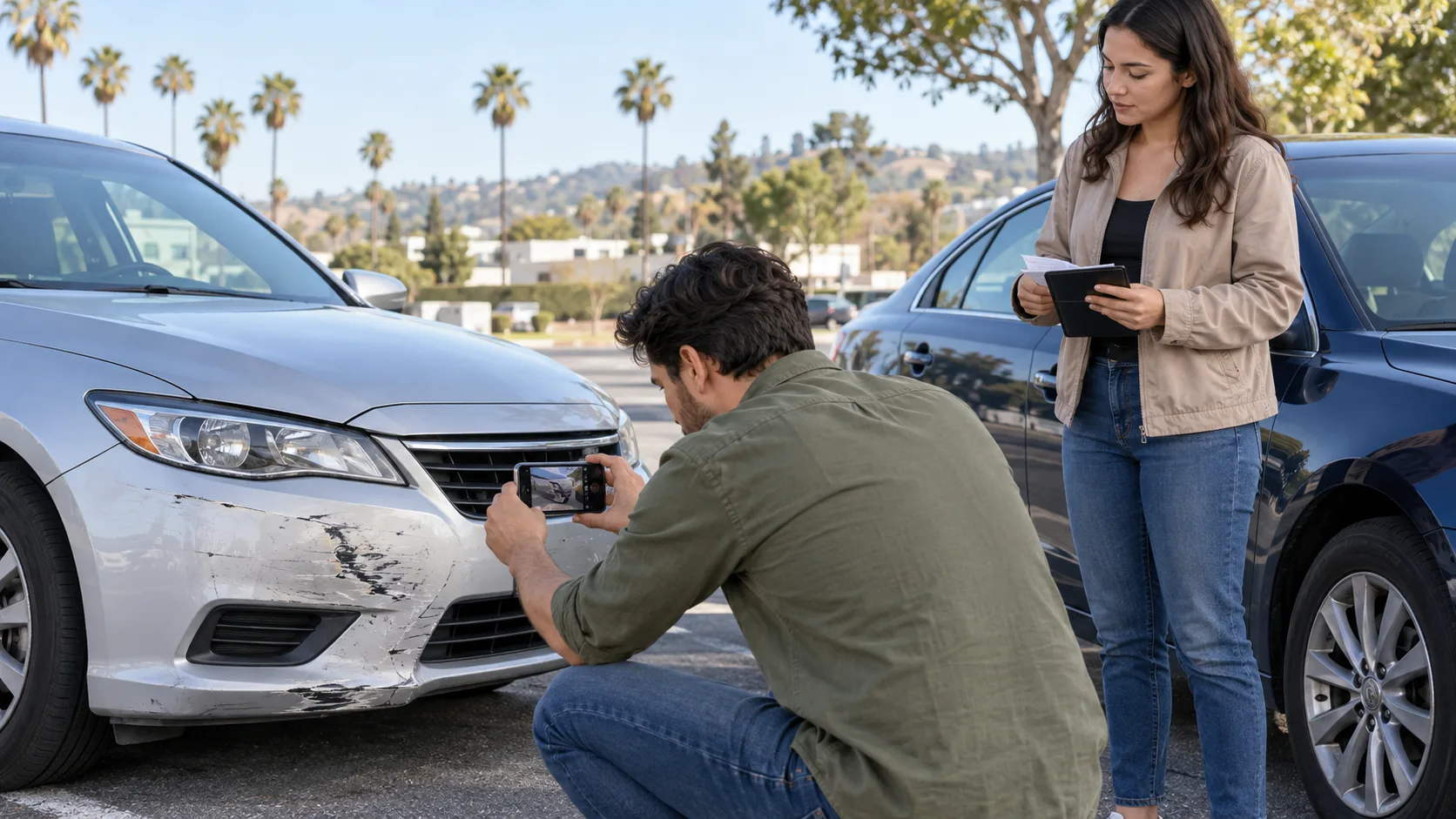
Skipping photos and the other car's plate
Leaving without photos is hard to fix later, because once the cars are towed, the scene is gone. Our guide to photos and information to get at the scene lists every shot and why each one matters for the property damage claim.
Mistakes in the first few days
Mistakes in the first few days are mostly missed steps, because drivers feel fine and the paperwork does not seem urgent.
Skipping medical care because you feel fine
Skipping a doctor visit because nothing hurts yet is a common early mistake. Health sources say symptoms can lag: MedlinePlus puts whiplash pain at hours to weeks, and the CDC says some concussion symptoms take hours or days to appear.
Get checked by a doctor even if you feel fine, and tell the doctor about the crash and its date. This is not medical advice; our guide on delayed injury after a car accident lists the CDC's emergency warning signs.
Missing the DMV SR-1 deadline
Missing the SR-1 is an easy mistake to make, because nobody hands you the form at the scene. Under Vehicle Code 16000, each driver must file an SR-1 with the DMV within 10 days when damage to any one person is over $1,000 or anyone is injured or killed. The SR-1 is required regardless of fault.
Many drivers assume the police or their insurer sends the SR-1. The California Driver Handbook says law enforcement will not, and a missed report can lead to a license suspension under Vehicle Code 16004. If you already missed the 10 days, our guide to the California SR-1 form covers what to do next.
Leaving the car at a tow yard
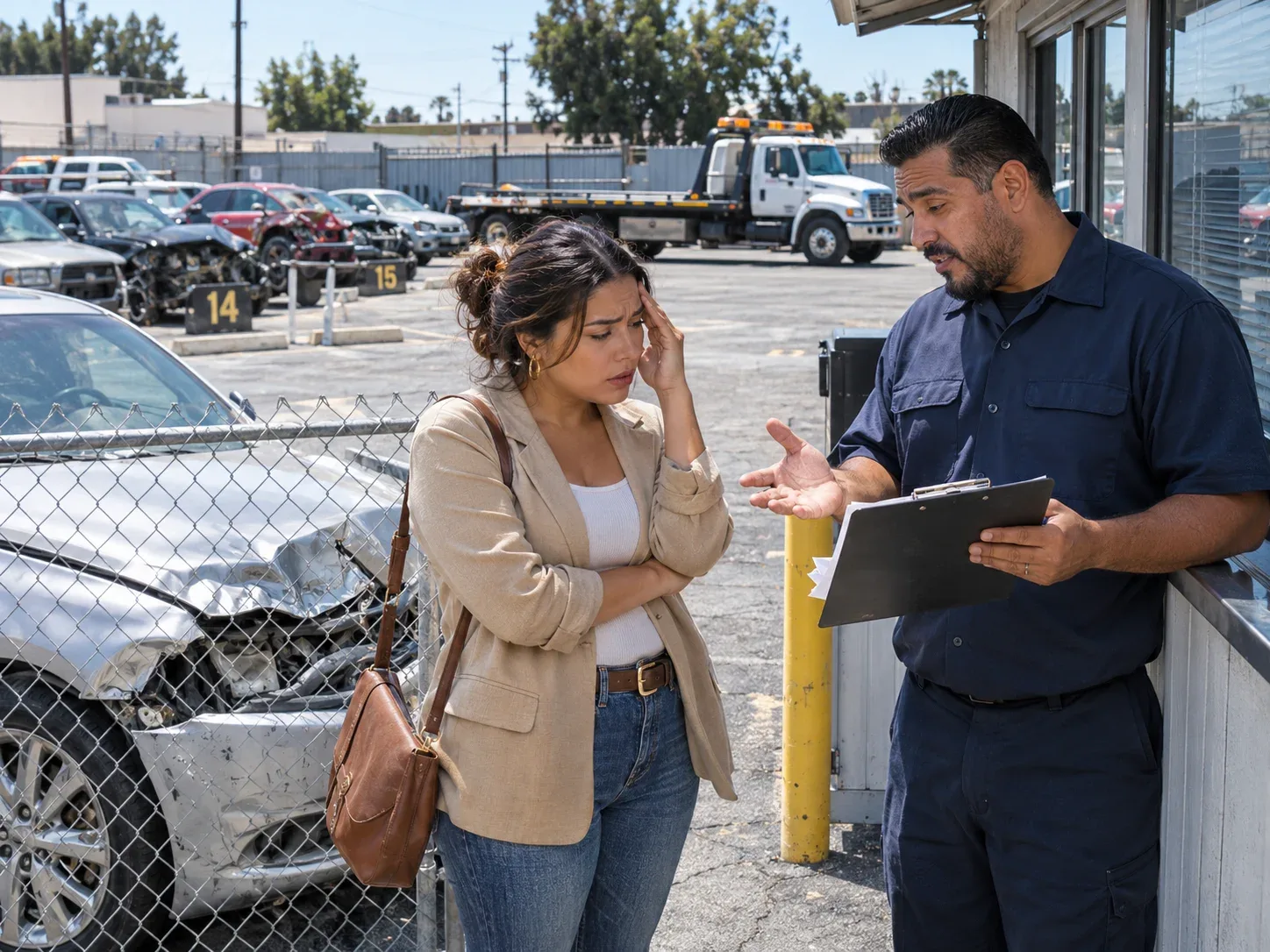
Leaving a non-drivable car at a tow yard lets storage charges build up every day. The insurer's storage payments are not open-ended: 10 CCR 2695.8(k) lets an insurer stop paying storage once it gives reasonable notice. On a third-party claim, the storage payment may also be cut by your share of fault.
Repair mistakes in the weeks after
Repair mistakes happen once the claim is open and the car is in the shop. Most come from moving too fast: picking a shop, accepting a number or letting a date pass without checking.
Going with the first shop you find
Picking the first shop in a search result skips the comparison that matters. One driver described it this way:
"I almost went with the first shop that popped up on Google. Glad I didn't, that one had some rough reviews I only saw because Collision Assistant had them side by side with two others. Went with a higher-rated one a few miles further out. Worth the extra drive."
Kevin B., Modesto
You also do not have to use the insurer's shop. Under Insurance Code 758.5, an insurer cannot require a particular shop, and once you pick one it cannot suggest a different one. Check any shop's Bureau of Automotive Repair registration on the BAR website, and read choosing the right collision center.
Treating the first estimate as the final price
The first estimate is a starting point, not a final price. A shop often cannot see broken brackets, sensors or frame damage until it takes the bumper or panels off. That hidden damage goes back to the insurer as a supplement, which is a normal part of collision repair.
Under Business and Professions Code 9884.9, a shop may not charge more than the written estimate without your consent, given after you learn the estimate is short and before the extra work. Read hidden damage after a car accident and how to read a collision repair estimate.
Letting the rental lapse
Letting a rental run past the insurer's cutoff can leave you paying out of pocket. The insurer sets the approved rental days, so track the end date from the first day. On a third-party claim, the legal yardstick is what a similar rental reasonably costs for the time reasonably needed to fix or replace the car (CACI 3903M).
Example: The insurer approves a rental through a set end date, and the shop then finds hidden damage that adds a week of parts delays. Asking for an extension before the end date, with the shop's updated timeline attached, gives the insurer a reason to approve more days. This scenario is hypothetical; see rental car after an accident.
Skipping the post-repair check
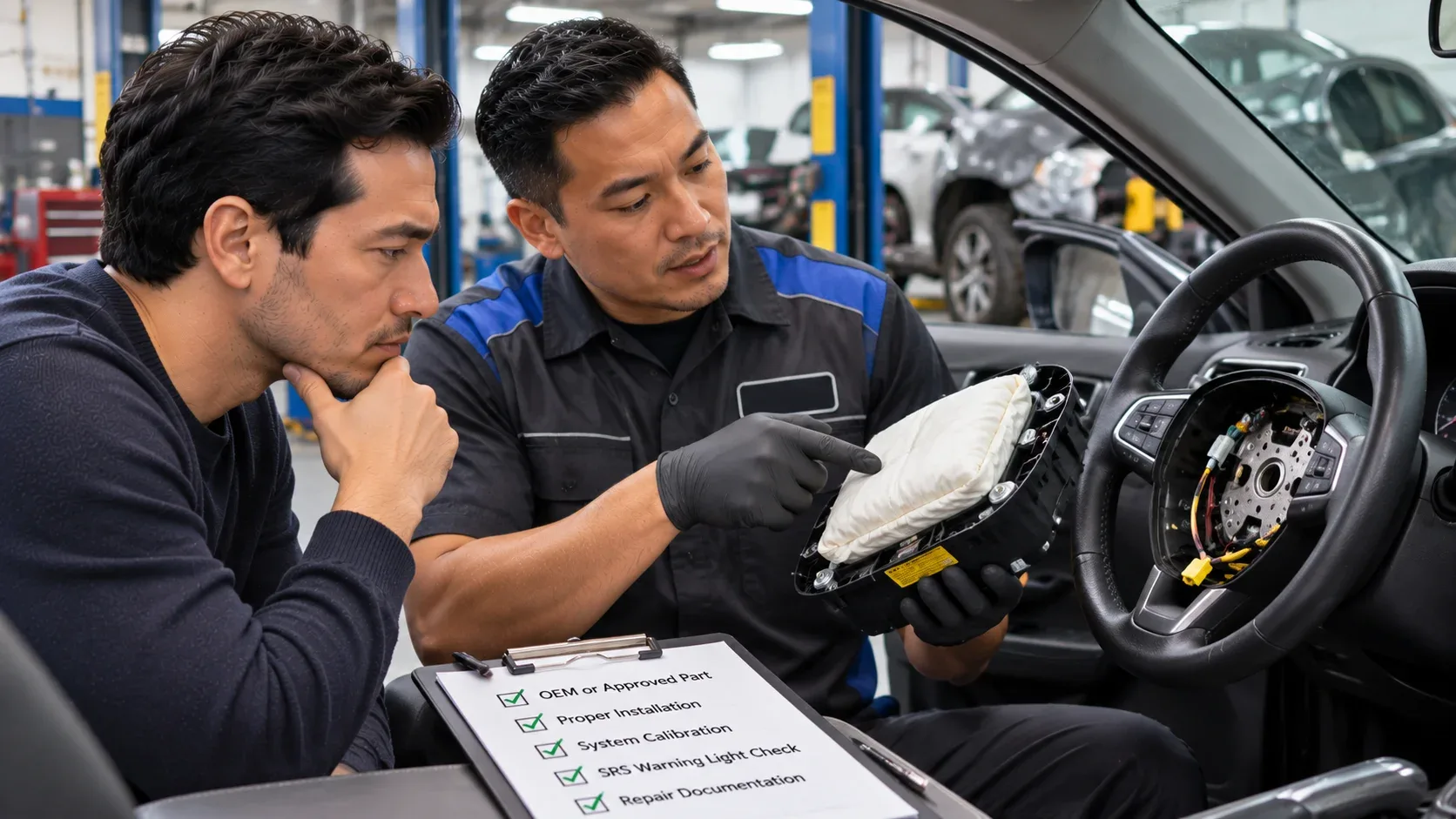
Do not drive away without checking the repair. Check panel gaps, paint match and warning lights before you sign for the car. Our post-repair inspection checklist walks through it, and the Bureau of Automotive Repair offers no-cost inspections of collision repairs made in California.
Insurance and settlement mistakes
Settlement mistakes are hard to undo, so check the numbers before you sign anything final.
Signing a release before checking the numbers
Do not sign a release or accept a total loss value before checking it. Under 10 CCR 2695.8(b), comparable cars must be identified by VIN, dealer stock number or license plate, plus the seller's phone number or address. Under 10 CCR 2695.8(c), on your own policy, if you tell the insurer within 35 calendar days of the payment or final offer that you cannot find a comparable car for that amount, the insurer must reopen the file.
California also bars insurers from trying to settle with an unreasonably low offer under 10 CCR 2695.7(g). See how California insurers decide a total loss and lowball insurance offer.
Assuming your own collision coverage pays diminished value
A common myth is that your own collision coverage pays for the value your car lost after repair, but generally it does not. In Baldwin v. AAA (2016), a California appeals court held that a policy with a repair option and a diminished value exclusion did not have to pay it. Diminished value is usually pursued on a third-party claim; see our guide to a diminished value claim.
Car accident mistakes to avoid: a quick plan
To avoid the most common car accident mistakes, follow this plan from the scene to the final paperwork.
- At the scene, stop, stay calm, exchange information and take photos before anything moves.
- Get checked by a doctor soon after the crash, even if you feel fine.
- File the SR-1 with the DMV within 10 days if damage is over $1,000 or anyone was hurt.
- Move the car from the tow yard to the shop you choose.
- Compare shops and check each one's BAR registration before you sign a repair order.
- Expect supplements when teardown finds more damage.
- Write down the rental end date and ask for an extension before it arrives.
- Check every final number before you sign a release.
How Collision Assistant helps
Collision Assistant is built to catch repair-side mistakes early. Our property damage claim management keeps every estimate, supplement, invoice, rental record, photo and insurer letter in one file under one case number.
- Picking a shop blind: our free body shop recommendation gives you a vetted shop, and we confirm its active Bureau of Automotive Repair registration first. If you already chose a shop, we never steer you away from it.
- Storage fees: we coordinate the tow that moves a non-drivable car out of the yard and into the shop.
- The first estimate: we track each supplement the shop sends after teardown, along with parts delays and the completion date.
- The rental cutoff: we watch the end date and ask the paying carrier for an extension before it arrives, with the shop's timeline attached.
- Signing too early: before you accept a total loss value, we check the valuation report against California's comparable vehicle rules.
Doing the Next Part Right
Nobody handles a car crash perfectly. You'll forget a photo, or say something at the scene you'd word differently later, and that's genuinely fine. Most common mistakes after a car accident are recoverable if you catch them reasonably quickly. The car accident mistakes that really hurt, the ones worth knowing to avoid after a car accident, are the deadlines you didn't know existed and the repair decisions you didn't know were yours. Getting those two right following an accident can make a significant difference in how the whole thing ends.
That second part is where we help. We're a free service connecting California drivers with vetted, verified collision repair shops, and we can help you request a repair quote and coordinate what comes next, so the car side gets handled by people who know what they're looking at. We're not a law firm or an insurance company, and we don't give legal or insurance advice. Our guide on what to do after a car accident walks through the full set of car accident do's and don'ts. When you're ready to deal with the car, reach out through our site and we'll take it from there.