Post-Repair Inspection Checklist After Collision Repair
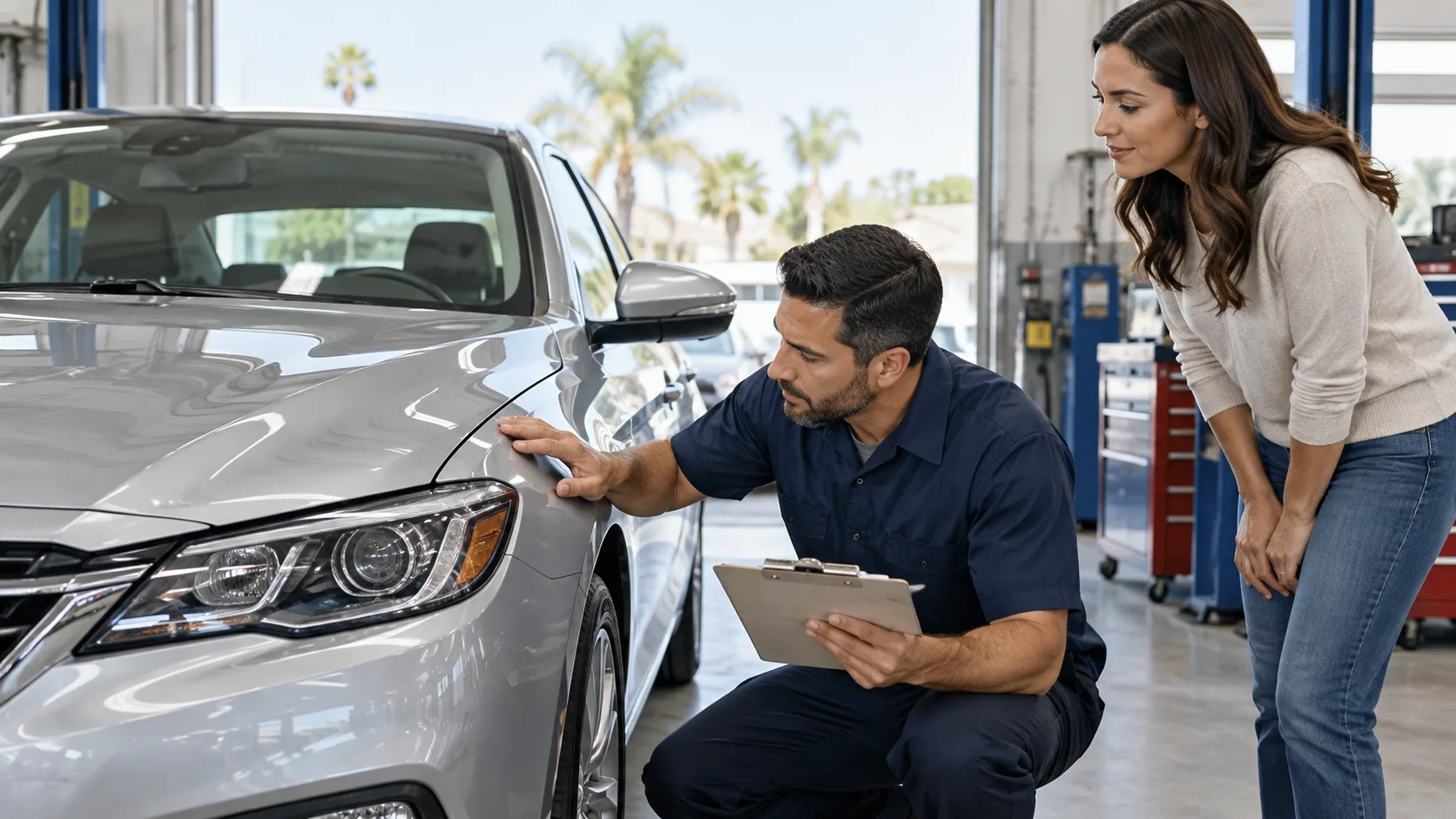
A post-repair inspection is your final check of the car and the paperwork before you accept it from the body shop. Check the paint in daylight, panel gaps, lights, doors, warning lights and driver-assist features, take a short test drive if the shop says the car is ready, and compare the final invoice to the estimate and supplements you approved. If a problem shows up later, California's Bureau of Automotive Repair offers no-cost collision repair inspections.
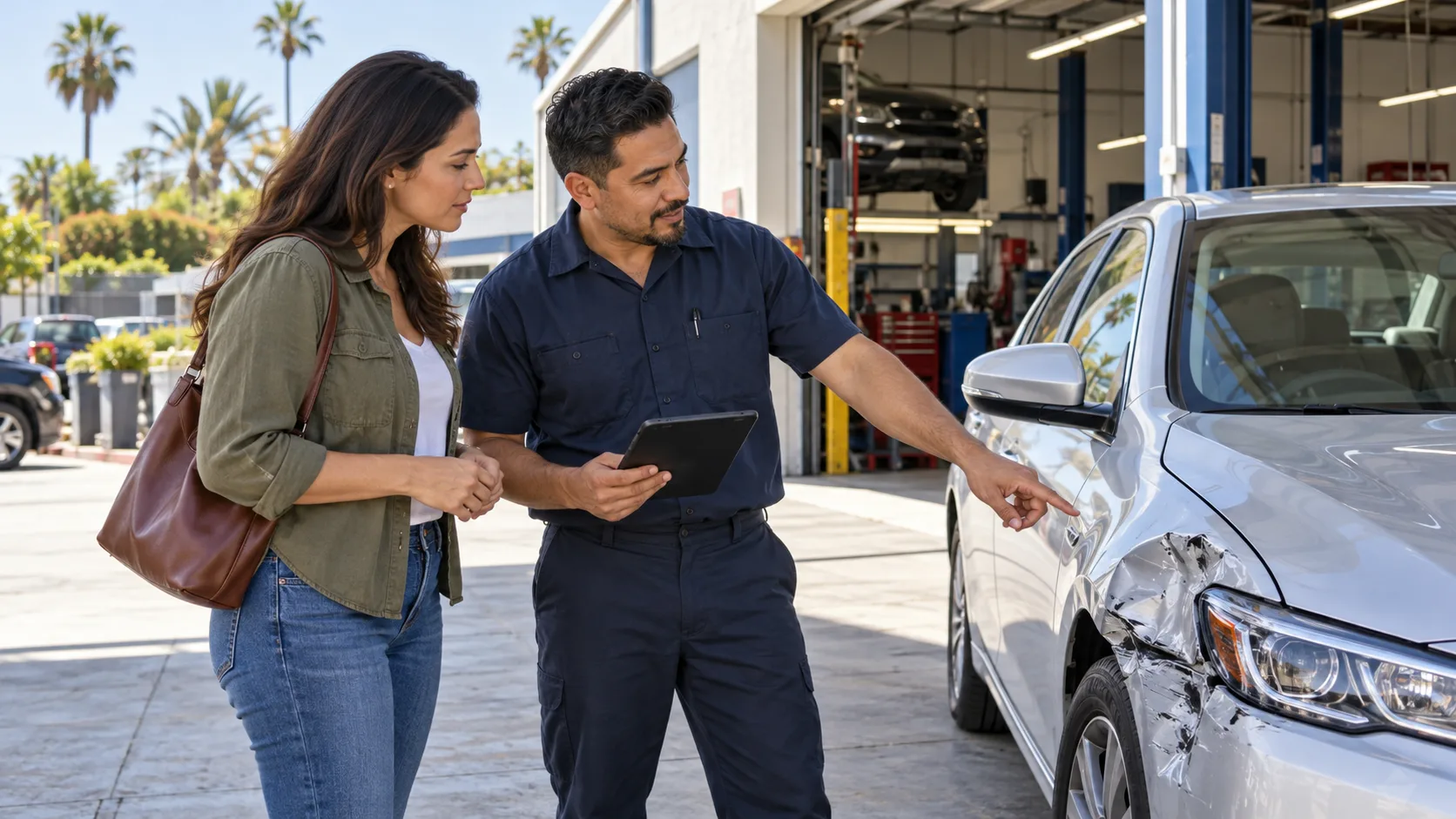
Pickup day can feel rushed. The car looks clean, the shop is busy and you just want your keys. A careful walk-around before you sign is the easiest time to catch a missed item, because the shop can still fix it while the car is there.
Collision Assistant stays on a repair until the keys are back in the driver's hand. Our service is free for California drivers, we place cars only with vetted, BAR-registered shops, and this post-repair inspection checklist is the one we suggest at pickup.
Key takeaways
- A post-repair inspection checks the paint, panel fit, lights, interior functions, warning lights, driver-assist features and the final invoice before you leave the shop.
- Under Business and Professions Code 9884.8, a California repair invoice must list work and parts separately and label each crash part as OEM or non-OEM aftermarket.
- If you asked for your replaced parts when the work order was written, Business and Professions Code 9884.10 requires the shop to return them when the work is done, with some exceptions.
- BAR's Auto Body Inspection Program will check, at no cost, that a California collision repair was done right and that every invoice item was completed, but BAR does not write second estimates.
What should you bring to a body shop pickup?
Bring the papers that show what you approved: the original estimate, every supplement, any approval you gave by phone or email, and your claim number. Also bring your phone to take photos in daylight and a list of any problems you noticed before the crash, so you do not mistake old wear for new damage.
Ask the shop for the final invoice before you sign anything. The invoice should match the estimate and supplements line by line. Our guide on how to read a collision repair estimate explains the codes you will see on both.
If Collision Assistant coordinated your claim, we keep the estimate, supplements and approvals in one file, so you can ask us for copies before pickup. For how the repair got to this point, see our guide to collision repair in California.
Post-repair inspection checklist at pickup
Use this post-repair inspection checklist in order, outside first, then inside, then a short drive, then the paperwork. Do it in daylight if you can, because shop lights can hide small paint differences.
- Walk around the whole car. Look at it from a few steps back and then up close, from several angles.
- Check paint color and finish. Compare repaired panels with the panels next to them. Look for color mismatch, dull spots, runs, dust specks or overspray on trim, glass and tires.
- Check panel gaps. The gaps around the hood, doors, trunk and bumpers should be even from side to side and match the undamaged side.
- Open and close everything. Doors, hood, trunk or liftgate, fuel door and windows should open, close and latch smoothly.
- Test every light. Check headlights, high beams, turn signals, brake lights, reverse lights and fog lights. Look for moisture inside the lenses.
- Check glass and mirrors. Mirrors should fold and adjust, and heated or camera mirrors should work.
- Check the inside. Look for dirt, loose trim, missing clips or stains. Test locks, climate controls, the display, the backup camera and the horn.
- Start the car and read the dash. No warning lights should stay on. Photograph any light or message and ask the shop to explain it.
- Take a short test drive. If the shop says the car is ready, drive a short loop. Check for steering pull, an off-center wheel, new noises, vibration or brake changes.
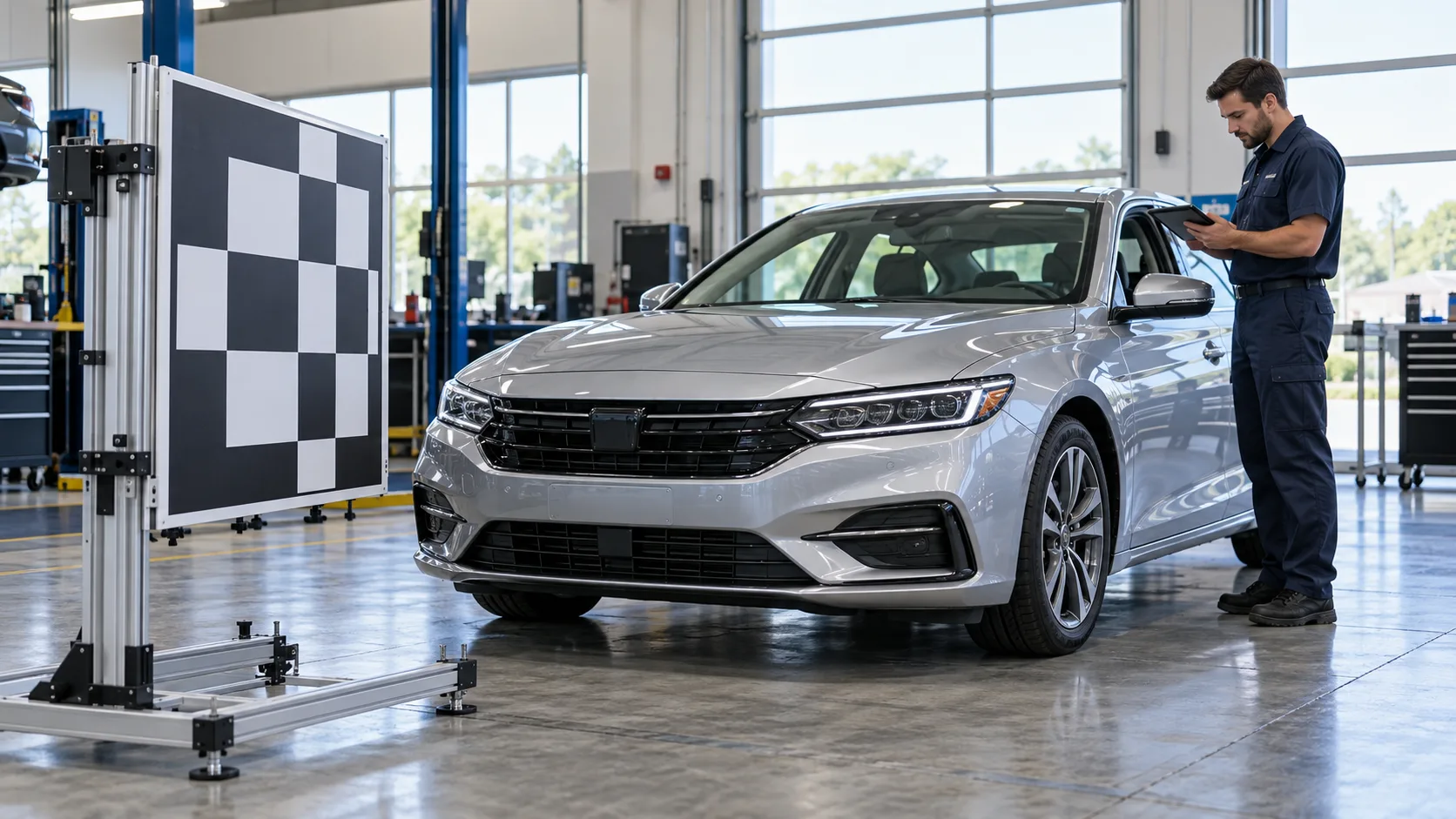
- Confirm driver-assist features. Ask whether scans or calibrations were done and where they appear on the invoice.
- Review the final invoice. Match each line to what you approved, and ask about anything new.
- Collect your parts and paperwork. Get your replaced parts if you asked for them, a copy of the invoice and any warranty in writing.
How do you confirm driver-assist calibration was done?
To confirm driver-assist calibration was done, ask the shop for the scan and calibration records and find the matching lines on the invoice. Cars with cameras, radar or blind-spot sensors near the repaired area may need calibration after collision repair, and a calibration done by an outside vendor often shows up as a sublet line.
NHTSA says that with today's driver assistance features, the driver is still responsible for driving the vehicle, and it points owners to the owner's manual. So test features like lane keeping or blind-spot alerts only as the manual describes, and never rely on them during a test drive. For more detail, read our guide to ADAS calibration after a collision.
What should the final invoice show in California?
A California repair invoice must show every service and every part with its own price, subtotals for labor and parts, sales tax and the total (16 CCR 3356(c)). Under Business and Professions Code 9884.8, the invoice must state used or reconditioned parts and identify each crash part as OEM or non-OEM aftermarket, and the shop must give you a copy.
BAR's invoice rule, 16 CCR 3356, requires the invoice to show the shop's BAR registration number. A part may be charged only if it is listed on the invoice, and shops may not bill generic items such as "shop supplies" or "miscellaneous parts" as a separate charge. If you approved added work by phone or email, the invoice must record the date, time, who approved it and the added cost.
| Invoice item | What to look for | California rule |
|---|---|---|
| Shop registration number | The BAR registration number and the shop's name and address | 16 CCR 3356(b) |
| Labor lines | Each repair listed with its own price and a labor subtotal | B&P 9884.8; 16 CCR 3356(c) |
| Parts lines | Each part priced and labeled new, used, rebuilt, reconditioned, OEM or non-OEM aftermarket | B&P 9884.8; 16 CCR 3356(c)(2) |
| Added work | Date, time, name of who approved it and the added cost | B&P 9884.9(a); 16 CCR 3356(e) |
| Generic charges | No separate line for "shop supplies" or "miscellaneous parts" | 16 CCR 3356(g) |
| Replaced parts | Parts returned if you asked when the work order was written | B&P 9884.10 |
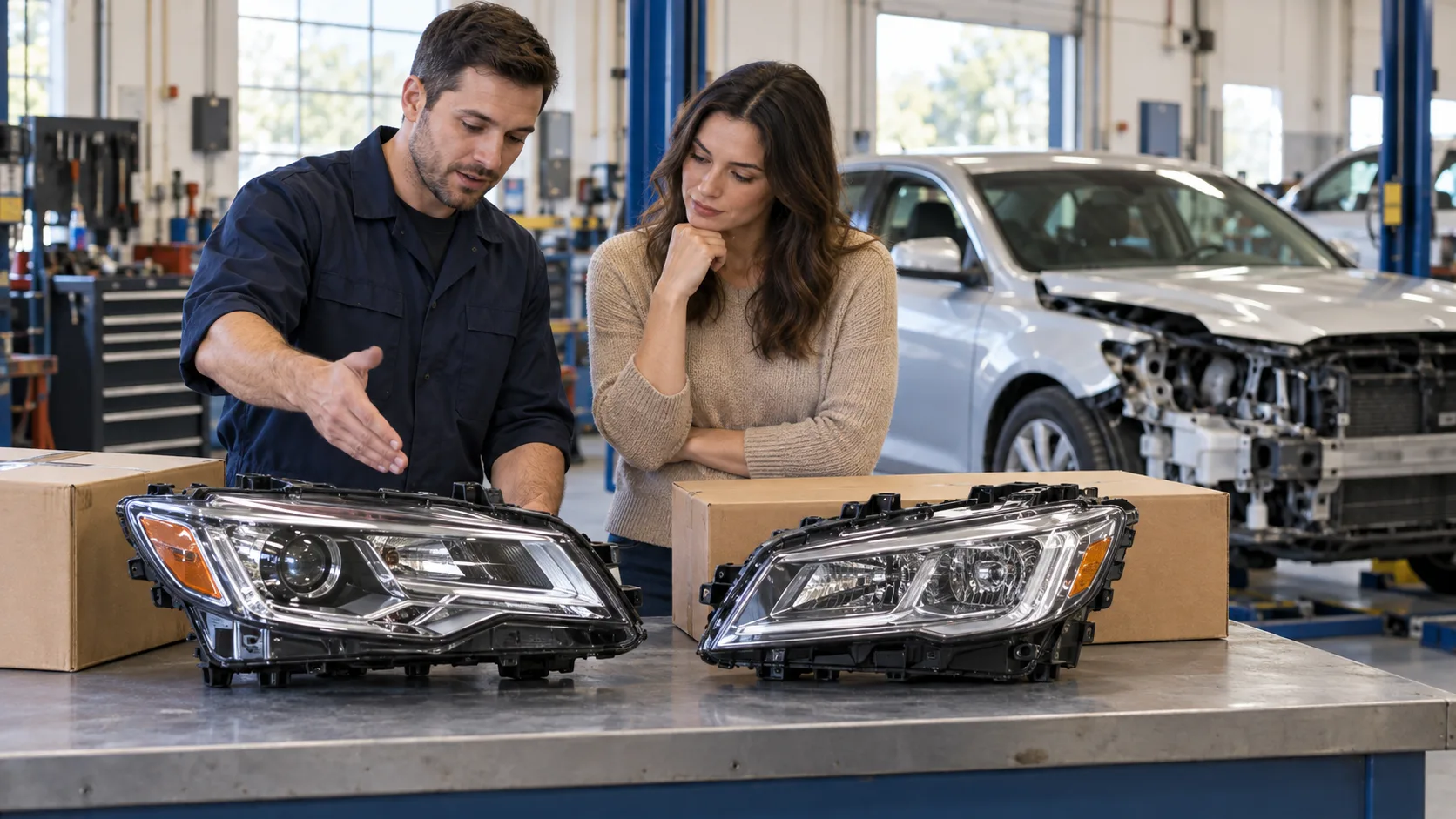
Compare the part labels on the invoice with the estimate. If the estimate listed an OEM part and the invoice lists a non-OEM aftermarket part, ask why before you sign. Our guide to OEM vs aftermarket parts explains the differences.
What should you do if you find a problem at pickup?
If you find a problem at pickup, tell the shop before you leave, show them the exact spot, and ask how and when it will be fixed. Take photos, and ask the shop to write the issue on the repair order or the invoice so there is a record. Ask whether small items, such as a loose clip, can be fixed before you leave.
If the car is not safe to drive, such as a warning light for brakes or airbags or a strong pull, ask the shop to keep the car until the issue is fixed. If your rental is about to end, tell the insurer that the repair is not complete and share the shop's updated date. Our guide to a rental car after an accident covers extensions.
How does the BAR Auto Body Inspection Program work?
The BAR Auto Body Inspection Program gives California drivers a no-cost inspection of collision repairs. According to the Bureau of Automotive Repair, a BAR representative checks that the repairs were done correctly and that every repair listed on the invoice was completed. If problems are found, BAR explains your options, and the inspection can happen at a place that works for you, such as your home or workplace.
The BAR program has limits: BAR inspects only repairs done in California after you bought the car, and BAR does not write second estimates. You request an inspection online at bar.ca.gov/autobody, and a BAR representative contacts you to schedule it. You can also call BAR's consumer line at (800) 952-5210, Monday to Friday, 8:00 AM to 5:00 PM.
If you and the shop cannot agree, BAR also takes consumer complaints online. BAR mediates between you and the shop, but BAR cannot order a refund. A BAR representative should contact you within 7 to 10 business days after the complaint is assigned.
Common mistakes
Most pickup mistakes come from rushing the last few minutes of a long repair. Avoid these five.
- Inspecting under shop lights only. Paint mismatch is easier to see in daylight.
- Signing before reading the invoice. Match each line to the estimate and supplements first.
- Ignoring a warning light. Ask the shop to explain any light before you drive away.
- Forgetting to ask for old parts at drop-off. The right to get replaced parts back depends on asking when the work order is written.
- Waiting weeks to report a problem. Report issues in writing with photos as soon as you notice them.
How Collision Assistant helps
Collision Assistant tracks the repair until you have the keys back, at no cost to drivers:
- Through our body shop recommendation service, we place cars only with shops that hold an active BAR registration, which we check before we recommend a shop.
- We track supplements, parts delays and the completion date, and send you status updates until pickup.
- Through our property damage claim management service, we keep the estimate, supplements, final invoice, photos and carrier letters in one file, so you can match the invoice to what was approved.
- We coordinate rental extensions with the paying carrier when the repair runs past the planned date.
You do not need to be a car person to end up with a solid repair. Marcus L. from Riverside described his experience:
"I rear-ended someone in stop-and-go traffic and my front end was a mess. I'm not a car person, I had no frame of reference for who's good and who isn't. Reading real reviews on here is what made the decision for me. Picked a place, the work was solid, done in four days."
Marcus L., Riverside
Insurers decide coverage and payment, and the shop is responsible for its own repair work.
Frequently asked questions
When should I schedule my body shop pickup?
Schedule the pickup in daylight with enough time for a walk-around, a short test drive and the invoice review, and avoid a rushed pickup at closing time. Daylight shows paint color and finish more clearly than shop lights. If the shop needs to fix something you found, catching it while the car is still there can save you a second trip to the shop later.
What if the paint does not match after collision repair?
Point out the panel in daylight, ask the shop whether it blended the paint into the next panel, and check the estimate and invoice for refinish and blend lines. A visible color difference is a reasonable thing to ask the shop to correct before you accept the car. Take photos from the same angle so the shop and any insurer can see the issue clearly.
Can I refuse to pick up my car if the repair is not right?
You can tell the shop the repair is not complete and ask it to fix the issue before you accept the car, with the problem in writing and photos on the repair order or in an email. Ask whether storage or rental charges apply while the fix is done, and tell the paying insurer the new completion date. If the shop disagrees, you can file a complaint with BAR.
Is there a time limit to request a BAR collision inspection?
BAR's Auto Body Inspection Program page does not list a time limit for collision repairs done in California after you bought the car. Request the inspection as soon as you notice a problem, because photos and records are easier to match to the repair while they are fresh. Keep the final invoice, since BAR checks the repairs listed on it.
Should I get a second shop to look at the repair?
You can. BAR's inspection program does not write second estimates, but California's Auto Body Repair Consumer Bill of Rights gives you the right to an independent estimate from a registered shop, which can tell you what it would cost to correct a problem. Read how to find a collision repair shop for how to check a shop first.
Want someone tracking your repair all the way to pickup day? Collision Assistant can place your car with a registered shop and send status updates until you drive away, free for drivers. Get a free quote or call 562-800-6904.
This article is general information, not legal, insurance or medical advice. Collision Assistant is not a law firm, insurer or medical provider.