ADAS Calibration After Collision and Why It Matters
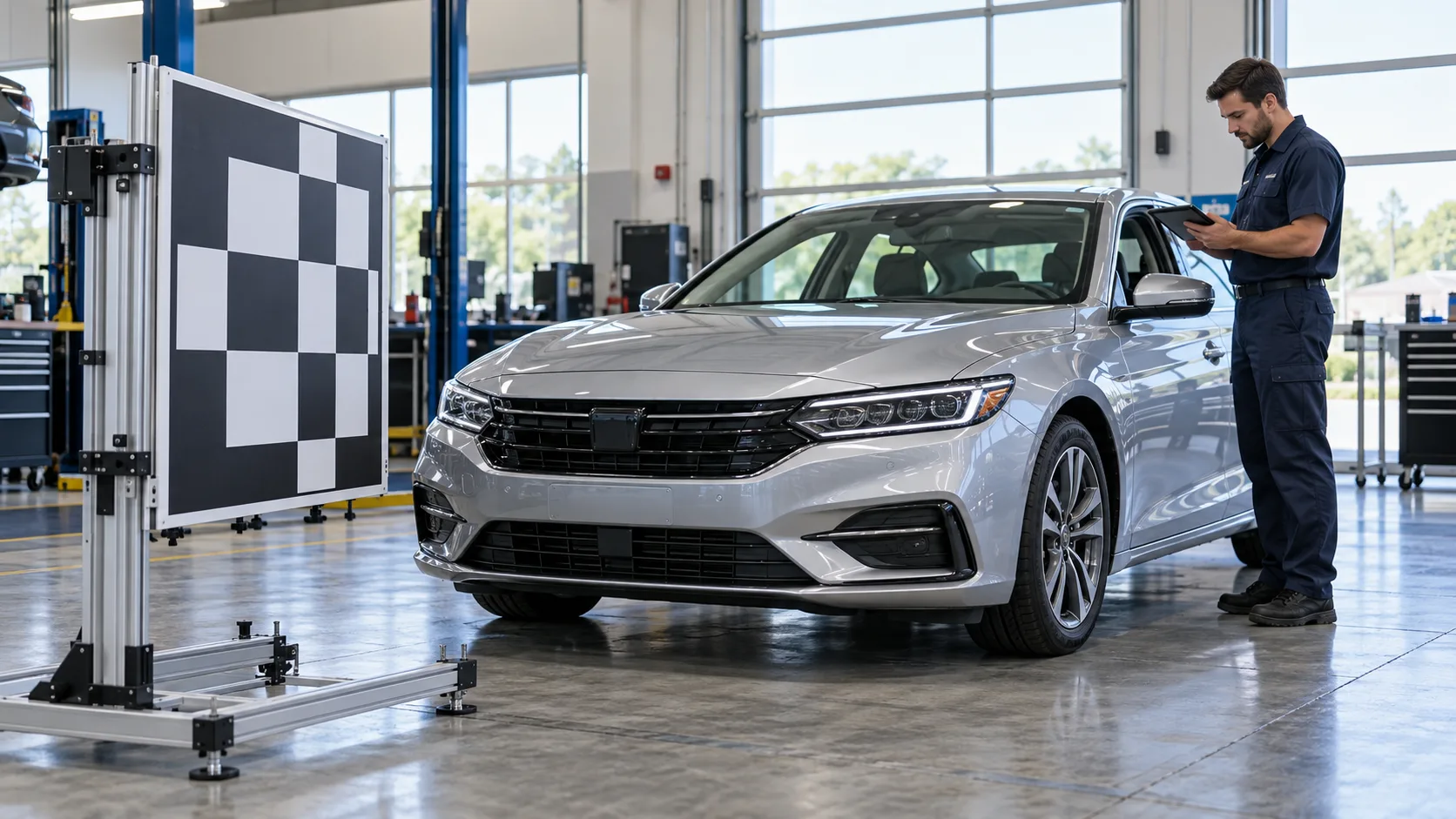
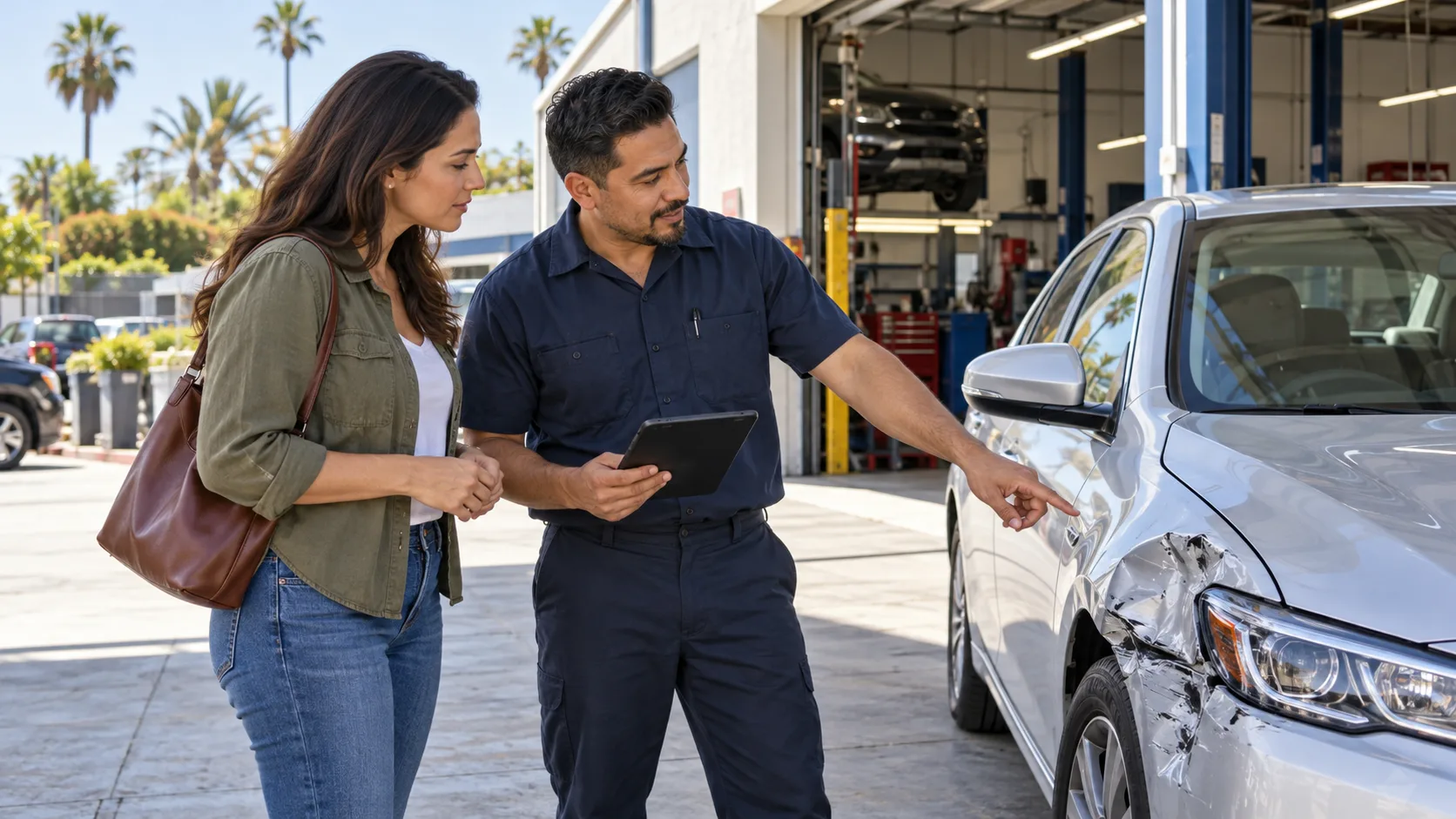
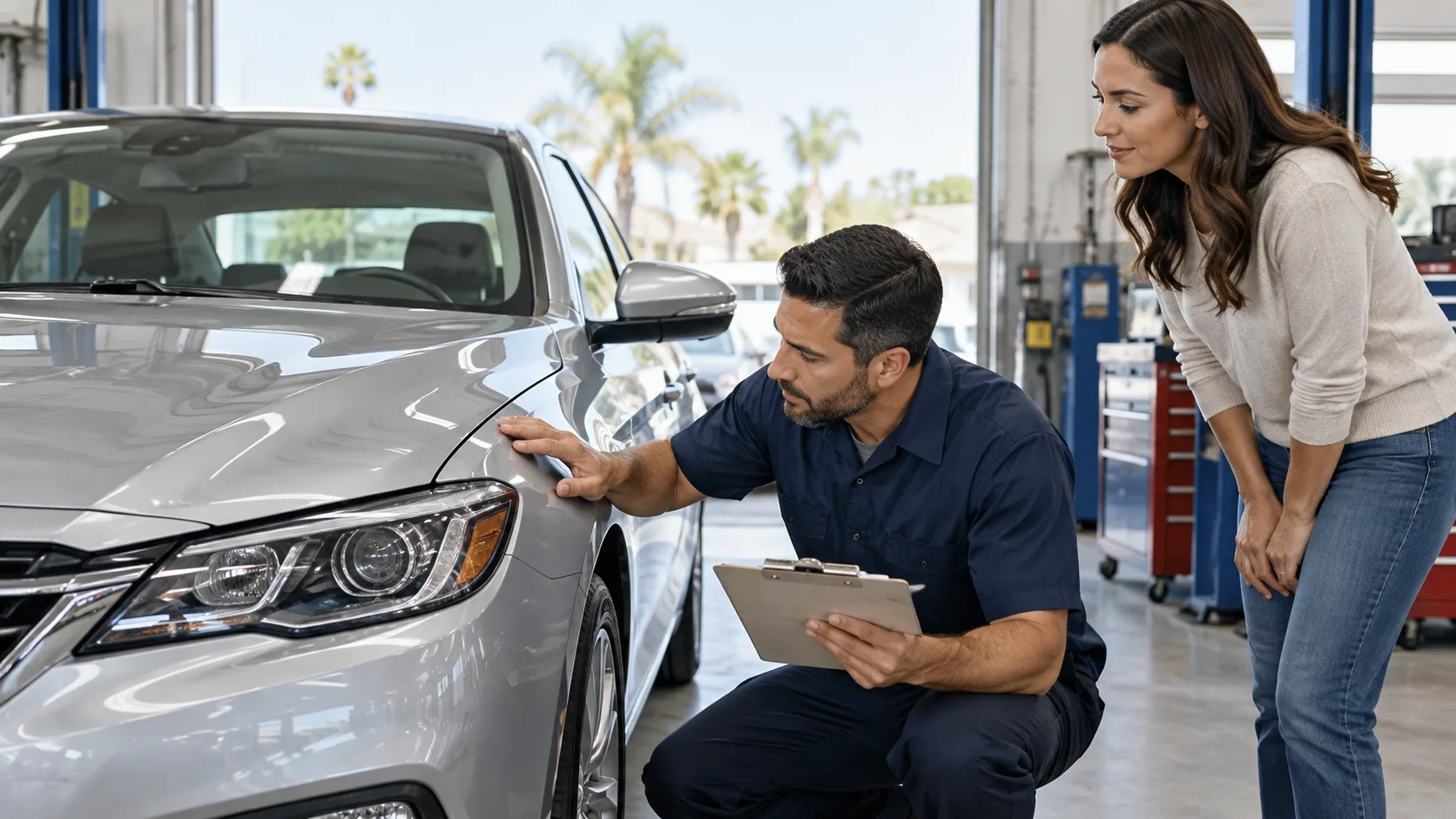
ADAS calibration after a collision is the process of resetting your car's driver-assist cameras and radar so they aim and read the road the way the vehicle maker designed. A crash, a bumper replacement or a new windshield can knock a sensor out of position, even when the car looks fine. Whether your car needs calibration depends on its make, model, equipment and the repairs done, as set by the vehicle maker's procedures.
Many California drivers first hear about calibration when it shows up as a line on a repair estimate. This guide from Collision Assistant explains what the work is, when it is needed and the two main methods. It also covers the paperwork to ask for and SB 988, California's new glass-repair disclosure law.
Collision Assistant matches cars with driver-assist sensors to shops that can handle them, and we track the calibration line from estimate to final invoice. You keep the choice of shop, and the service is free for drivers.
Key takeaways
- ADAS calibration aligns cameras and radar to the vehicle maker's specifications after a sensor, its mount or the windshield is disturbed or replaced.
- Static calibration uses a scan tool and targets while the car is parked. Dynamic calibration is done by driving the car with a scan tool connected.
- Starting January 1, 2027, California's Motor Vehicle Glass Act (SB 988, Chapter 666, Statutes of 2026) makes auto glass shops tell you if calibration is needed after windshield work. They must also give you the results in writing.
- We found no California rule that requires calibration after general collision repair, so the vehicle maker's repair procedures decide when it is needed.
- NHTSA says that with driver assistance at Levels 0 to 2, the driver remains responsible for driving the vehicle.
What is ADAS calibration after a collision?
ADAS stands for advanced driver assistance systems, such as automatic emergency braking, lane keeping help, adaptive cruise control and blind spot warning. These systems rely on cameras behind the windshield and radar behind the bumper cover, grille or quarter panels. Calibration tells each sensor exactly where it sits and where it is pointing.
Calibration after a collision usually follows a scan. In its position statement on I-CAR, General Motors says every car assessed for collision repair must get a pre-repair scan and a post-repair scan. GM adds that components, sensors and control units "require calibration and/or learns when replaced."
Driver-assist features help, but they do not drive the car. The National Highway Traffic Safety Administration says, "You, as the driver, are responsible for driving the vehicle" with these systems (NHTSA driver assistance technologies). A sensor that is aimed wrong can still mislead the system you rely on.
When is ADAS calibration needed after a crash?
ADAS calibration is needed when the vehicle maker's procedure says so for the repair that was done. I-CAR, the collision industry's training group, states that a collision involving an ADAS-equipped vehicle will "more than likely" require a calibration (I-CAR typical calibration requirements).
Example: I-CAR's calibration requirements search lists these triggers for a 2020 Toyota Corolla Hatchback. The front camera needs calibration if the camera is replaced, the windshield is removed or replaced, or a trouble code is stored. The front radar needs it if the front bumper is damaged or deformed in an accident, if the bumper mounting area is repaired, or if a trouble code is stored.
The same Toyota listing ties other sensors to battery disconnection, headlamp control unit replacement, height sensor replacement and suspension parts. That example shows why calibration is decided car by car, not by a general rule.
Common repairs that may trigger calibration
| Repair | Sensors often affected | Who decides |
|---|---|---|
| Windshield removal or replacement | Forward-facing camera near the rearview mirror | Vehicle maker's procedure; glass shops must disclose from Jan 1, 2027 (SB 988) |
| Front bumper damage or bumper area repair | Front radar behind the bumper cover or grille | Vehicle maker's procedure |
| Rear bumper or quarter panel repair | Blind spot and rear cross-traffic sensors | Vehicle maker's procedure |
| Sensor or camera removed, reinstalled or replaced | The sensor itself | Vehicle maker's procedure |
| Suspension parts or ride height sensor replaced | Sensors that depend on vehicle angle | Vehicle maker's procedure |
Myth: no warning light means no calibration
A dashboard warning light is only one signal. In the Toyota example above, a stored trouble code is one trigger, but bumper damage and windshield replacement are separate triggers that apply even without a code. Ask the shop what the vehicle maker's procedure requires for the repairs on your estimate.
What is the difference between static and dynamic calibration?
Static calibration happens in the shop with the car parked. I-CAR describes static calibration as using "a scan tool, targets, and other special tools and equipment" while the vehicle sits still. Vehicle makers also require a set amount of flat, open space around the car.
Dynamic calibration happens on the road. I-CAR describes dynamic calibration as "driving the vehicle while connected to a scan tool." Weather and road conditions can change how long the sensors take to calibrate.
A dynamic calibration is not the same as a test drive. I-CAR says the two are separate steps, and that a test drive should follow all calibrations as a final check. Some cars need static calibration, some need dynamic, and some need both.
| Feature | Static calibration | Dynamic calibration |
|---|---|---|
| Where | Inside the shop, car parked | On public roads, car moving |
| Main tools | Scan tool, targets, levels, measuring tools | Scan tool connected during the drive |
| Conditions | Flat, open space set by the vehicle maker | Speed, road and weather conditions set by the vehicle maker |
| Done by | The repair shop, a dealer or a calibration business | The repair shop, a dealer or a calibration business |
What does California's SB 988 require for glass calibration?
California's Motor Vehicle Glass Act, SB 988, was approved and filed on September 27, 2026 as Chapter 666, Statutes of 2026, adding Civil Code 1784.50 and following. The bill has no urgency clause, so under Government Code 9600 it takes effect January 1, 2027.
Under Civil Code 1784.53, a glass repair shop must tell you before it starts whether your car has ADAS. If it does, the shop must say whether the vehicle maker recommends calibration after the windshield work. The shop must also say whether it will calibrate to the maker's specifications or send the car to a dealer or another qualified calibration provider.
After calibration, the glass shop must give written notice of whether it was successful. If calibration fails, Civil Code 1784.54(c) requires the shop to advise the customer not to rely on the driver-assist system until a dealer or qualified provider calibrates it successfully. The chaptered text is on the California Legislative Information bill page.
SB 988 covers businesses "primarily engaged in automotive glass replacement." It does not set calibration rules for general collision shops. SB 988 also says an insured may not be required to use a particular glass shop or recalibration facility to receive claim benefits (Civil Code 1784.56).
What calibration paperwork should you get?
You should get calibration shown on the written estimate, any outside work disclosed, and a final invoice that lists what was done. When the shop sends calibration to a dealer or a calibration business, Business and Professions Code 9884.9(b) requires the estimate to say that another business will do that work.
Business and Professions Code 9884.8 requires an itemized final invoice, and you get a copy. Ask the shop for the pre-repair and post-repair scan reports and the calibration report as well, since those reports help if a supplement is needed or a warning appears later. The statute text is on the California Legislative Information site.
Checklist: questions to ask about ADAS calibration
Ask these eight ADAS calibration questions when you approve the estimate, not at pickup. Write down the answers or ask for them by email.
- Which driver-assist features does my car have, and where are the sensors?
- Will you do a pre-repair scan before work and a post-repair scan after?
- Does the vehicle maker's procedure require calibration for the repairs on my estimate?
- Will the calibration be static, dynamic or both?
- Will your shop do the calibration, or will it go to a dealer or calibration business?
- Is the calibration listed on the estimate so it can go to the insurer before the work?
- Will I get the scan and calibration reports with my final invoice?
- Was the calibration successful, and was a road test done after it?
Common mistakes with ADAS calibration
ADAS calibration mistakes usually come from assuming the car will tell you when something is wrong. Watch for these five.
- Assuming a clean dashboard means the sensors are fine. Repair events, not only warning lights, can trigger calibration.
- Not asking until pickup. Calibration added late can become a supplement and delay the repair, much like hidden damage after a car accident.
- Skipping the reports. Without written results, it is hard to show later that calibration was done.
- Treating a test drive as a calibration. I-CAR says they are separate steps.
- Choosing a shop without asking about sensors. See our guide on choosing the right collision center for the full question list.
How Collision Assistant helps
Collision Assistant weighs driver-assist sensors when we match a car to a shop. Through our free body shop recommendation, we connect you with one vetted California shop that holds an active BAR registration, which we check before we recommend it.
With our property damage claim management service, we track supplements, including calibration lines added after teardown, and we follow up on parts delays and completion dates. Your estimates, invoices and reports stay in one file. The insurer decides coverage and payment, and you keep the final say on your shop.
You do not have to be near the shop for us to set this up. Lorena M. from Bakersfield arranged her daughter's repair from two hours away:
"My daughter's car got hit while it was parked and I was handling it from two hours away. Being able to find a trustworthy shop near her, check it out, and set it up without driving down there myself saved me a whole day off work."
Lorena M., Bakersfield
Frequently asked questions
Can I drive my car before ADAS calibration is done?
The answer depends on your car and its condition after the crash, so ask the shop and check your owner's manual. NHTSA notes that you are responsible for driving with Level 0 to 2 driver assistance. If any calibration on your car failed or was not finished, ask the shop in writing whether you should rely on the driver-assist features before you drive.
How long does ADAS calibration take?
Calibration time varies by vehicle, sensor and method. I-CAR notes that weather and road conditions can change how long a dynamic calibration takes, and static calibration needs set floor space and equipment. Ask the shop for a time estimate and whether calibration is sent out, because outside work adds a step to the repair schedule.
Does insurance pay for ADAS calibration after a collision?
Insurers decide coverage under each policy, so no one can promise payment, but under 10 CCR 2695.8(f), an insurer's estimate must allow repair to accepted trade standards. Having the vehicle maker's procedure and the shop's calibration line on the estimate gives the insurer what it needs to review the item. See our guide to reading a repair estimate.
Does SB 988 apply to my body shop?
Generally no, because SB 988 covers a business "primarily engaged in automotive glass replacement," so its disclosure duties are aimed at glass shops rather than general collision shops. If your windshield work goes to a glass shop, that shop has the SB 988 duties starting January 1, 2027. You can still ask any body shop for written calibration results and keep them with your final invoice.
What happens if a calibration fails?
A failed calibration usually means a part, mount or alignment issue needs another look. Under SB 988, a glass shop must tell you in writing that calibration failed and advise you not to rely on the system until a dealer or qualified provider completes it. For other repairs, ask the shop to explain the next step in writing.
Is calibration needed after a minor bumper repair?
Calibration may be needed even after a minor bumper repair if a radar sits behind the cover. In the I-CAR example for a 2020 Toyota Corolla Hatchback, front bumper damage from an accident is a listed trigger for the front radar. Ask the shop to check the procedure for your exact car.
Get the sensor work on the plan
If your car has driver-assist features, Collision Assistant can match it to a shop that handles them and keep the calibration records in your file. Get a free quote or call 562-800-6904.
This article is general information, not legal, insurance or medical advice. Collision Assistant is not a law firm, insurer or medical provider.