Tips for Choosing the Right Collision Center
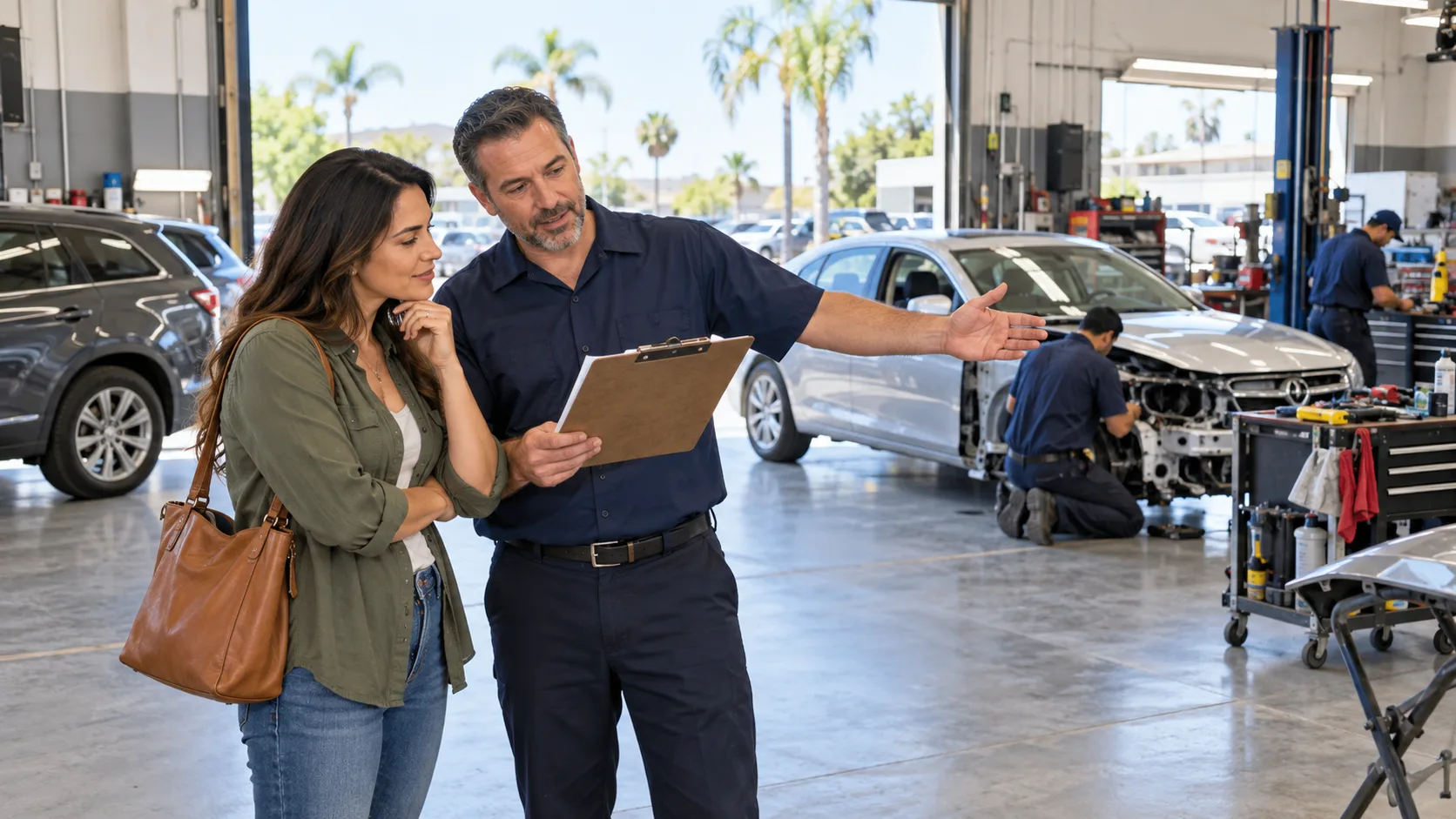
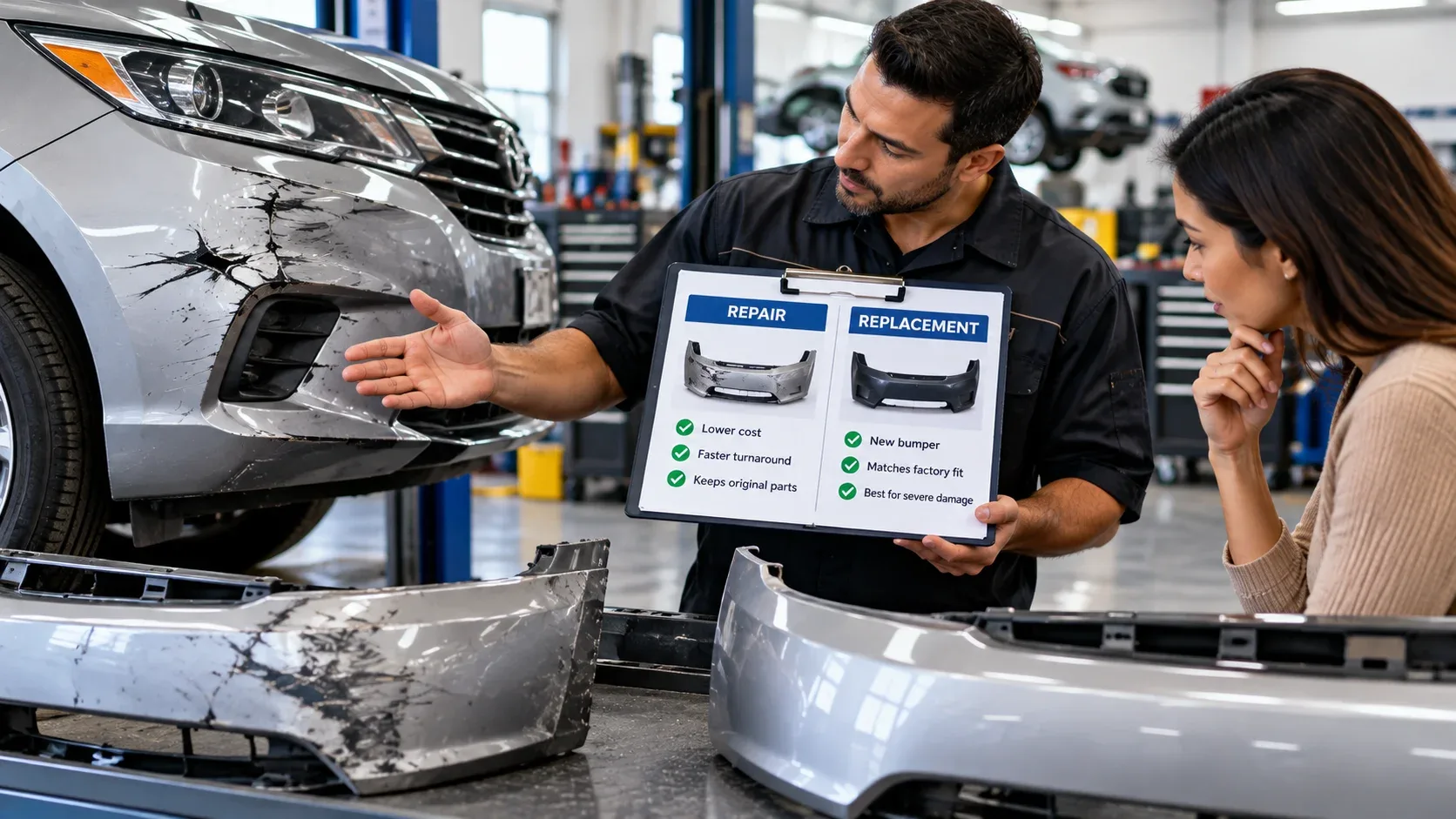
The right collision center is licensed, repairs your make and damage type to the vehicle maker's procedures, and explains every line of its estimate in writing. Choosing the right collision center comes down to a few quality signals you can check and a few questions you can ask before you sign anything.
This short checklist from Collision Assistant is for California drivers who already have one or two shops in mind and want to compare them. For the full search process, including your shop choice rights and DRP shops, see our guide on how to find a collision repair shop.
What are the signs of a good collision center?
A good collision center shows its quality in things you can verify: an active license, a clear written estimate, a plan for your car's technology and steady communication. You can check all six signals below before you hand over your keys.
1. An active BAR license with a clean record
A good collision center has nothing to hide on its license record. Business and Professions Code 9884.6 requires a valid registration, and the DCA license lookup for BAR shows any disciplinary history, so read past the word "active." The same registration number should also print on the shop's final invoice under 16 CCR 3356(b).
2. Experience with your make and damage type
Aluminum panels, electric vehicles and driver-assist sensors each need specific tools and steps. A good collision center can tell you how it handles your make and whether it uses the vehicle maker's repair procedures.
3. A written, itemized estimate
The quality signal here is not the estimate itself, which Business and Professions Code 9884.9 already requires, but how well the shop explains it. Ask the estimator to walk you through three lines you do not understand, and use our guide on how to read a collision repair estimate to check the answers.
4. A plan for scans and calibration
Cars with cameras and radar may need a scan and a sensor calibration after collision repair. A good collision center says whether it does this work itself or sends it out. Our guide to ADAS calibration after a collision explains why that line matters.
5. A clear supplement process
Hidden damage often shows up once parts come off. A good collision center tells you up front how it will document added damage, send a supplement to the insurer and get your OK before extra work starts.
6. Reviews that hold up side by side
Strong reviews mention the same good things again and again, such as clear updates and paint that matches. When you line up two or three shops, look for repeated complaints about delays or callbacks, which stand out faster in a comparison than in one listing.
"I rear-ended someone in stop-and-go traffic and my front end was a mess. I'm not a car person, I had no frame of reference for who's good and who isn't. Reading real reviews on here is what made the decision for me. Picked a place, the work was solid, done in four days."
Marcus L., Riverside
Questions to ask when choosing the right collision center
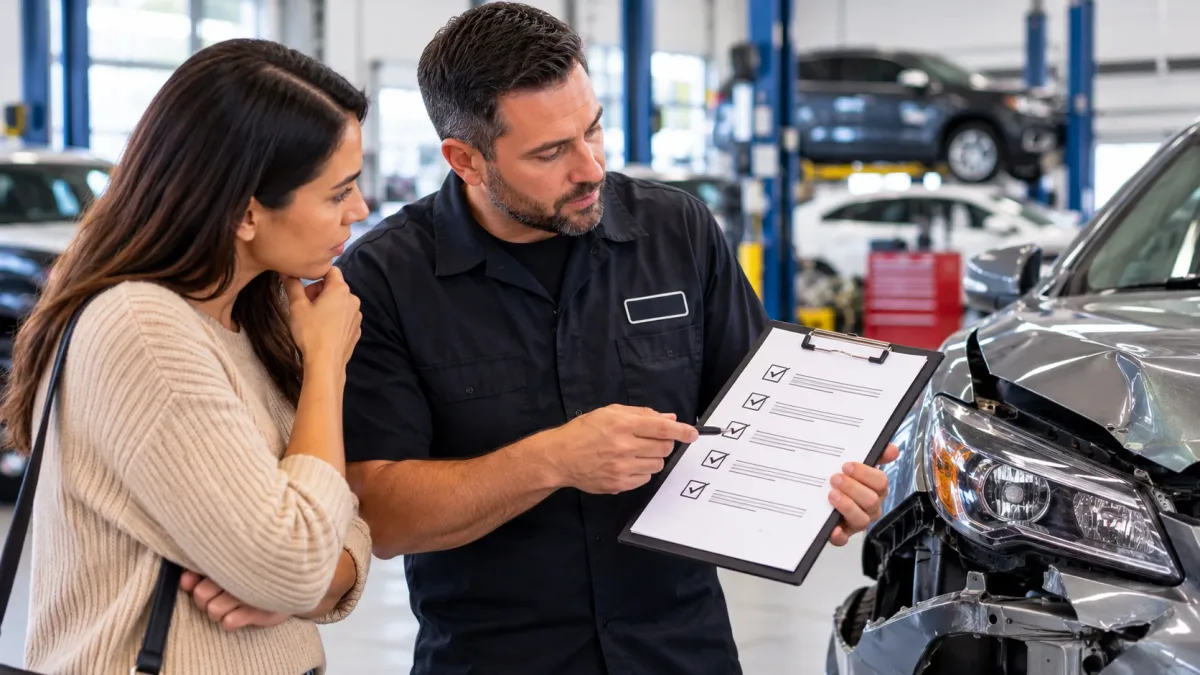
Ask these questions out loud and ask for the answers in writing where you can. A collision center that answers clearly is easier to work with when the repair changes. Collision Assistant checks the first two items, the license and the fit for your make, before it recommends any shop.
- Is your BAR license active, and is the license number on your estimate and invoice?
- Do you repair my make often, and do you follow the vehicle maker's repair procedures?
- Which parts on this estimate are OEM, and which are non-OEM aftermarket, used or reconditioned?
- Will you do a pre-repair and post-repair scan, and will you calibrate any driver-assist sensors?
- Will any work be sent to another business, such as calibration, glass or alignment?
- If you need to tear down parts to find damage, what will the teardown and reassembly cost?
- How will you handle a supplement, and how will you reach me before extra work starts?
- What is your estimated completion date, and how often will you send updates?
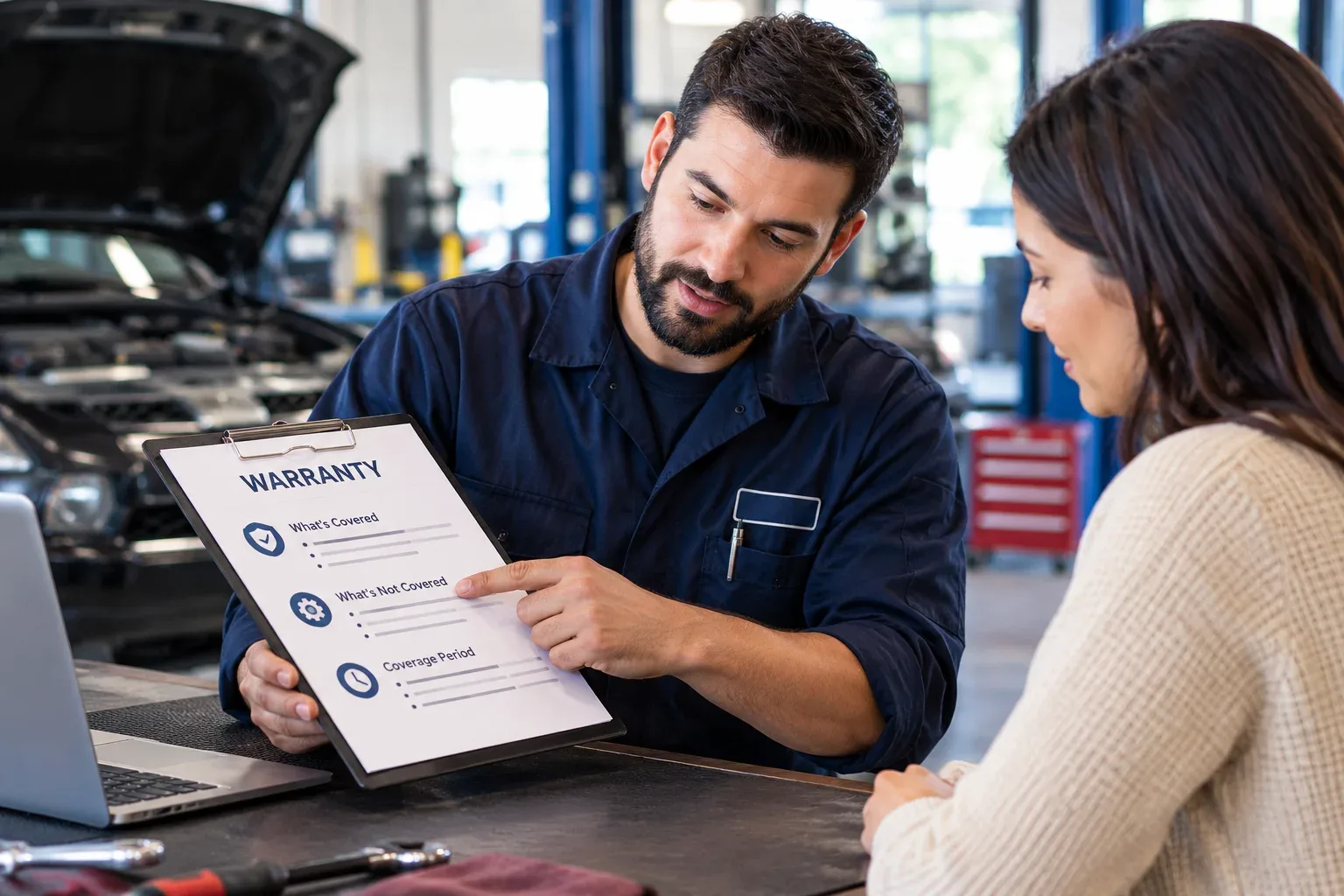
- What written warranty do you give on workmanship and paint?
Question 5 matters because California law covers outside work. Under Business and Professions Code 9884.9(b), the estimate must state any repair that "will be done by someone other than the dealer or his or her employees."
Collision center quality signals at a glance
Each quality signal below ties back to a California rule, so you can check it instead of taking the shop's word for it.
| Signal | How to check it | Rule or source |
|---|---|---|
| Active license | DCA license lookup for BAR | B&P 9884.6 |
| Itemized estimate with parts labels | Read the written estimate line by line | B&P 9884.9(c) |
| Outside work disclosed | Look for sublet lines on the estimate | B&P 9884.9(b) |
| Teardown cost in writing | Ask before parts come off | 16 CCR 3353(c), operative July 1, 2025 |
| Consent before extra charges | Shop calls or writes before supplement work | B&P 9884.9(a) |
| Detailed final invoice | Invoice lists parts, labor and OEM or aftermarket labels | B&P 9884.8 |
Common mistakes when choosing a collision center
Most mistakes in choosing a collision center come from skipping the comparison. These five are the ones to watch.
- Going with the first search result. Kevin B. in Modesto almost did, then found rough reviews once he compared three shops side by side.
- Choosing on price alone. A lower total may use different parts or leave out a scan or calibration.
- Accepting vague answers. "We'll see when we get in there" is fine for hidden damage, but the teardown cost should still be in writing.
- Assuming you must use the insurer's shop. California Insurance Code 758.5 bars an insurer from requiring a specific shop.
- Skipping the pickup check. Use our post-repair inspection checklist before you drive away.
How Collision Assistant helps
Collision Assistant does the comparison work with you. Through our free body shop recommendation, we connect you with one vetted shop in our California network. We check every shop's BAR registration before we recommend it, and we match on your make, the damage type (aluminum, EV, driver-assist sensors) and your location.
If you want help beyond the shop, our property damage claim management service tracks supplements, parts delays and completion dates, and keeps estimates, invoices and photos in one file. Collision Assistant is free for drivers, and you always keep the final say on your shop.
Compare with confidence
If you would like a second set of eyes on your shortlist, Collision Assistant can check licenses and match a shop to your car, free for drivers. Get a free quote or call 562-800-6904.
This article is general information, not legal, insurance or medical advice. Collision Assistant is not a law firm, insurer or medical provider.