Bumper Repair vs Replacement and What to Ask Your Shop
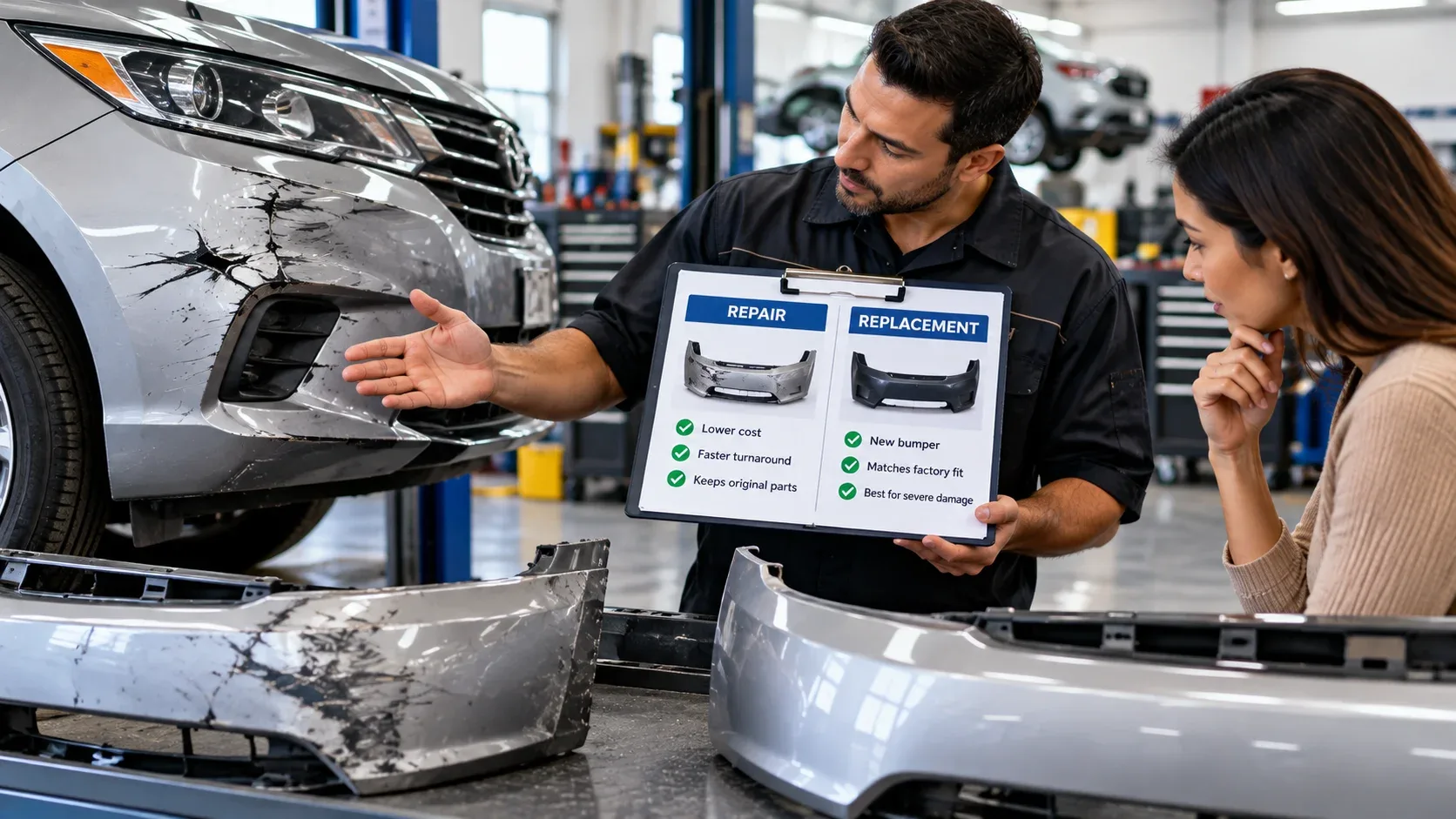
The bumper repair vs replacement decision depends on the damaged component, its material, the location of the damage, and the vehicle manufacturer’s repair instructions. Some plastic covers can be repaired, while damaged reinforcement or sensor-related restrictions can require replacement. Ask your shop to explain the inspection findings and document its recommendation before you authorize work.
By Collision Assistant
For California drivers, the useful question is which option fits the actual damage and the vehicle’s requirements. A photograph or the size of a visible crack does not provide all the information needed to make that decision.
Collision Assistant connects drivers with vetted collision repair shops. We do not perform bumper repairs or decide whether your car needs a replacement. This guide helps you understand the shop’s explanation and ask informed questions. For the broader process, see our guide to collision repair in California.
Bumper Repair vs Replacement at a Glance
Repair keeps and restores the existing part. Replacement removes that part and installs another. The appropriate choice depends on what was damaged and which operations the manufacturer permits.
Use this table to guide your conversation with the estimator. It is not a way to diagnose your bumper yourself.
|
Inspection Finding |
What It Means for the Decision |
What to Ask the Shop |
|
Surface scrape or gouge on the cover |
Repair and refinishing may be possible if permitted |
Does the damage affect only the finish or also the plastic? |
|
Crack or tear in a plastic cover |
Some damage has professional repair options, subject to restrictions |
Is the proposed method allowed for this material and location? |
|
Broken mounting tab |
Repairability needs assessment rather than an automatic assumption |
Can the attachment be restored under the applicable procedure? |
|
Damaged reinforcement or energy absorber |
These parts require separate evaluation from the cover |
Which underlying components need replacement? |
|
Damage near a radar sensor |
Manufacturer restrictions may affect the cover repair decision |
Does the procedure permit repair or refinishing in this area? |
|
Damage not yet fully inspected |
The initial recommendation may need revision |
What inspection or disassembly remains before the plan is confirmed? |
3M publishes professional procedures for cosmetic damage, cracks, tears, and plastic tabs. It also tells repairers to assess the specific application and relevant manufacturer guidelines. The existence of a repair product therefore does not establish that a particular bumper should be repaired.
Which Part Does the Shop Mean by Bumper?
Ask whether the recommendation concerns the exterior cover, an absorber, a reinforcement, a mounting component, or several parts. Repairing the visible cover does not resolve damage to another component behind it.
I-CAR’s guide to bumper absorbers, crush boxes, and reinforcements explains the different roles of these components and identifies damaged impact-management parts that require replacement.
In a bumper repair vs replacement discussion, request separate explanations for the cover and the components behind it. A shop might recommend repairing one and replacing another.
For example, an estimate that says only “bumper replacement” leaves an important question unanswered. Is the shop replacing the cover, the reinforcement, or an assembly? Ask the estimator to identify each affected part.
Our article on hidden damage after a car accident explains why removing a cover can reveal additional work.
Can a Cracked Bumper Cover Be Repaired?
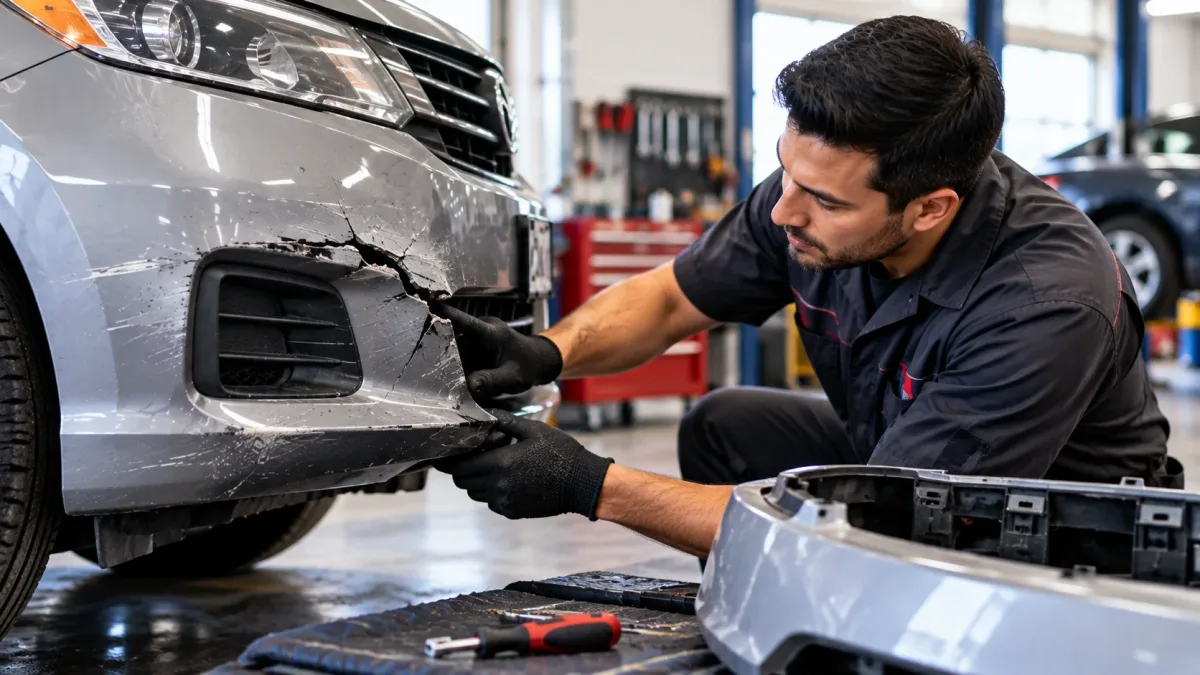
Some cracked plastic bumper covers can be professionally repaired, but a crack alone does not establish repairability. Material, location, access, attachment condition, and manufacturer restrictions need review.
3M’s bumper and plastic repair resources include two-sided procedures for cracks and tears, along with tab-repair methods. These are professional repair options, not permission to repair every cracked cover.
As another example, Tesla’s Model Y plastic-component guidelines for 2020 through 2024 vehicles allow certain non-safety-related plastic repairs but prohibit plastic repairs in radar-sensor areas of the front fascia. The guidance also calls for identifying the plastic material before repair. Those instructions apply to the vehicles covered by that manual.
When discussing cracked bumper repair options, ask the shop to connect its proposed method to your vehicle. A useful explanation identifies the damaged area, the applicable instruction, and why the method fits.
When Is a Bumper Replacement Recommendation Justified?
A bumper replacement recommendation should identify the condition or restriction that rules out repairing the specific part. Ask for the reason and supporting inspection findings rather than accepting a general statement that replacement is always better.
I-CAR explains that damaged bumper reinforcements require replacement and that damaged crush boxes should not be straightened. These components should not be treated like a cosmetic plastic cover.
For the exterior cover, ask the estimator whether replacement is based on:
-
A manufacturer restriction affecting the damaged area.
-
Damage to attachments or another area the proposed repair cannot appropriately restore.
-
The condition of the existing part, including previous repairs.
-
A comparison of the complete permitted repair and replacement plans.
Hypothetical example: Two vehicles have similarly sized marks on their bumper covers. One shop proposes a permitted cosmetic repair. For the other vehicle, the shop identifies a manufacturer restriction at the damaged sensor area and recommends a replacement. Similar appearance does not make the two repair plans interchangeable.
How Can Sensors Change the Decision?
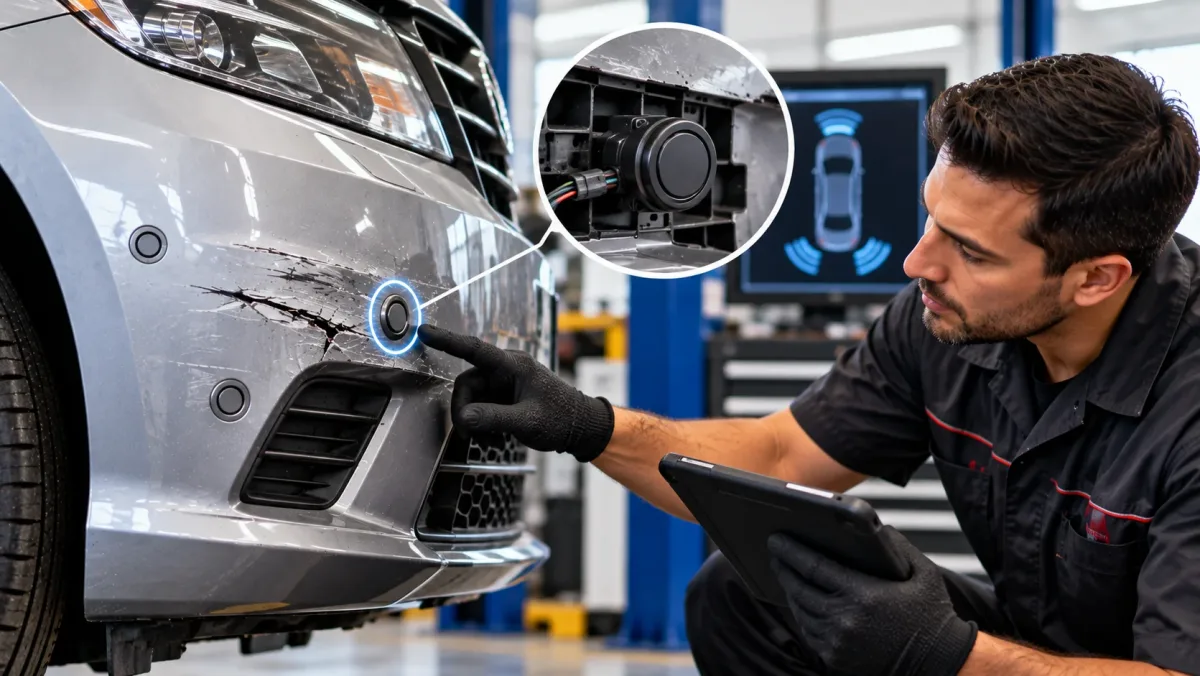
Sensors can impose restrictions on cover repair and refinishing. The shop should check the current manufacturer instructions for your vehicle’s equipment and the affected area.
Toyota’s Repair the Bumper or Replace It?, published in its 2018 Collision Pros magazine, explains how repairs and added coating thickness near certain rear radar sensors can affect performance. It is a manufacturer-specific illustration, not a universal rule for every bumper.
Ask two separate questions:
-
Is the cover repair or refinishing method permitted here?
-
What inspections, scans, or calibration procedures apply afterward?
An answer about calibration does not, by itself, explain whether the proposed cover repair is permitted. Request the reason for each operation. Our guide to ADAS calibration after a collision explains that related subject.
How Should You Compare the Cost of Both Options?
Compare the complete proposed work for bumper repair vs replacement, using only methods appropriate for the vehicle. A repair-material charge and the price of a replacement cover are not complete job totals.
Ask the shop to identify which of these apply to each option:
-
Inspection and any necessary disassembly.
-
Cover repair labor or the replacement part.
-
Removal, installation, attachments, and related parts.
-
Preparation, refinishing, and materials.
-
Required scans, calibration, or outside services.
Ask whether any proposed replacement cover is new OEM, aftermarket, used, or reconditioned. Our comparison of OEM and aftermarket collision parts explains those categories.
Avoid relying on a universal price cutoff or a guaranteed completion time. Ask for the actual totals, parts availability, and remaining uncertainties for your car.
Collision Assistant can help arrange an estimate with a vetted shop suited to your vehicle and damage. The repair facility explains its methods and charges, while the insurer determines coverage and payment.
What Should You Confirm Before Authorizing Work in California?
Confirm the specific parts, proposed operations, price, and any inspection still needed. Your authorization to the shop and the insurer’s payment decision are separate matters.
The California Bureau of Automotive Repair, or BAR, explains in Write It Right, updated January 2026, that diagnostic teardown requires an estimate first. After teardown, the shop must provide an itemized estimate and obtain authorization for repair or reassembly.
Use this sequence before deciding to repair or replace the bumper:
-
Ask the shop to identify every damaged bumper component.
-
Request photos or an explanation of the inspection findings.
-
Ask which manufacturer instructions support the proposed method.
-
Review the estimate and clarify any teardown or reassembly charges.
-
Ask what the insurer has approved and what you could owe personally.
-
Keep the estimate, authorization, revisions, and final invoice together.
For help with the document itself, read our guide to understanding a collision repair estimate.
Get a Clear Recommendation Before You Decide
The most useful bumper repair vs replacement recommendation explains the damaged parts, permitted methods, complete cost, and remaining inspection needs. Ask for that explanation in writing before authorizing the work.
If you need a suitable California shop to assess the damage, request a body shop recommendation from Collision Assistant. We match drivers with vetted repair facilities and help arrange the estimate. Our referral is free, while repair costs and outside charges are separate.