I-CAR Certified Shop Explained for California Drivers
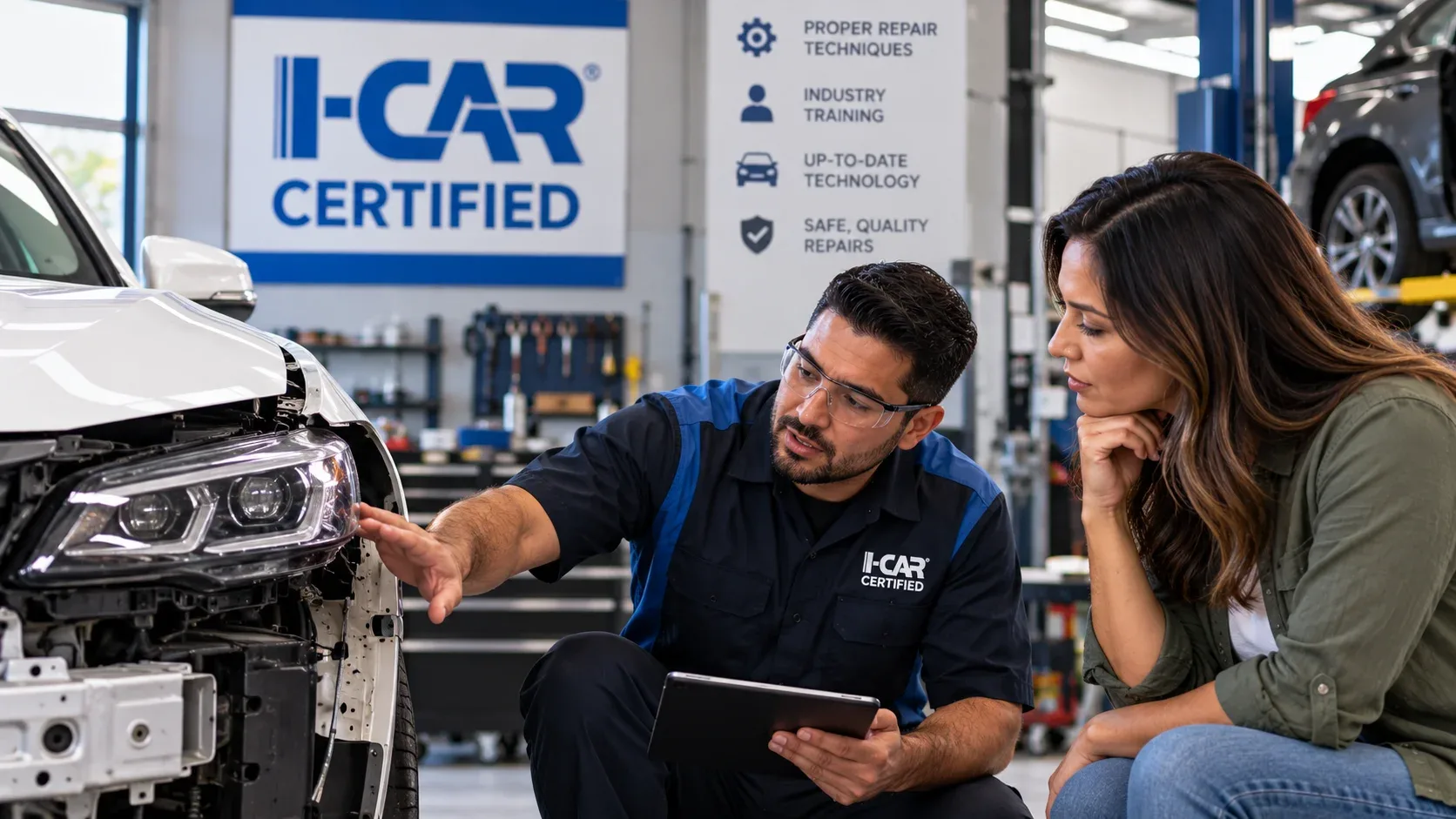
An I-CAR certified shop is a common search term for a collision repair business with I-CAR training or recognition. The business designation to verify is Gold Class. Platinum applies to individuals. Neither replaces California repair-shop registration or proves that every repair is correct. Check the exact credential, current status, and suitability for your vehicle.
Training badges can help you compare body shops, but only if you know what each badge means. A certificate held by one technician is different from recognition held by a business. Manufacturer certification is another separate check.
This guide explains the differences between I-CAR, ASE, and OEM credentials and gives you a practical way to verify them before authorizing repairs. For the broader process, start with our guide to collision repair in California.
What Does an I-CAR Certified Shop Mean
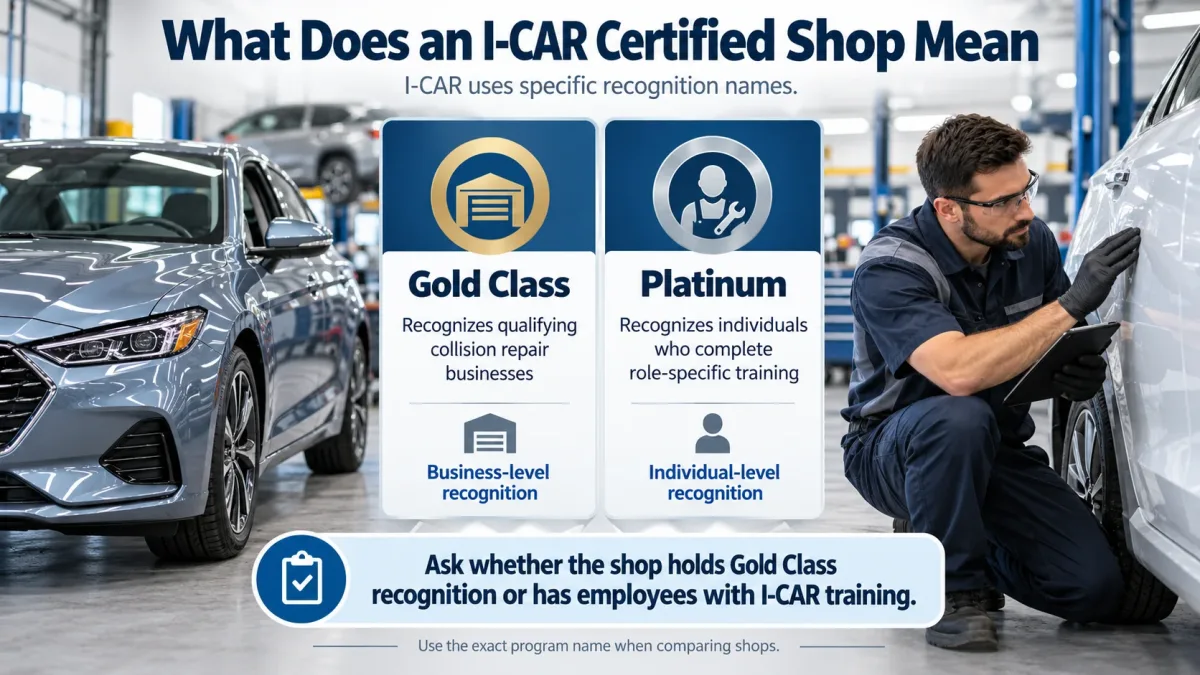
An I-CAR certified shop claim needs clarification because I-CAR uses specific recognition names. Gold Class recognizes qualifying collision repair businesses, while Platinum recognizes individuals who complete role-specific training.
I-CAR stands for the Inter-Industry Conference on Auto Collision Repair. Its official FAQ describes the organization as a not-for-profit provider of collision repair information, knowledge, and skills. info.i-car.com
When a shop says it is I-CAR certified, ask whether it currently holds Gold Class recognition or has employees with I-CAR training. A course certificate, a Platinum employee, and a Gold Class business tell you different things.
Use the exact program name in your comparison notes. That makes it easier to check the claim against the issuing organization instead of relying on a broad statement on the shop’s website.
What Is I-CAR Gold Class Recognition
I-CAR Gold Class recognition identifies collision repair businesses that meet the program’s role-specific training standards and ongoing professional-development requirements.
I-CAR’s Gold Class standards cover estimating, refinishing, structural repair, and non-structural repair roles. The standards also address location-level training and continuing education. Requirements account for shop size and assigned roles. I-CAR
Structural repair concerns the vehicle’s supporting structure. Non-structural repair concerns other damaged body components. Refinishing covers the preparation and application of the vehicle’s finish. Training in each role addresses different work within the same repair.
For a driver, Gold Class provides evidence of a business’s participation in an organized training program. It does not give you the repair plan for your particular car. You still need to ask which procedures apply, who will perform them, and how the shop will verify completion.
Avoid assuming that every employee has the same designation or that a badge answers every question about equipment and vehicle-specific experience.
How Is Platinum Different From Gold Class
I-CAR Platinum is individual recognition. Gold Class is business recognition, so a shop with a Platinum employee is not automatically a Gold Class business.
According to I-CAR’s Platinum program, the designation is awarded to individuals who complete detailed, role-specific collision repair training. The organization explains that individual training can help a business earn or maintain Gold Class recognition. I-CAR
Ask which role the individual’s recognition covers. An estimator’s training and a structural technician’s training relate to different responsibilities. Both can contribute to the repair, but one person’s credential should not be presented as proof of every employee’s qualifications.
If an I-CAR certified body shop advertisement shows only an individual’s certificate, ask the business to explain its current shop-level recognition separately.
How Do I-CAR, OEM, ASE, and BAR Credentials Compare
I-CAR recognition, OEM certification, ASE certification, and California BAR registration answer different questions. Compare the credentials by who issues them, who holds them, and what you need to verify.
|
Credential |
Who or What It Applies To |
What to Verify |
|
I-CAR Gold Class |
A qualifying collision repair business |
Current recognition for the exact location |
|
I-CAR Platinum |
An individual in a defined role |
Current recognition and relevant role |
|
OEM collision certification |
A facility participating in a vehicle manufacturer’s program |
Manufacturer, location, and applicable program |
|
ASE collision certification |
An individual technician or estimator |
Current certification and test categories |
|
California BAR registration |
The automotive repair business |
Active registration, matching address, and disciplinary history |
These distinctions come from the respective program providers and California BAR. A business may hold several credentials, but one should not be treated as a substitute for another. info.i-car.com
Is OEM Certified Collision Repair the Same as I-CAR
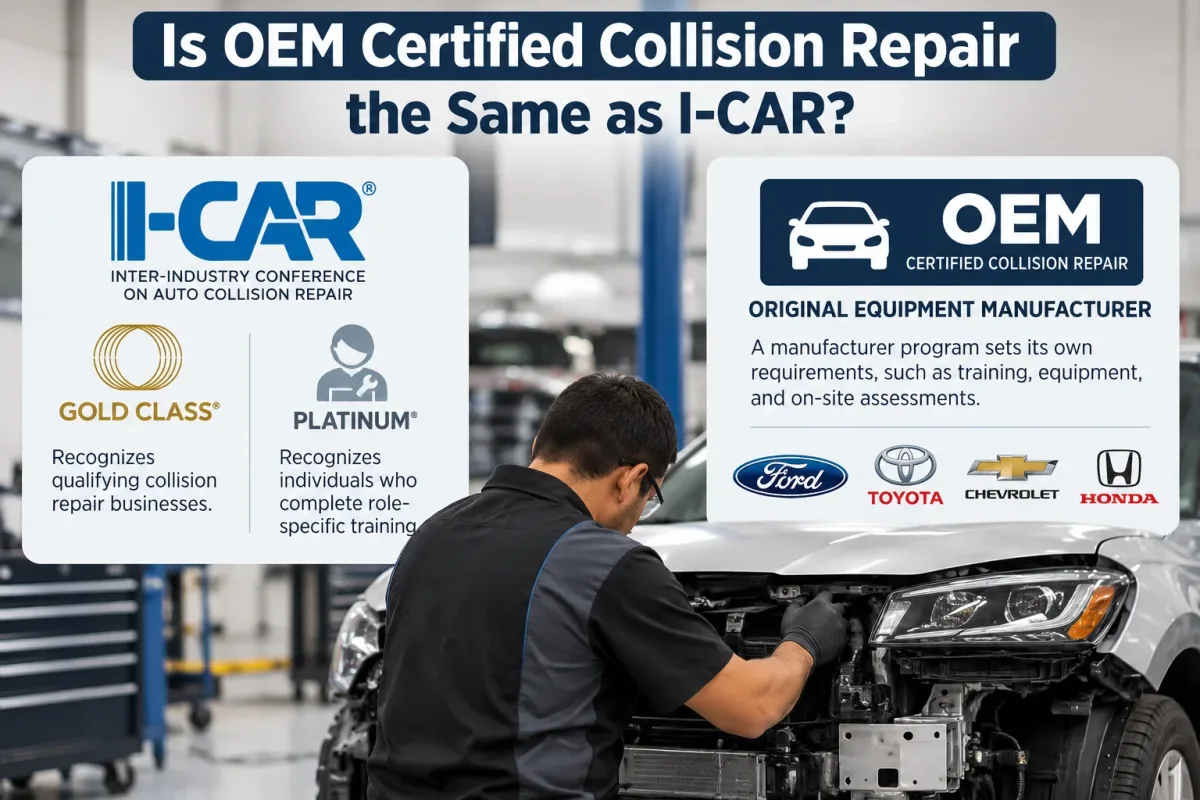
OEM certified collision repair is separate from I-CAR recognition. OEM means original equipment manufacturer, which is the vehicle manufacturer in this context.
A manufacturer program sets its own requirements. For example, Ford’s Certified Collision Network describes annual on-site assessments and repair support from Ford. That is a manufacturer-specific program, not a general credential for every vehicle brand. Ford.com
An I-CAR certified shop may also participate in an OEM program. Ask which manufacturer recognizes the shop and confirm the specific location through the manufacturer’s official directory or program contact.
Do not assume that certification for one brand covers another. Also ask whether the shop can perform the work your particular vehicle needs, including any specialized material, electrical, or sensor-related procedures.
What Does ASE Auto Body Certification Tell You
ASE collision credentials certify individuals in defined repair or estimating areas. They are different from I-CAR Gold Class business recognition.
The National Institute for Automotive Service Excellence, known as ASE, lists four Collision Repair and Refinish certification tests:
-
B2 covers painting and refinishing.
-
B3 covers non-structural analysis and damage repair.
-
B4 covers structural analysis and damage repair.
-
B5 covers mechanical and electrical components.
ASE identifies technicians certified in all four as Master Collision Repair Technicians. Its separate B6 certification addresses damage analysis and estimating. ASE also requires technicians to retest every five years to retain these certifications. ASE
If a shop advertises ASE auto body qualifications, ask which employees hold them and which categories are current. A general ASE logo does not tell you whether the credential concerns collision repair, estimating, or another automotive specialty.
How Can You Verify an I-CAR Certified Shop
Verify an I-CAR certified shop by checking the precise designation and business location with I-CAR, then verifying California registration separately.
Use this sequence before leaving your vehicle:
-
Get the Exact Business Details
Record the location’s name and street address. Do not rely only on a chain’s overall branding. -
Ask for the Recognition Name
Confirm whether the shop claims Gold Class, individual Platinum recognition, or completion of particular training. -
Check the Official Locator
Use the I-CAR Gold Class locator for current business recognition. -
Resolve Any Mismatch
If the location is missing or the details differ, ask the shop and I-CAR to clarify the status before treating the claim as verified. -
Check California Registration
Use BAR’s official tools to confirm the business’s registration and available disciplinary history. -
Connect the Credential to Your Repair
Ask who will handle the relevant operations and whether any work will be sent elsewhere.
I-CAR’s Gold Class policy says qualifying collision repair businesses appear in its consumer locator. Businesses must renew annually to use the designation, and facilities that no longer qualify are removed. info.i-car.com
An old plaque or website logo is therefore a starting point for a question, not the end of your verification.
Does I-CAR Recognition Replace California Registration
No. I-CAR recognition is a training credential. California BAR registration is a separate check on the automotive repair business.
The California Bureau of Automotive Repair’s consumer guidance advises drivers to verify a shop’s license status and disciplinary history. BAR also explains customers’ rights to estimates, authorization, notification of changes, and final invoices. Bureau of Automotive Repair
Check the name and address against the business you are considering. An I-CAR certified shop should be evaluated on both its claimed recognition and its California registration.
If the shop cannot explain a mismatch, ask for clarification before authorizing work. Training does not replace the need for clear business records.
What Should You Ask About Your Vehicle’s Repair
Ask an I-CAR certified shop how its training relates to your vehicle’s actual repair plan. The most useful answers explain procedures, responsibilities, and records.
Bring the vehicle’s year, make, model, damage photos, and any available estimate. Then ask:
-
Which manufacturer repair information will you use for this vehicle?
-
Which repair roles will be involved?
-
Which operations will you perform here, and which will be sublet?
-
How will you identify necessary scans and calibrations?
-
How will you explain additional damage and request authorization?
-
What repair and warranty documents will I receive?
Ask the estimator to explain several unfamiliar lines rather than only giving you the total. Our guide to reading a collision repair estimate helps you compare the scope of work.
For vehicles with cameras or radar, ask who will check the manufacturer requirements and complete any required procedures. Our explanation of ADAS calibration after a collision covers that separate part of the repair.
What Mistakes Should You Avoid When Comparing Credentials
Avoid treating training badges as interchangeable or assuming that recognition proves every aspect of a repair. Verify the credential, then review the written repair plan.
Common mistakes include accepting an old logo without checking current status, confusing an individual’s Platinum recognition with shop-level Gold Class, and assuming OEM certification covers every vehicle brand.
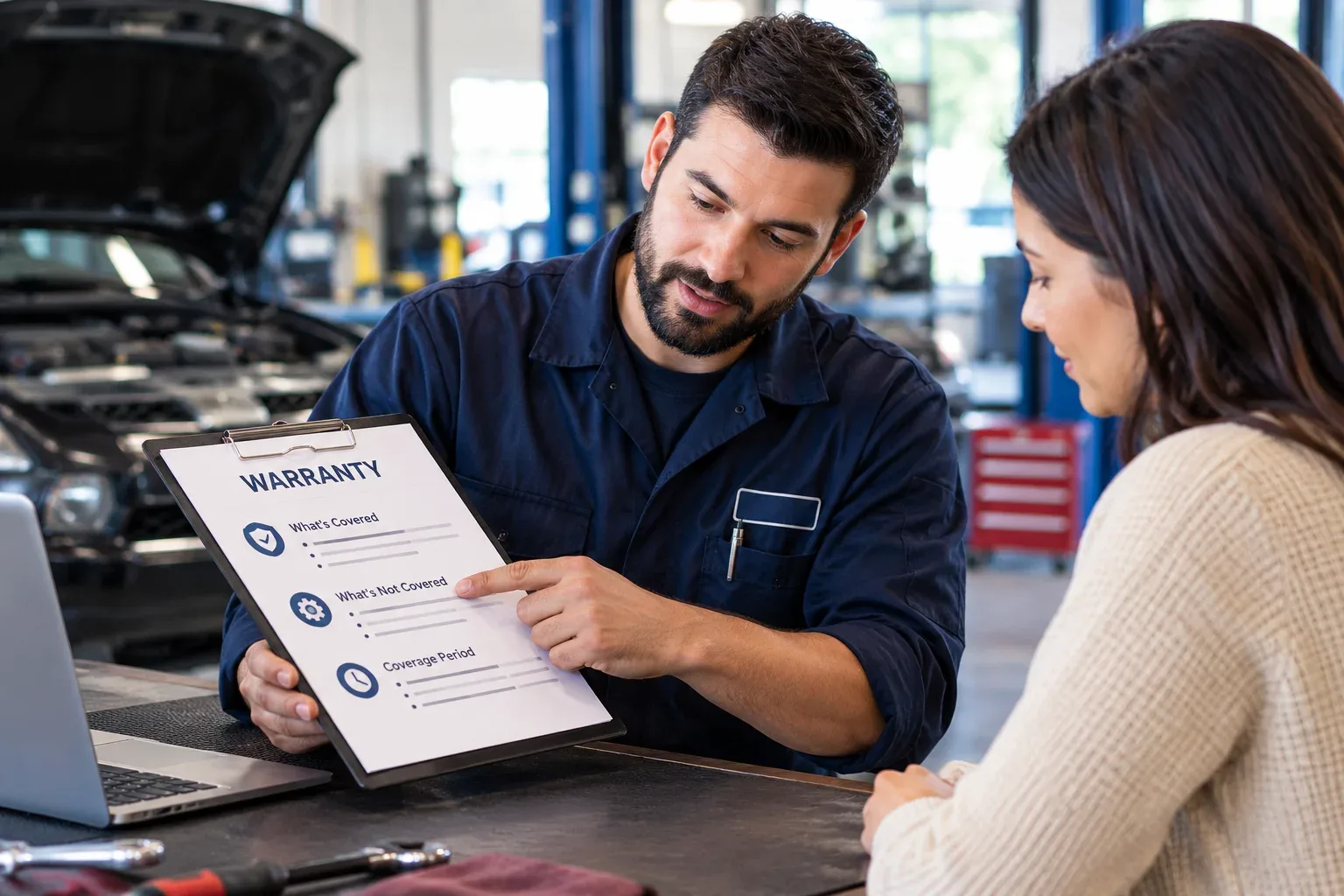
Another mistake is assuming credentials determine the warranty or price. Ask the shop for its written warranty terms and an estimate for your vehicle. A badge alone does not explain either.
Finally, check the particular location rather than assuming every branch of a business has identical credentials. Keep the verification details with your repair documents so you know which business and qualifications you reviewed.
Check the Credential and the Repair Plan Together
An I-CAR certified shop claim is most useful when you can verify exactly what it means. Check Gold Class business recognition separately from individual Platinum or ASE credentials, confirm California registration, and ask how the shop will document your vehicle’s repair.
We help California drivers connect with vetted collision repair shops. To discuss repair options for your vehicle, request a repair quote and ask about the qualifications relevant to the work you need.