Collision Repair in California: Process, Costs & What to Expect
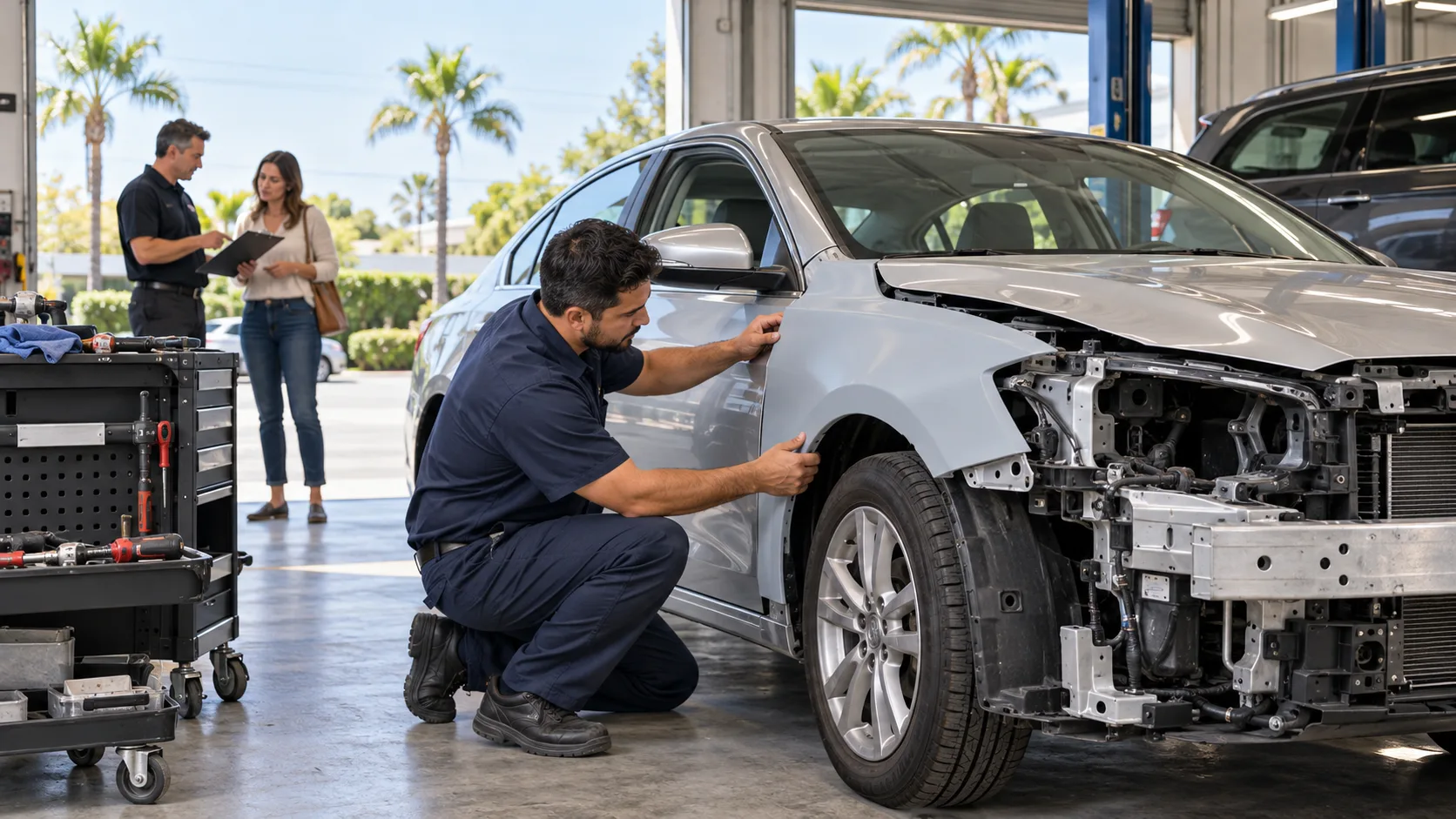
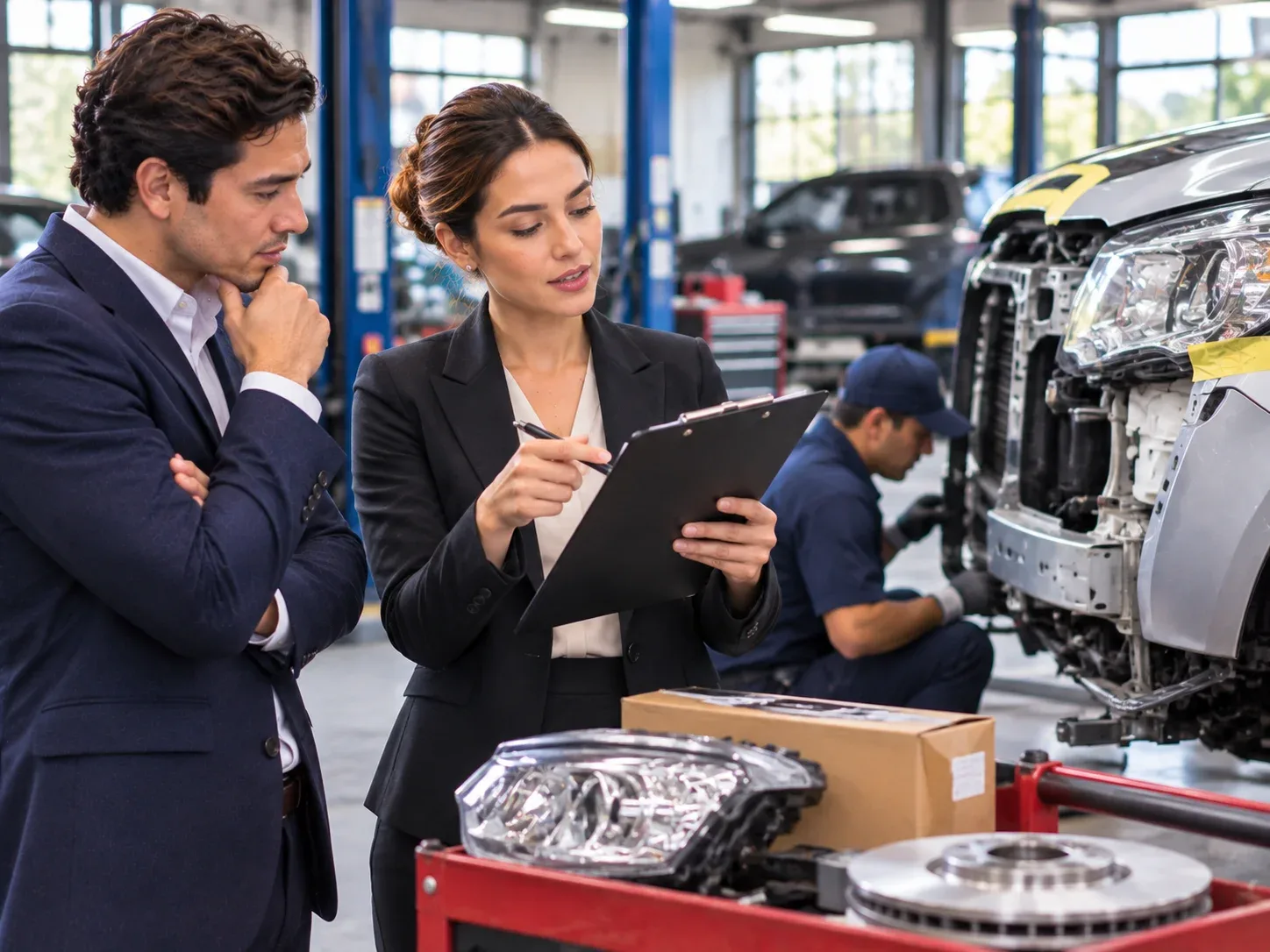
Collision repair in California follows a set path: a damage review, a written estimate, teardown, a supplement for any hidden damage, body and structural work, refinish, calibration when the car needs it, and a final check at pickup. You choose the shop, and the shop must give you a written estimate before work starts. Who pays depends on who caused the crash and what coverage applies.
If your car was just hit, you probably want to know where to take it, what the repair will cost and how long you will be without it. This guide explains the collision repair process the way California law and working body shops handle it.
Collision Assistant is a free service for California drivers. We connect drivers with a vetted, BAR-registered body shop and coordinate the property damage side of the claim while the car is in the shop. Our view comes from the repair side, where most delays start, so this guide focuses on the steps, rules and mistakes we see most often.
What happens during collision repair, step by step?
Collision repair in California usually moves through nine steps, from documenting the damage to a final check at pickup. Each step has its own paperwork that is worth keeping.
- Document the damage. Keep your photos, the police report number and every claim number. See photos and information to get at the scene.
- Choose a shop. Pick any shop with an active BAR registration. Check it on the DCA license search.
- Get the written estimate. The shop writes an itemized estimate, and the insurer may write its own.
- Approve the teardown. The shop removes damaged parts to see what is behind them.
- Handle supplements. Damage found at teardown is written up and sent to the paying insurer.
- Order parts and repair the structure. Body and frame work follows the maker's repair specifications.
- Refinish and reassemble. Painters refinish repaired panels and may blend paint into nearby panels.
- Scan and calibrate. Cars with cameras and radar may need sensor calibration. See ADAS calibration after a collision.
- Final check and pickup. Compare the invoice to the estimate and inspect the car before you leave.
Step 4 comes with its own paperwork. Before any teardown, the shop owes you a separate written teardown estimate under 16 CCR 3353(c), in the version operative July 1, 2025, and our guide to hidden damage after a car accident lists what that estimate must show.
Step 6 has a California standard, too. Under 16 CCR 3365, auto body and frame repairs, including sectioning, must follow the vehicle maker's service specifications or nationally accepted repair specifications, and corrosion protection must meet the maker's specifications.
Do you have to use the insurance company's body shop?
No. California Insurance Code 758.5 says no insurer may require that a car be repaired at a specific automotive repair dealer. The belief that you must use the insurer's shop is a myth we hear often, and it is false in California.
The shop choice also protects the repair budget. After you name your shop, Insurance Code 758.5 bars the insurer from limiting or discounting reasonable repair costs to what its own preferred shop would charge.
An insurer's suggested shop can still be a fine choice, as long as the decision is yours. Our guide on how to find a collision repair shop compares insurer-recommended and self-chosen shops and covers the inspection and distance rules.
What California rules protect you before the repair starts?
Three California rules protect you before the first bolt comes off: a written estimate, consent before extra charges, and the Auto Body Repair Consumer Bill of Rights. Under Business and Professions Code 9884.9, the shop must give you a written estimate for parts and labor and may not charge more unless you agree before the extra work is done.
A collision estimate in California also has a set format. Parts and labor appear on separate lines, and every crash part carries an OEM or non-OEM aftermarket label, which our estimate guide explains line by line.
California's Auto Body Repair Consumer Bill of Rights (10 CCR 2695.85) lists six rights. You may choose the shop, get an itemized estimate and detailed invoice, learn about towing, storage and rental coverage, know where to report fraud, and get an independent estimate from a registered shop. Insurers must hand out the Bill of Rights at application, when the policy is issued, or after a reported loss.
What drives collision repair costs?
Collision repair costs come from four main lines on the estimate: labor hours, parts, refinish and outside services such as calibration or towing. A hit near the frame, airbags or sensors usually adds operations that a dent in a door does not.
| Cost driver | What it means on the estimate | Why it changes the price |
|---|---|---|
| Labor | Hours for body, frame, mechanical and refinish work, times the shop's rate | Structural damage and access to hidden parts add hours |
| Parts | New OEM, non-OEM aftermarket, used or reconditioned parts | Part type changes price and must be disclosed in writing |
| Refinish and materials | Painting repaired panels and blending nearby panels | Color, finish type and blended panels add time and material |
| Scans and calibration | Pre- and post-repair scans and sensor calibration | Cars with cameras and radar may need this to restore safety features |
| Towing and storage | Tow bills and daily storage at a lot or shop | Storage grows every day a car sits before it is moved |
The insurer's estimate must allow repairs to accepted trade standards under 10 CCR 2695.8(f). If the shop's written estimate is higher, the insurer must pay the difference, name a shop that will do the work for its amount, or make itemized, reasonable adjustments. Our guides on how to read a collision repair estimate and OEM vs aftermarket parts go deeper.
Who pays for collision repair in California?
Who pays for collision repair depends on fault and coverage. When another driver caused the crash, that driver's property damage liability coverage usually pays, and when you use your own collision coverage, your insurer pays under your policy terms.
| Situation | Who usually pays | California rule |
|---|---|---|
| Other driver at fault and insured | Other driver's property damage liability coverage | Minimum $15,000 property damage limit for policies issued or renewed on or after January 1, 2025 (Vehicle Code 16056) |
| You use your own collision coverage | Your insurer, under your policy and deductible | Fair Claims Settlement Practices Regulations, 10 CCR 2695 |
| Uninsured at-fault driver, no collision coverage | Your uninsured motorist property damage coverage, if your policy has it | Up to the car's actual cash value or $3,500, whichever is less; the at-fault driver or plate must be identified (Insurance Code 11580.26) |
| Uninsured at-fault driver, with collision coverage | Your collision coverage; your uninsured motorist coverage may pay the collision deductible | Collision deductible waiver capped at $3,500 (Insurance Code 11580.26) |
| No claim filed | You pay the shop directly | Written estimate rules still apply (B&P 9884.9) |
The current liability minimums come from SB 1107, as listed on the California DMV insurance requirements page. The uninsured motorist property damage rules are in Insurance Code 11580.26, which also requires a report to your insurer within 10 business days.
If the repair cost is close to the car's value, read how California insurers decide a total loss. If the car is worth less after the repair, see our guide to a diminished value claim.
How long does collision repair take?
Collision repair time depends on the amount of damage, parts availability, insurer approvals and supplements. On a first-party claim, 10 CCR 2695.8(e)(4)(B) gives the insurer six business days after the notice of claim, or after a supplement request, to ask that the car be made available if it chooses to inspect.
Parts delays and supplements cause most of the waiting Collision Assistant sees in the repairs we track. Ask the shop for a target completion date in writing, and ask for a new date each time a supplement goes to the insurer.
No one can promise a repair date, because the insurer's review and parts supply are outside the shop's control. A car with structural or sensor damage has more steps, and each step adds time.
Rental coverage has limits, so share the shop's updated date with the paying insurer before the rental cutoff. Our guide to a rental car after an accident explains how extensions work.
What should you check when you pick up the car?
At pickup, check the paint in daylight, the gaps between panels, the lights, the doors, any warning lights and the invoice. The invoice should match the estimate and supplements you approved, and our post-repair inspection checklist walks through each item.
A problem that shows up weeks later still has a path. The shop gets the first chance to fix it, and the state's BAR Auto Body Inspection Program is the free backstop when it does not.
Common mistakes
The most common collision repair mistakes happen in the first few days, before the car is even in the shop. These five come straight from what drivers tell us when they first call.
- Picking the first shop online. Compare quality, reviews and BAR registration before you commit.
- Reading the first estimate as the final bill. More damage often turns up once panels come off, and the shop sends a supplement.
- Letting the rental run past the cutoff. Ask for an extension before the end date, backed by the shop's timeline.
- Leaving a non-drivable car on a tow lot. Each day on the lot adds storage charges to the claim.
- Signing a release too early. Do not accept a total loss value before you check the comparable cars.
Kevin B. from Modesto almost made the first mistake:
"I almost went with the first shop that popped up on Google. Glad I didn't, that one had some rough reviews I only saw because Collision Assistant had them side by side with two others. Went with a higher-rated one a few miles further out. Worth the extra drive."
Kevin B., Modesto
How Collision Assistant helps
Collision Assistant coordinates the repair side of a California property damage claim at no cost to drivers. Here is what we do:
- Set up your file with photos, the police report number, claim numbers and vehicle details.
- On request, recommend one shop from our vetted California network through our body shop recommendation service, after checking its active BAR registration.
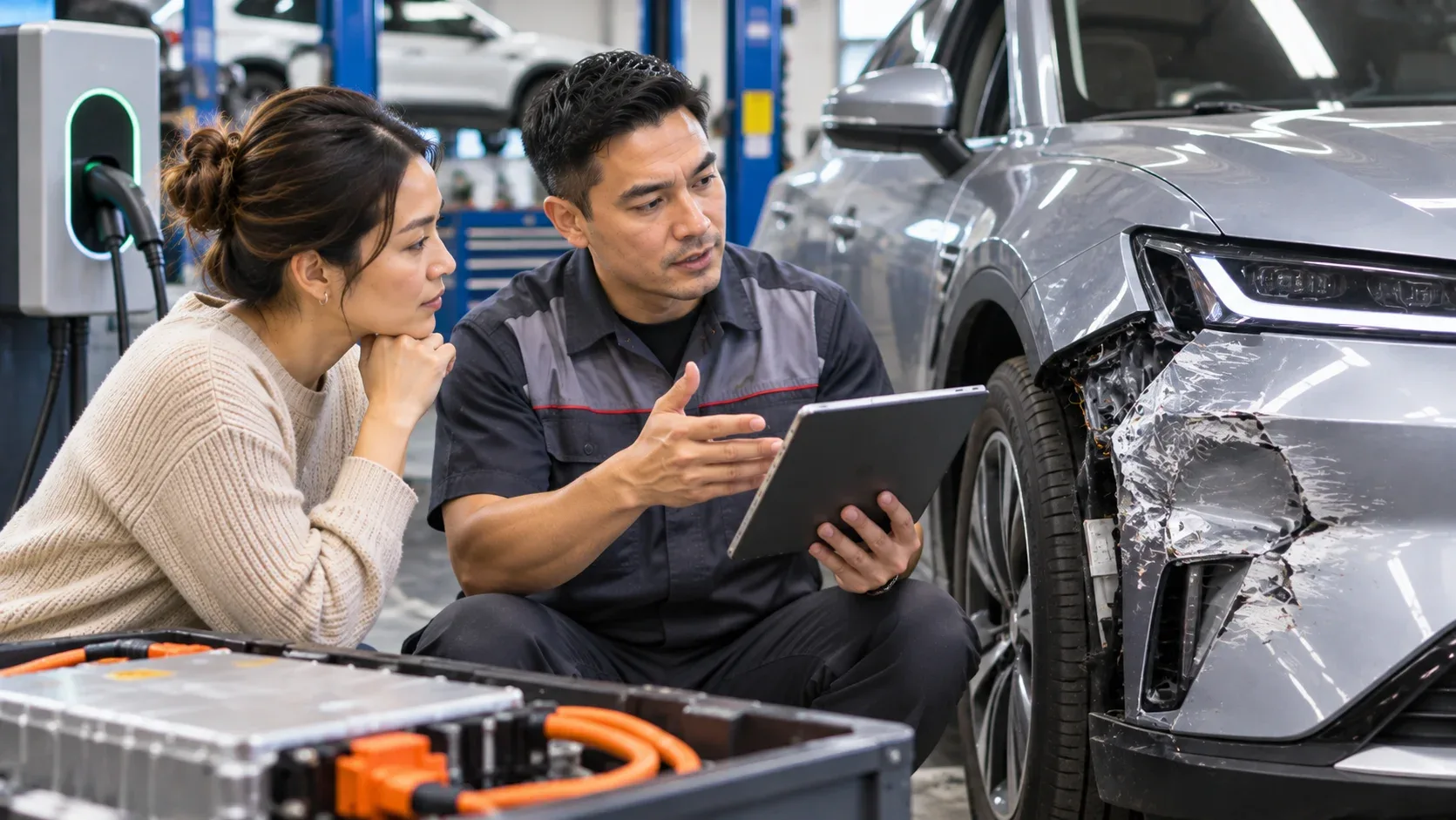
- Match the shop to your car's make and damage type, including aluminum, EV and driver-assist sensor repairs.
- Track supplements, parts delays and completion dates, and coordinate the rental with the paying carrier.
- Hold the whole repair record, from first photo to final invoice, under one case number with our property damage claim management service.
If you already picked a shop, we never steer you away from it. The insurer still decides coverage and payment.
Getting Your Car Into the Right Hands
The difference between a repair that goes smoothly and one that drags usually comes down to who's doing it. A shop that assesses thoroughly before touching anything, orders parts promptly, and documents its work properly saves you time, rental days, and the particular frustration of collecting a car that isn't quite right.
When you're ready, we'll help you find and connect with a vetted, verified California repair shop and request a repair quote, all for free. You keep the choice, you keep the paperwork, and your car goes to someone equipped to do the job properly. Reach out through our site whenever you're ready.