Is My Car a Total Loss? How California Insurers Decide
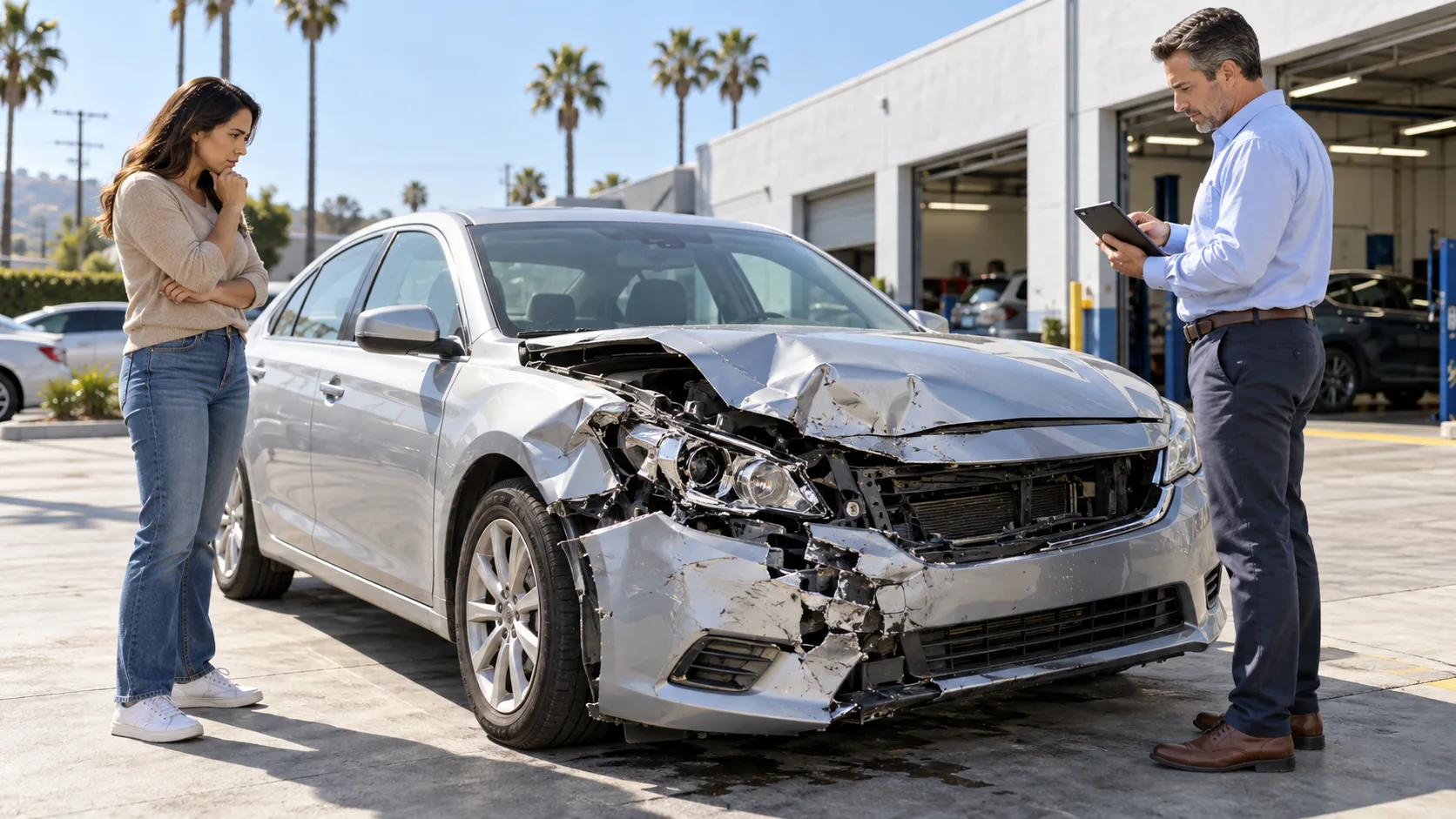
Your car is a total loss in California when the insurer, owner or lender decides it is uneconomical to repair, and the insurer then pays the value of a comparable car instead of fixing yours. California law does not set one percentage that makes a car totaled. What California does set are strict rules for how the insurer values the car, found in the Fair Claims Settlement Practices Regulations at 10 CCR 2695.8(b).
If you are asking "is my car a total loss," the answer that matters most is whether the valuation is right. Collision Assistant checks total loss valuations for California drivers as part of property damage claim coordination, and a gap we see often is a valuation report that was never checked against the comparable vehicle rules before the driver signed.
Is my car a total loss, and who decides?
The insurer paying the claim decides whether it will repair your car or pay it as a total loss. Vehicle Code 544 describes a total loss salvage vehicle as one damaged to the point that its owner, leasing company, financial institution or insurer considers it uneconomical to repair.
A common myth is that California has a fixed "70 percent rule" for totaling a car. Vehicle Code 544 uses "uneconomical to repair," not a percentage. Because the statute sets no percentage, ask the insurer which numbers it compared for your car, such as the repair estimate, the car's value and the salvage value.
Why the repair estimate drives the total loss decision
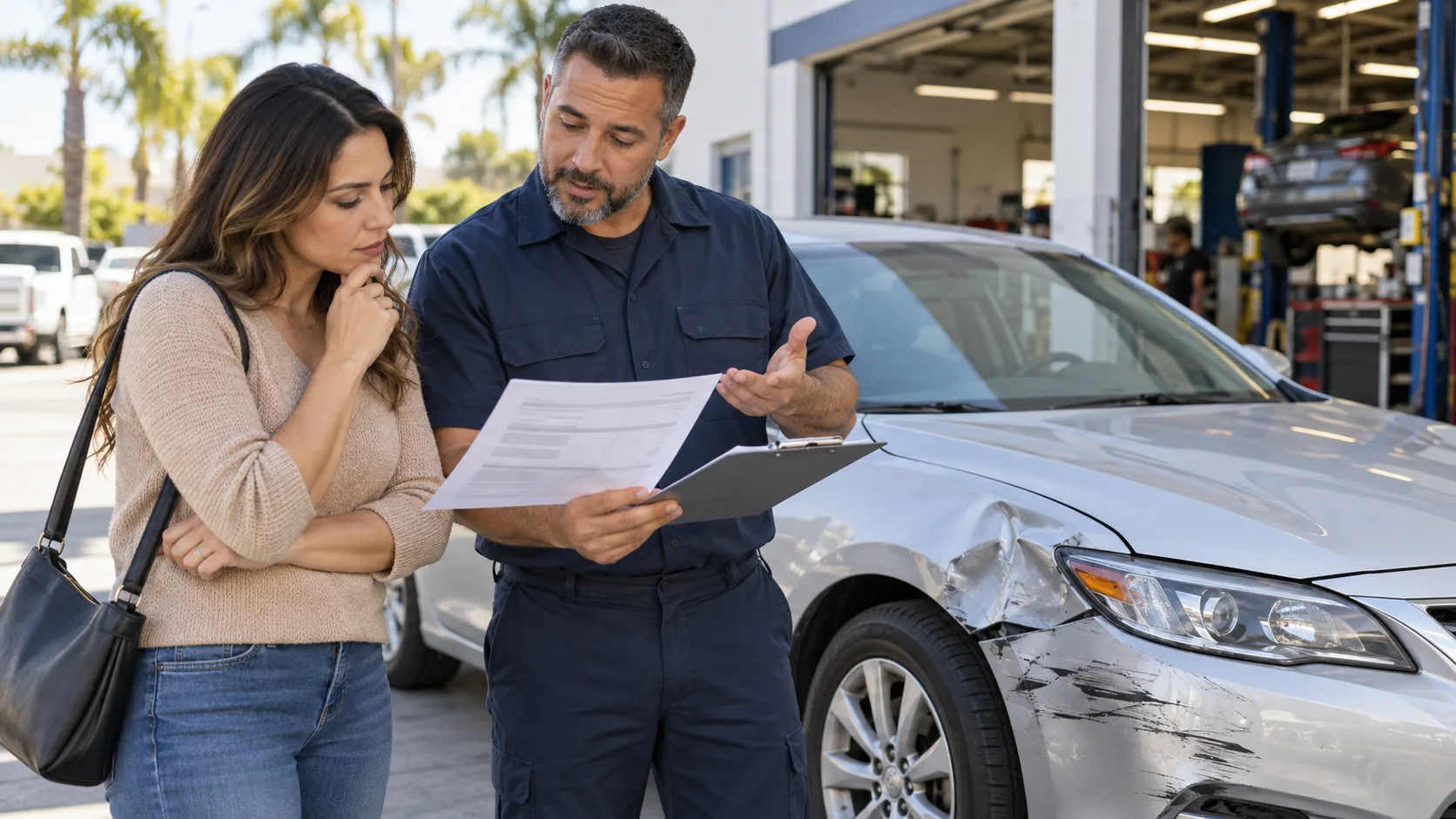
The repair estimate is one of the main numbers in a total loss decision, so an incomplete estimate can tip a borderline car either way. A low first estimate may keep a car on the repair path until hidden damage found at teardown pushes the cost past the insurer's line.
Supplements for hidden damage after a car accident are normal, and a car that starts as a repair can become a total loss mid-repair. Knowing how to read a collision repair estimate helps you see how close the repair cost is to the car's value.
How do California insurers value a totaled car?
California insurers value a totaled car by the actual cost of a "comparable automobile," less your policy deductible, under 10 CCR 2695.8(b)(1). A comparable automobile must be of like kind and quality, made by the same manufacturer, the same or newer model year, and available for retail sale in your local market area within 90 calendar days of the final settlement offer.
The regulation gives insurers three main ways to set the value. Each one must be fully itemized and explained in writing with the offer.
| Valuation method under 10 CCR 2695.8(b)(4) | What it uses | What to check |
|---|---|---|
| Comparable vehicles | The average cost of two or more comparable cars available in the local market area in the last 90 days | Same make, same or newer model year, similar trim, options and mileage |
| Dealer quotes | The average of two or more quotations from licensed dealers in the local market area | That the quotes are from licensed dealers near you |
| Computerized valuation service | A service producing statistically valid fair market values in the local market area | That the report is itemized and each adjustment is explained |
How comparables must be identified
Each comparable vehicle in a California total loss valuation must be identifiable. Under 10 CCR 2695.8(b)(2), comparables are identified by VIN, dealer stock or order number, or license plate, together with the seller's phone number or street address. A listing you cannot trace to a real car for sale is a reason to ask questions.
Example: a hypothetical valuation for a top-trim SUV lists three comparables, but two are base trims from another region. Those two do not match on kind and quality or local market, so they are worth raising with the adjuster in writing.
Which deductions are allowed?
Condition deductions in a California total loss are limited. Under 10 CCR 2695.8(b)(2), any adjustment from the cost of a comparable must be "discernible, measurable, itemized, and specified" in the claim file, and condition adjustments are allowed only for documented below-average condition.
A flat "condition" deduction with no itemized reason does not meet that standard. Recent repair receipts, new tires, maintenance records and pre-accident photos help show your car's actual condition.
What must a total loss settlement include in California?
A California total loss cash settlement must include more than the car's price. Under 10 CCR 2695.8(b)(1), the settlement must include all applicable taxes and one-time fees incident to transferring ownership of a comparable car, plus the license fee and other annual fees for the remaining term of your current registration. The regulation says this applies whether or not you buy a replacement car.
Look for separate line items for the vehicle value, taxes, transfer fees, registration fees and your deductible.
What if you want to keep your totaled car?
You can keep a totaled car in California, but the settlement changes. Under 10 CCR 2695.8(b)(1)(A), the insurer may deduct the car's salvage value, set by what a salvage pool, licensed salvage dealer, wholesale auction or dismantler will pay. If you ask, the insurer must give you the name, address and phone number of that buyer.
The insurer must also tell you in writing that DMV must be notified, that keeping the car may affect its future resale and insured value, and that you may seek a refund of unused license fees from DMV. Under Vehicle Code 11515, you have 10 days from settlement to send DMV the endorsed title, the license plates and a $15 fee, and DMV then issues a salvage certificate.
What if you disagree with the total loss value?
If you disagree with a California total loss value, start by asking for the full valuation report in writing. Insurers may not try to settle with an unreasonably low offer under 10 CCR 2695.7(g), and each comparable and adjustment must be documented.
The 35-day rule is a step many total loss guides skip. Under 10 CCR 2695.8(c), if you tell the insurer within 35 calendar days of the payment or final offer that you cannot find a comparable car for that amount, the insurer must reopen the file. It must then find a comparable car, pay the difference, or use the appraisal clause in your policy.
For first-party disputes on your own policy, the California Department of Insurance runs a free Automobile Claims Mediation Program for physical damage claims over $7,500 where more than $2,000 is in dispute. It does not cover third-party liability claims. Our guide to a lowball insurance offer covers more ways to respond.
Total loss checklist: what to do before you accept
Use this checklist before you sign a total loss settlement or a release.
- Ask for the full valuation report and the list of comparables in writing.
- Check that each comparable is the same make, the same or newer model year, and similar in trim, options and mileage.
- Check that each comparable is identified by VIN, stock number or plate, plus the seller's phone or address.
- Look for a written, itemized reason behind every condition deduction.
- Confirm the offer adds taxes, transfer fees and the unused registration fees, and subtracts only your deductible.
- Gather receipts, maintenance records and pre-accident photos that show your car's condition and options.
- Search your local market for comparable cars; if none are available at the offered price, notify the insurer in writing within 35 calendar days.
- Ask when your rental ends and when storage charges stop, so you are not paying for days after the offer.
Common mistakes after a total loss
- Accepting the valuation before checking the comparables. Signing a release first makes it harder to raise a mistake later.
- Believing the 70 percent myth. Vehicle Code 544 uses "uneconomical to repair," so ask the insurer how it reached its decision for your car.
- Not checking for taxes and fees. 10 CCR 2695.8(b)(1) requires applicable taxes, transfer fees and unused registration fees in the cash settlement.
- Missing the 35-day window. The reopen right under 10 CCR 2695.8(c) depends on telling the insurer within 35 calendar days.
- Leaving the car at a tow yard. Storage charges keep building. Under 10 CCR 2695.8(k), insurers must give reasonable notice before they stop paying storage.
- Losing track of the rental. Many rentals end soon after a total loss offer. Our guide on a rental car after an accident explains the cutoff.
How Collision Assistant helps
Collision Assistant checks total loss files from the repair side, where the estimate that triggered the total loss was written. Through our property damage claim management, we:
- Check the valuation report against California's total loss rules, including identified comparables and supportable, itemized adjustments.
- Flag missing taxes, transfer fees or registration fees so you can raise them with the insurer.
- Gather the repair estimate, supplements, photos and receipts into one file under one case number.
- Coordinate towing so a non-drivable car does not sit at a tow yard, and confirm the rental end date with the paying carrier.
- If the insurer decides the car is repairable after all, recommend a shop on request through our free body shop recommendation, after confirming its Bureau of Automotive Repair registration is active.
When a car stays on the repair path, shop placement is the next step. One parent set it up from two hours away:
"My daughter's car got hit while it was parked and I was handling it from two hours away. Being able to find a trustworthy shop near her, check it out, and set it up without driving down there myself saved me a whole day off work."
Lorena M., Bakersfield
The service is free for drivers. The insurer decides the value and payment; Collision Assistant documents, coordinates and follows up.
Finding Out Where Your Car Actually Stands
Uncertainty is the worst part of is my car a total loss, and it usually lasts longer than it needs to. The decision comes down to three figures, and the one you have any influence over is the repair estimate, simply by making sure it reflects everything genuinely wrong with the car.
When you're ready to get that number, we'll help you find and connect with a vetted, verified California repair shop and request a repair quote, all for free. If the car is repairable, you'll be in good hands. If it isn't, at least you'll know for certain instead of wondering. Reach out through our site whenever you're ready.