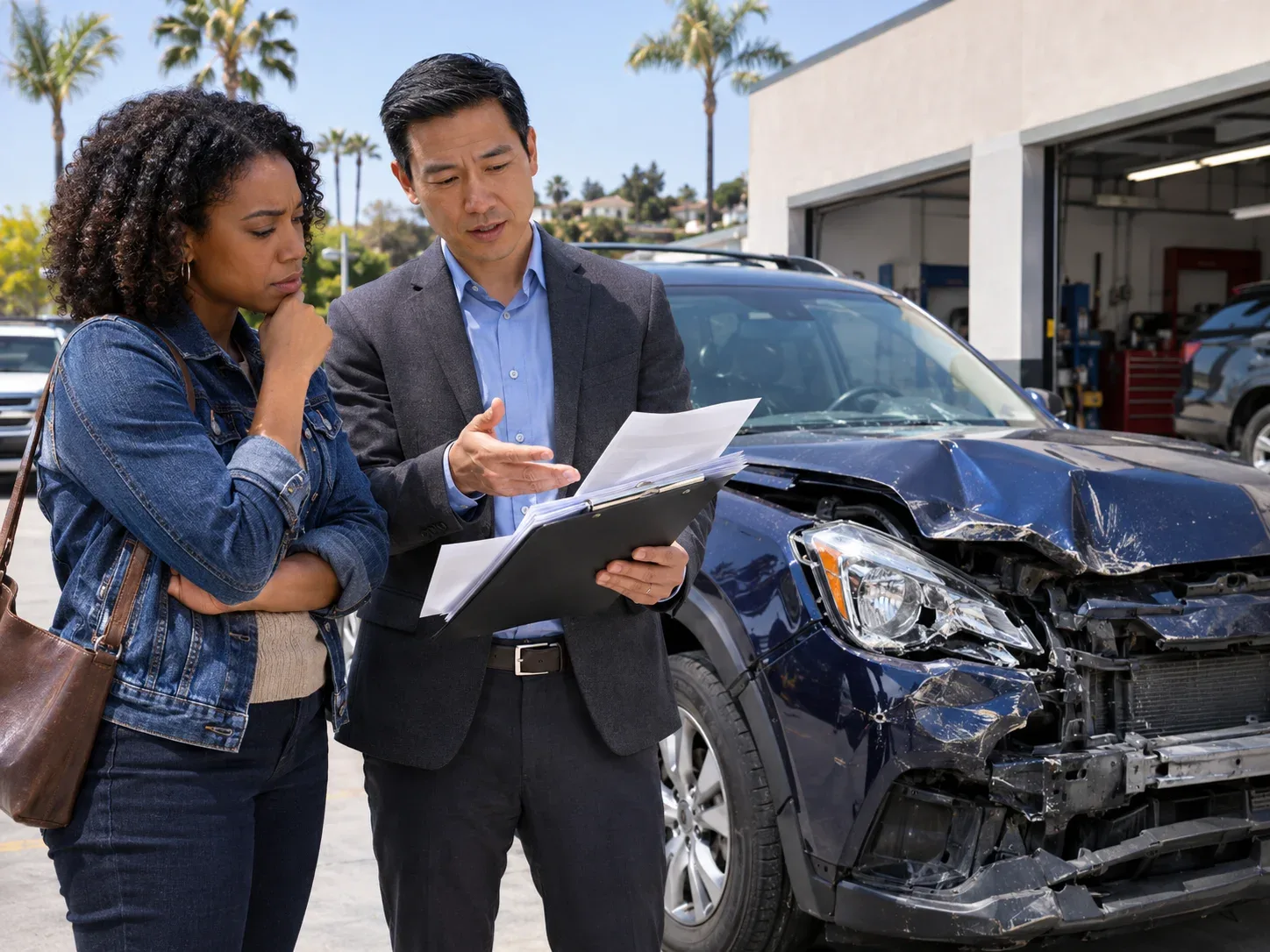
Car Accident Photos and Info to Get at the Scene
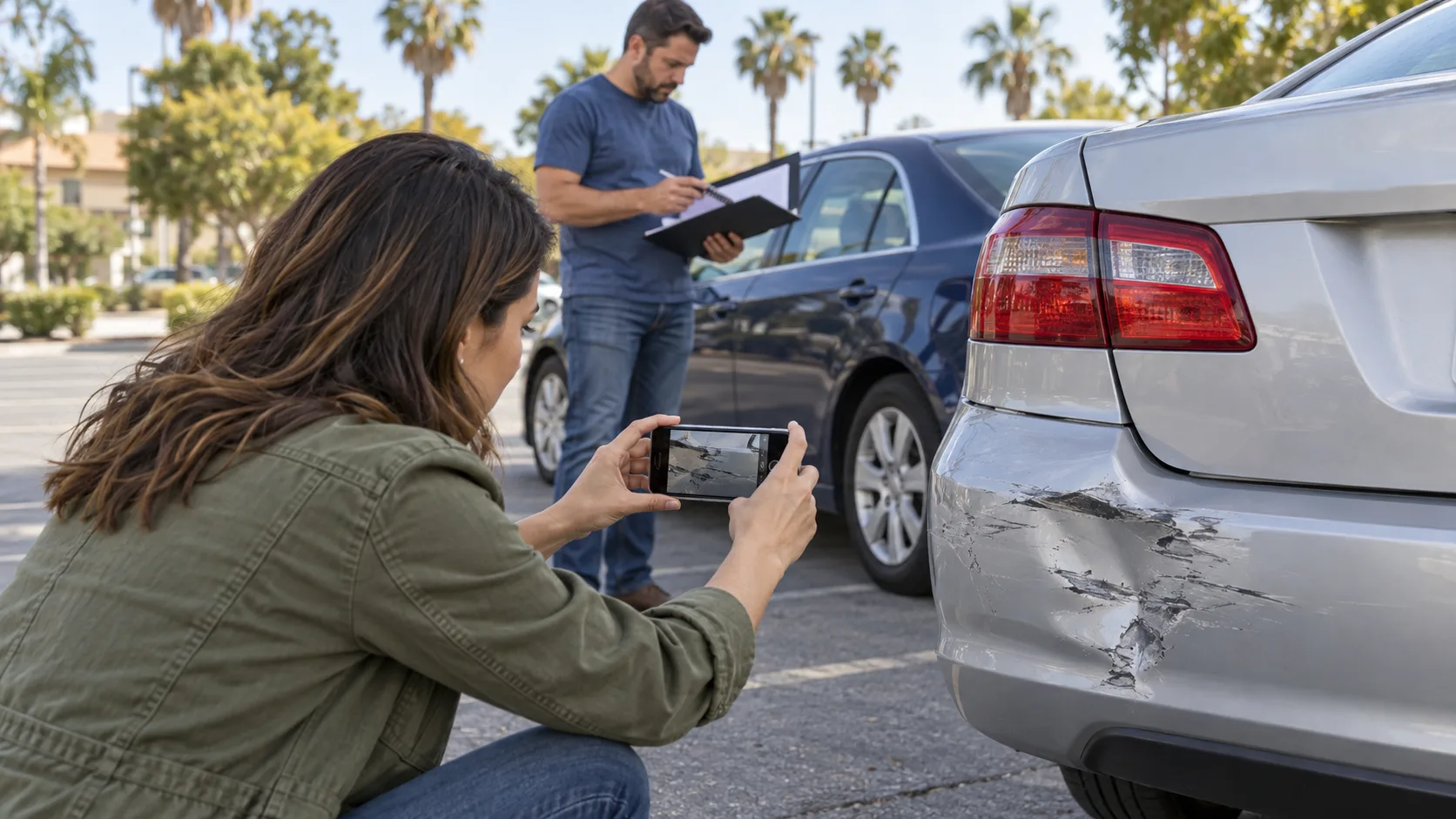
The car accident photos and info to get at the scene are the ones an insurer, a repair shop or a total loss reviewer will ask for later: wide shots of where the cars ended up, close-ups of all damage, the other car's license plate, the other driver's license and insurance card, the dashboard, and the road conditions. Take them only when it is safe, and before anything is moved or towed.
This guide is for California drivers who want to know exactly which photos to take and why each one matters for the property damage claim. Collision Assistant works on the vehicle side of the claim: repair estimates, supplements, total loss reviews and diminished value estimates. We see which scene photos those steps lean on, and which missing photos slow them down.
Most photo guides stop at "prove who was at fault." Your scene photos also do a second job: they show what the car looked like before a tow truck, a tow yard or a teardown touched it. That record is what supports a supplement for hidden damage, a fair total loss value, and a diminished value estimate months later.
Why do car accident photos matter for the property damage claim?
Car accident photos matter because the scene disappears fast. Within an hour, the cars are moved, the debris is swept, and your car may be at a tow yard. Photos are often the only record of where the cars stopped, what the damage looked like, and what the car's condition was before anyone else handled it.
Insurers decide the property damage claim from records. Under 10 CCR 2695.7, an insurer must accept or deny a claim within 40 calendar days after receiving proof of claim. Clear photos are part of that proof, and when Collision Assistant opens a case, scene photos are the first thing we ask for at intake.
What photos should you take at the scene?
Take photos in three passes: the scene, the damage, and the details. Each pass answers a different question the claim will ask later. The table below lists each shot and how it is used.
| Photo | How to take it | How it is used later |
|---|---|---|
| Wide scene shots | From 20 to 30 feet away, from two or three directions, showing both cars | Shows where the cars came to rest for the fault decision |
| Traffic signs, signals and lane lines | One shot each, from the direction you were driving | Shows who had the right of way |
| Skid marks and debris | Wide, then close | Helps show the point of impact |
| All four corners of your car | Each corner at an angle, so two sides show in each shot | Shows the car's overall condition before the crash, for total loss and diminished value |
| Close-ups of all damage | Straight on and at an angle, with a hand or key for scale | Supports the repair estimate and later supplements |
| Damage near sensors and wheels | Bumper sensors, cameras, mirrors, wheels and tires | Supports calibration, suspension and alignment items on the estimate |
| Other car's damage and license plate | Plate readable; damage from two angles | Matches the other car to its insurer and shows impact points |
| Dashboard and odometer | With the car on, showing mileage and any warning lights | Mileage is used in valuation; warning lights point to hidden damage |
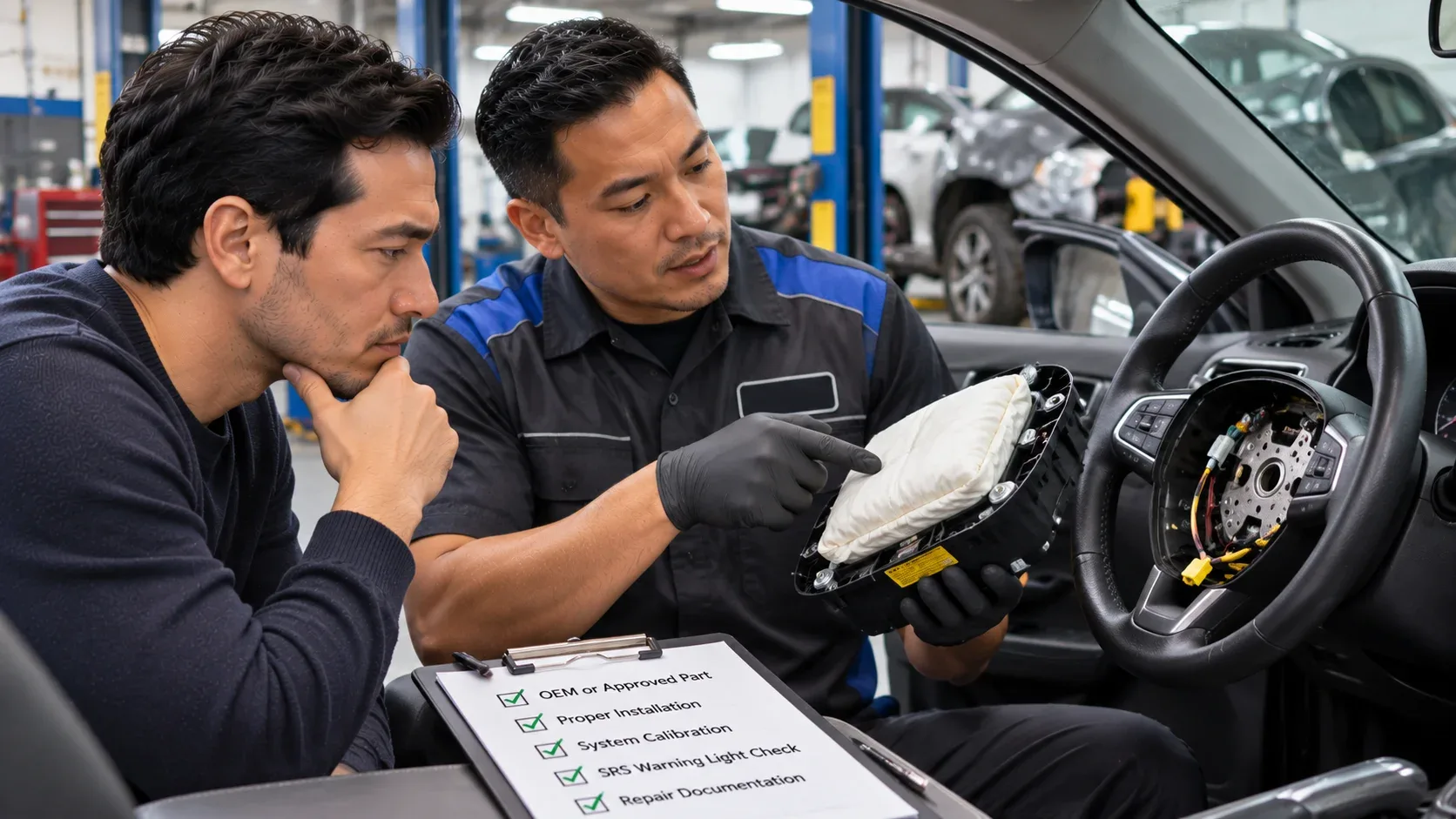
| Interior | Seats, dash and airbag areas | Shows interior condition and any airbag deployment |
| Weather and light | One wide shot of the sky and road surface | Records rain, glare or darkness at the time |
Shots that show who had the right of way
Fault shots tie the damage to the road. Take a photo from where you were driving toward the intersection or lane, showing the signal or sign you saw. Then photograph lane lines, crosswalks, skid marks and the debris field, because debris can help show where the cars made contact.
California follows pure comparative negligence, so fault can be shared and a driver's damages are reduced by their own share of fault. Clear scene photos help keep the fault decision tied to what happened, not to two drivers' memories. For more, see our guide to a not-at-fault accident.
Shots that support the repair estimate
Repair shots should show every damaged panel, light, sensor and wheel, not only the obvious dent. Contrary to a common myth, the first estimate is often not the final price, because bumper covers can hide cracked brackets, sensors and reinforcement bars. When a shop finds that damage at teardown, it sends a supplement to the insurer, and a scene photo showing the area right after impact helps the shop explain why the part was damaged in this crash.
Photograph wheels and tires on the side of impact. A bent wheel or a tire pushed off its seat can point to suspension damage. Our guides on hidden damage after a car accident and ADAS calibration after a collision explain what shops look for next.
Shots that protect your car's value
Value shots show the car's condition apart from the crash damage: the undamaged sides, the interior, the tires and the odometer. These photos matter most if the car turns out to be a total loss. Under 10 CCR 2695.8, condition adjustments to a total loss value are allowed only for documented below-average condition and must be "discernible, measurable, itemized, and specified" in the claim file.
Example: A car is declared a total loss, and the valuation report takes a condition deduction for interior wear. The owner's scene photos show a clean interior, which gives the owner something specific to send back when questioning the deduction (this scenario is hypothetical).
Your own photos of a clean interior and good tires are evidence of the car's condition. See how California insurers decide a total loss, and our guide to a diminished value claim if the car is repaired but worth less.
What information should you get at the scene?
Get the details California law requires, plus a few your claim will need. Vehicle Code 16025 covers identity, license, vehicle, owner and insurance details, and the list below adds the items that keep a property damage claim moving.
Ask the other driver if you may photograph their license, registration and insurance card. A photo avoids copying errors, such as one wrong digit in a policy number. If they say no, write the details down by hand.
- Other driver's name, address, phone and driver's license number.
- Registered owner's name and address, if different from the driver.
- Insurance company, policy number and the insurer's phone number.
- Make, model, color, license plate and VIN of the other car.
- Names and phone numbers of witnesses.
- The officer's name, agency and report number, if police came.
- The tow company, the driver's phone number and the yard address.
The police report number is easy to forget in the moment. If police respond, ask for it before you leave. You can later request a CHP crash report on form CHP 190, and our guide on the car accident police report explains when you need one.
How to take car accident photos that hold up later
Good accident photos are clear, complete and unedited. Follow these steps to take photos that a shop or adjuster can use:
- Make sure you are out of traffic and no one needs help before you take any photos.
- Turn on location and time stamps in your phone's camera settings if they are off.
- Start with wide shots from two or three directions, then move closer.
- Photograph each damaged area straight on, then at an angle, so light shows the shape of dents.
- Put a key, hand or shoe next to small damage for scale.
- Take a short video walking around both cars, narrating what you see.
- Do not edit, crop or filter the originals; make copies if you want to mark them up.
- Back up the photos to cloud storage or email them to yourself the same day.
What if you cannot take photos at the scene?
If you cannot take photos at the scene, because you were hurt or the scene was not safe, your health comes first, so get checked by a doctor. MedlinePlus says whiplash pain may take hours to weeks to develop, and the CDC says some concussion symptoms may not appear for hours or days (this is not medical advice).
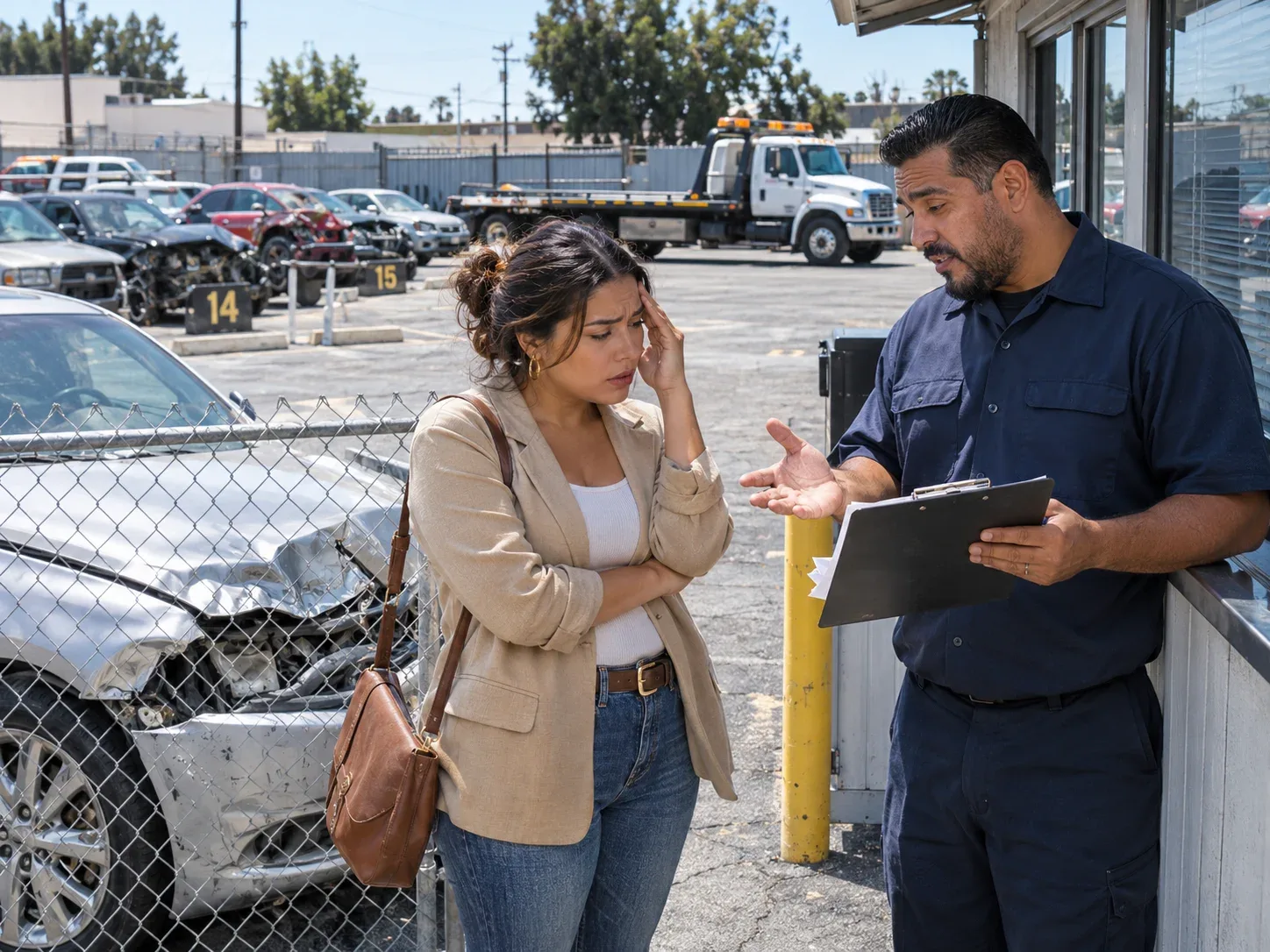
Photos can still be taken later: ask a passenger or family member to photograph the car at the tow yard as soon as possible, before it is moved again. The police report, the tow yard's intake record and the shop's teardown photos fill in the rest. Our guide on delayed injury after a car accident covers the health side.
Common mistakes with car accident photos
The most common photo mistakes leave gaps that show up later in the estimate or the valuation. Watch for these:
- Taking close-ups only, with no wide shot showing where the cars stopped.
- Skipping the undamaged sides and interior, which leaves no record of the car's condition.
- Missing the other car's license plate.
- Not photographing the dashboard while warning lights are on.
- Deleting "bad" photos that turn out to show something useful.
- Posting crash photos on social media before the claim is settled.
For errors beyond photos, see car accident mistakes to avoid.
How Collision Assistant helps
Collision Assistant puts your scene photos to work on the vehicle side of the claim. With our property damage claim management, your photos go into one file under one case number, next to the estimates, supplements, invoices and insurer letters. Good photos also let a repair get set up from a distance, as one parent found:
"My daughter's car got hit while it was parked and I was handling it from two hours away. Being able to find a trustworthy shop near her, check it out, and set it up without driving down there myself saved me a whole day off work."
Lorena M., Bakersfield
Here is where your photos go once we have them:
- At intake, we collect your photos, police report number, claim numbers and vehicle details.
- We share your damage photos with the shop when we start the written estimate, through our free body shop recommendation.
- When teardown finds hidden damage, we track the supplement the shop sends to the insurer.
- If the car is a total loss, we check the valuation report against California's comparable vehicle rules, and your condition photos are part of that review.
- On third-party claims, we prepare a diminished value estimate from the repair record.
From Phone Camera to Fixed Car
When the dust settles, the pictures on your phone are one of the most useful things you walked away with. A solid set of car accident photos protects your version of events, smooths out the claim, and gives whoever repairs your car a real head start. Take them carefully, keep the originals, keep them offline, and you've done your part.
When you're ready to deal with the car itself, we'll help you find and connect with a vetted, verified California repair shop and request a repair quote, all for free. Bring your photos, and we'll help you turn them into a plan to get your car back to the way it was. Reach out through our site whenever you're ready.