What Happens When Car Accident Damage Exceeds Insurance Limits in California?
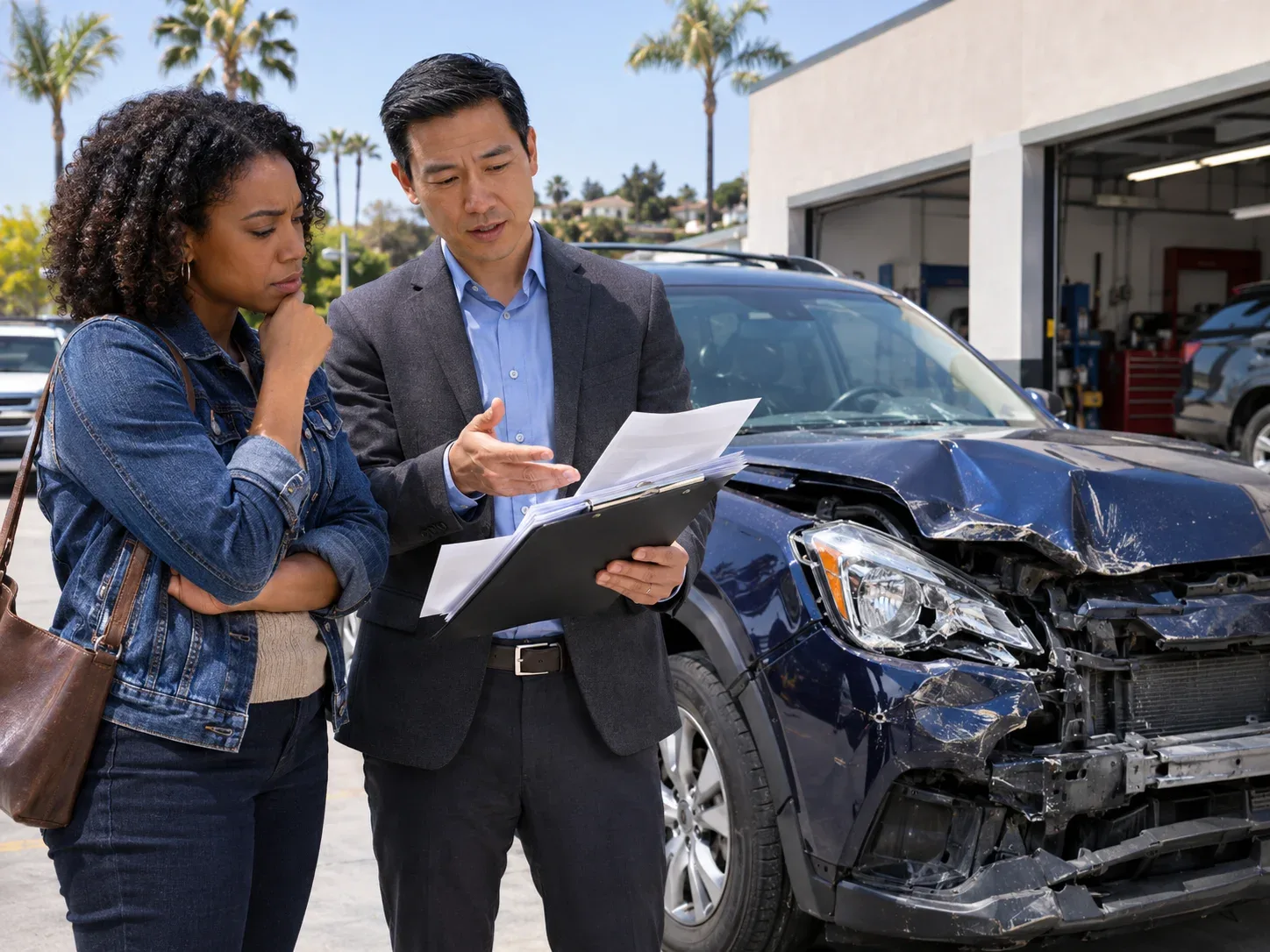
When car accident damage exceeds insurance limits in California, the responsible driver's insurer may not cover the entire loss. You may have an option to use your own collision coverage or pursue the remaining damage from a legally responsible party. The best next step depends on your coverage, the available liability limit and other claims against it.
An insurer may accept that its policyholder caused the crash and still explain that there isn't enough coverage to pay your repair bill. Those are two different issues. At Collision Assistant, we help California drivers organize the vehicle repair and property damage claim process so they can make informed decisions about the next step.
What Does It Mean When Car Accident Damage Exceeds Insurance Limits?
A property damage liability limit is the maximum amount of coverage available under that part of a policy for an accident. If the amount of legally recoverable property damage is higher than the available limit, an insurance shortfall exists.
The difference between a coverage shortfall and a disputed repair estimate matters. An insurer might agree with every repair operation but have insufficient property damage coverage. Alternatively, the insurer may have enough coverage but disagree with the repair cost.
|
Problem |
What to Confirm |
|
Policy limit is insufficient |
The applicable limit, competing claims and the amount available to you. |
|
Repair cost is disputed |
Which repair operations or charges the insurer has not accepted. |
|
Liability remains under investigation |
Whether the insurer has accepted responsibility for the damage. |
|
Payment has not arrived |
Whether the amount is approved and when payment will be issued. |
If the insurer disputes the amount required for repairs, compare its estimate with the shop's itemized collision repair estimate. A higher estimate alone does not establish that the policy limit has been reached.
How Much Property Damage Liability Coverage Is Required in California?
California requires standard automobile liability policies to provide at least $15,000 for property damage per accident under the higher limits introduced in 2025. Drivers may purchase more coverage, so the legal minimum does not establish the actual limit of the policy involved in your crash.
The California Department of Insurance's 2025 consumer alert explains the transition as policies renewed starting January 1, 2025. The state also has a separate California Low Cost Automobile Insurance program for eligible drivers, with a $3,000 property damage limit.
Property damage liability covers damage caused to others' property, rather than the insured driver's own car. Injury liability limits are separate. Consult the insurer about the coverage applicable to the accident date.
How Do Multiple Vehicle Claims Affect the Amount You Receive?
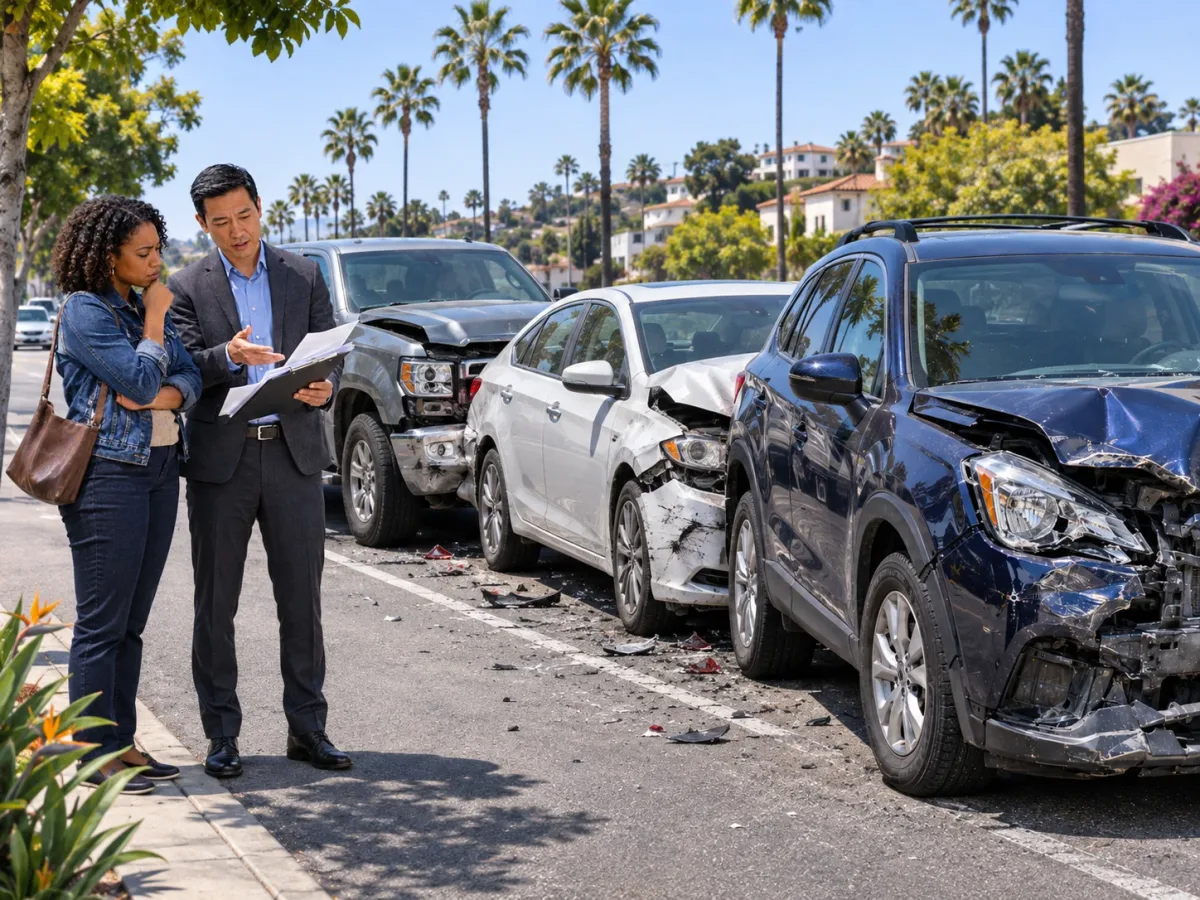
Property damage liability coverage is shared across covered property damage from the same accident, not multiplied by the number of damaged vehicles. A driver whose car needs $9,000 in repairs may face a shortfall even if the applicable property damage limit is $15,000.
Consider a hypothetical collision involving two other vehicles and a damaged fence. Assume the responsible driver's applicable property damage coverage is $15,000 and the following losses are accepted.
|
Accepted Property Damage |
Illustrative Amount |
|
Vehicle A repairs |
$9,000 |
|
Vehicle B repairs |
$10,000 |
|
Fence restoration |
$1,000 |
|
Combined property damage |
$20,000 |
|
Available liability limit |
$15,000 |
|
Combined shortfall |
$5,000 |
The combined shortfall is $5,000. That does not mean you can automatically calculate how much each vehicle owner will receive. The final distribution depends on the claims, applicable law and settlement arrangements.
Ask the adjuster whether other property claims are still being evaluated and whether the proposed amount for your car is confirmed or preliminary. Avoid authorizing repairs based solely on the total policy limit.
Can Your Own Insurance Cover the Remaining Vehicle Damage?
Your own collision coverage may pay eligible accident-related vehicle damage, even if the other driver's liability insurance is inadequate. Ask your insurer whether you can open a collision claim instead of waiting for competing third-party claims to be resolved.
|
Coverage or Option |
What It May Cover |
Limitation |
|
Your collision coverage |
Covered repair or total loss of your vehicle. |
Deductible, policy terms and valuation apply. |
|
Uninsured motorist property damage |
Eligible vehicle damage caused by an uninsured driver. |
Not automatically available when an insured driver simply has insufficient limits. |
|
Underinsured motorist coverage |
Eligible bodily injury losses. |
Not a general vehicle repair benefit in California. |
|
Other applicable liability coverage |
Potential coverage from another responsible party or additional policy. |
Must be verified for the accident. |
The California Department of Insurance auto insurance guide, updated February 2025, distinguishes collision coverage from uninsured motorist property damage and underinsured motorist bodily injury coverage.
How Does the Deductible Work?
Suppose your covered repair costs $19,000, your collision deductible is $1,000, and the other driver's property damage limit is $15,000. Assuming your insurer accepts the full repair cost under your policy, a collision claim could pay $18,000 before any deductible recovery.
That is a simplified example, not a prediction of the claim outcome. Coordinate with your insurer before taking money directly from another insurer. Do not assume you can collect both payments for the same damage or automatically recover your full deductible.
Through a process called subrogation, your insurer may seek reimbursement from the party responsible for the damage. The California Department of Insurance's accident guide explains that an insurer pursuing subrogation must include your deductible, subject to the circumstances of its recovery. A partial recovery may result in only partial deductible reimbursement.
What Should You Do Before Accepting a Policy-Limit Settlement?
When car accident damage exceeds insurance limits, confirm whether an offer settles the property damage claim in full and whether accepting it affects other recovery options. A payment offer and the terms attached to accepting it deserve separate attention.
Before signing a release, ask for written clarification of the following:
-
Is the proposed amount the entire applicable limit or a share of the available coverage?
-
Which property losses does the payment address?
-
Are additional repair costs excluded or still under review?
-
Does the release affect your own insurer's recovery rights or any other claims?
Discuss the offer with your own insurer if you have opened or intend to open a collision claim. A licensed California attorney can explain the effect of a release on your particular rights. Collision Assistant can help organize repair records and insurer correspondence, but we do not negotiate or accept settlements.
How Can You Keep Repair Costs From Becoming an Unexpected Bill?
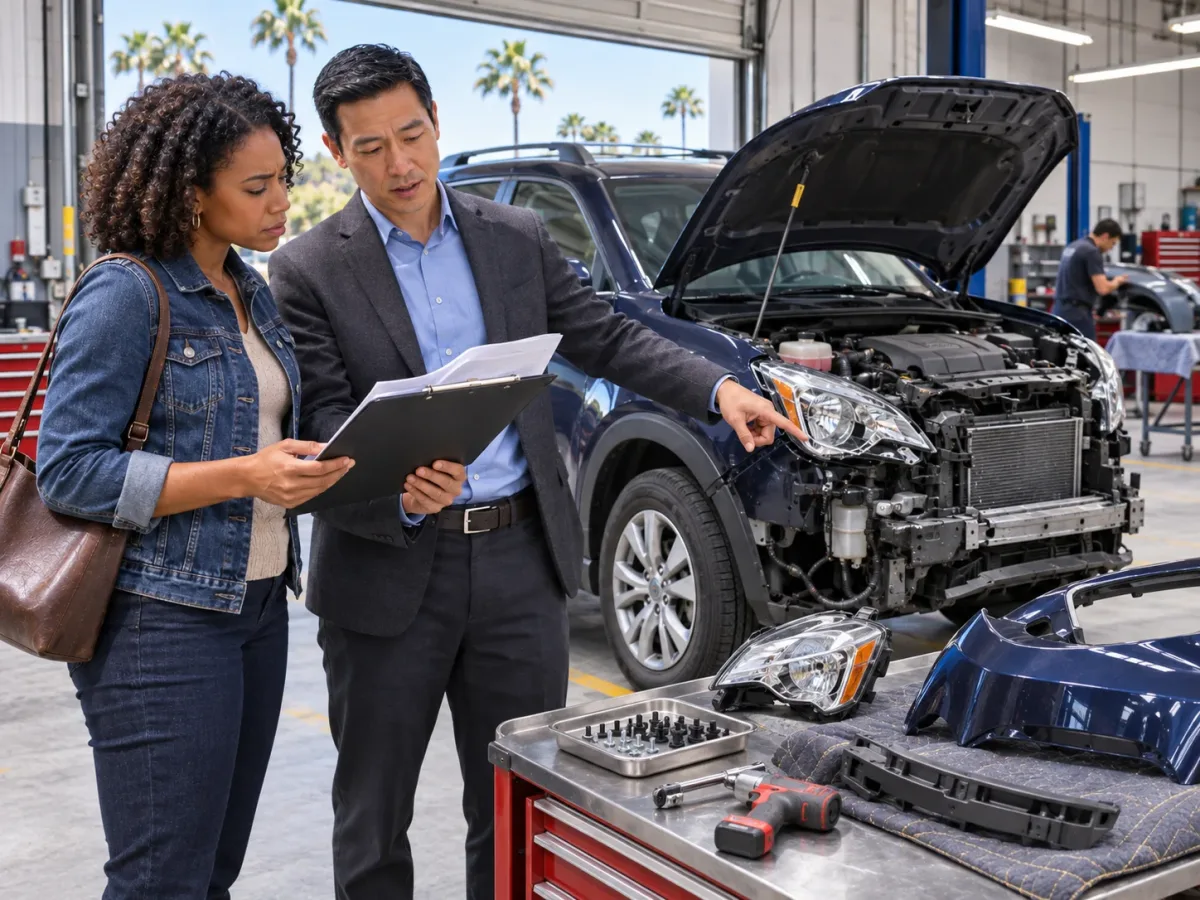
Confirm who has agreed to pay each portion of the repair before authorizing work. A body shop's estimate describes the cost of repairing the vehicle, but it does not establish insurance coverage.
-
Get a complete written estimate from the repair shop and ask which items may change after teardown.
-
Request an explanation of the accepted damage amount and the available payment from the insurer.
-
Review alternative coverage with your own insurer before committing to work.
-
Ask the shop what you will owe if insurance cannot pay the full amount, including any authorized teardown or other charges.
-
Obtain a revised written estimate when new damage is discovered and confirm how additional costs will be handled before authorizing them.
The California Bureau of Automotive Repair's documentation guidance explains that shops need customer authorization before beginning additional repairs or incurring additional charges beyond the approved estimate. A limited insurance budget does not change the procedures needed for a proper repair.
For the repair stages and consumer rights involved, read our California collision repair guide. Ask a qualified repair professional about safety-related work and any manufacturer-specific requirements.
What If the Other Driver Cannot Pay the Remaining Amount?
Insufficient insurance does not necessarily eliminate a responsible person's liability for the damage. However, legal responsibility and the ability to collect money are distinct questions.
Keep your estimates, invoices, insurer letters and payment history. If there is an unresolved balance, a California attorney can assess potential recovery options, applicable time limits and the effects of any settlement already signed. The San Mateo County Superior Court's small claims guide also discusses vehicle property damage claims.
If you were the driver responsible for the crash and have insufficient liability limits, contact your insurer promptly about any demands you receive. Ask whether any additional applicable liability policy exists and seek legal advice about potential personal exposure.
Understand Your Available Coverage Before Proceeding With Repairs
If car accident damage exceeds insurance limits, start by separating the actual repair cost from the amount available to pay it. Get those figures in writing and clarify your options before agreeing to a settlement or additional repair work.
Collision Assistant provides property damage claim coordination in California at no charge to drivers. We help organize estimates, supplements and repair updates while you retain your shop choice. Repair bills and outside expenses remain separate. Your insurer determines coverage and payment.
This article provides general information and is not personalized legal, financial or insurance advice.