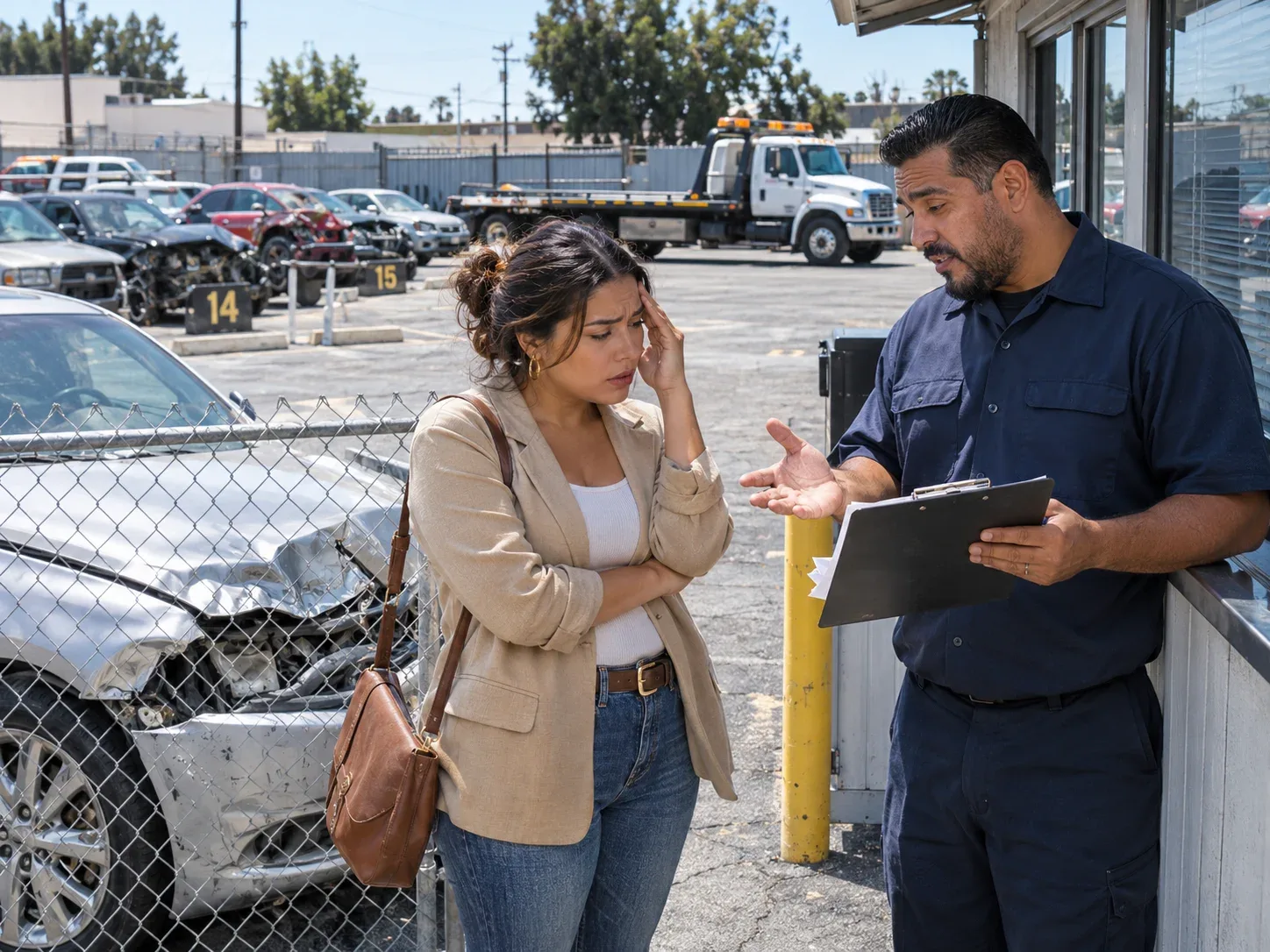
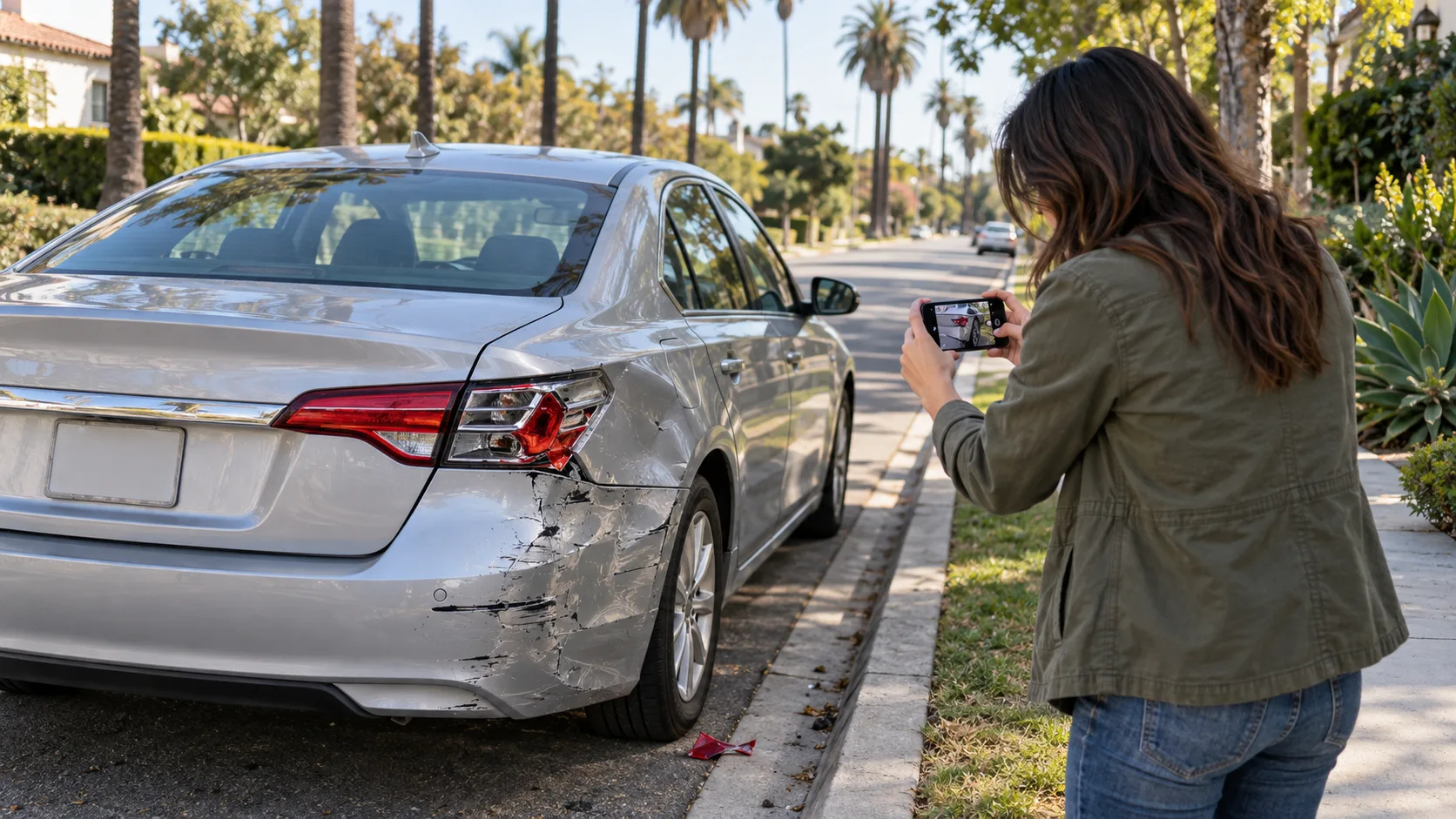
Airbag Replacement After an Accident and What Owners Should Verify
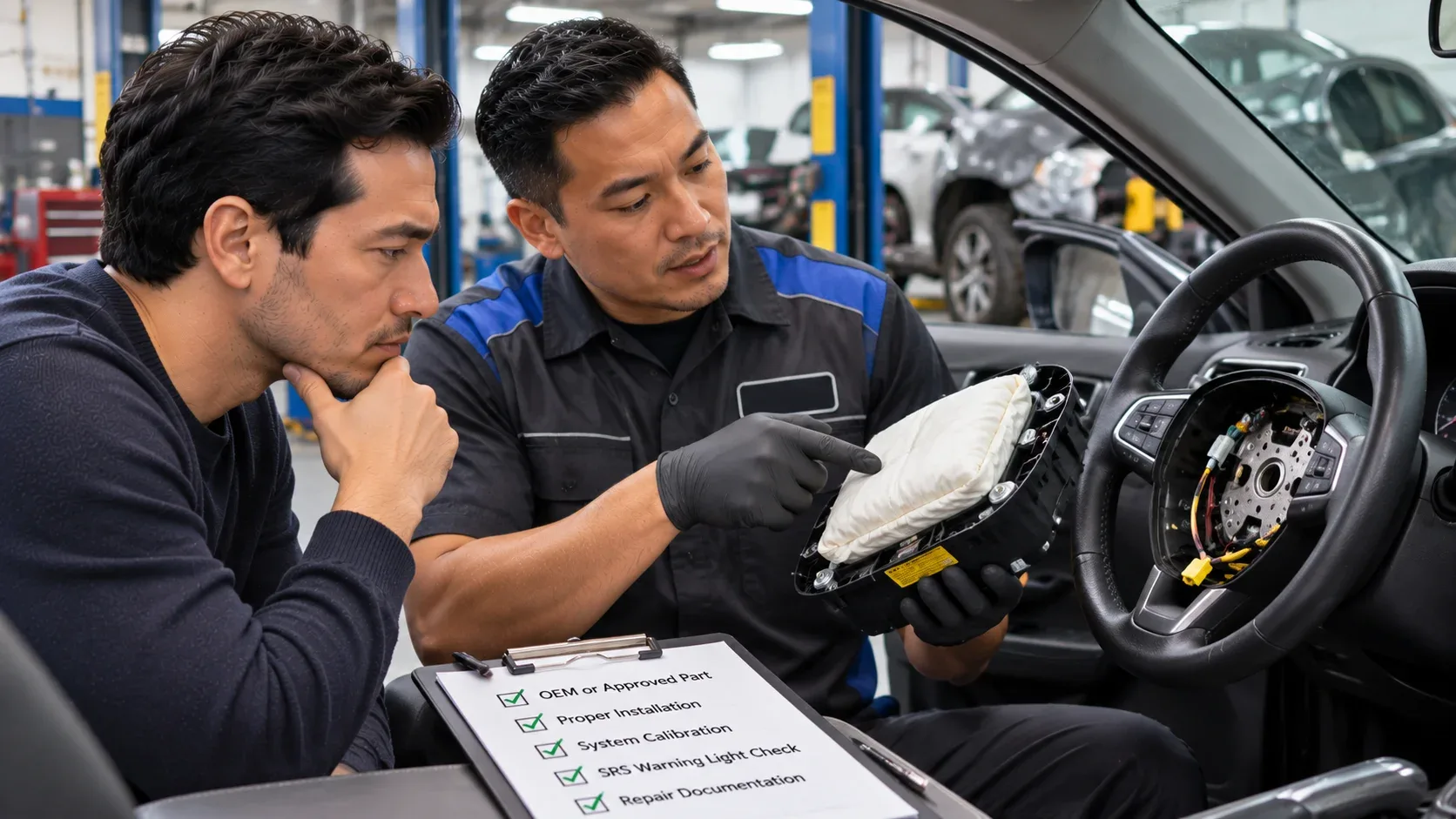
Airbag replacement after an accident means replacing deployed airbags and assessing the related restraint system under the applicable repair procedures. The complete job may involve more than the visible airbag. Ask the shop to explain the required inspections, replacement components, parts sourcing, and final checks before authorizing the work.
A repaired dashboard or an extinguished warning light does not explain everything that happened to the restraint system. You need a repair plan that connects the damage, installed parts, and completion records.
Collision Assistant helps California drivers connect with vetted collision repair shops. This guide focuses on restraint-system questions within the wider collision repair process.
What Should Airbag Replacement After an Accident Include?
The repair plan should address the deployed airbags, related component inspections, required replacements, and completion procedures. A price for one airbag alone does not tell you whether the full restraint-system work is included.
The supplemental restraint system, or SRS, works alongside the seat belts. Depending on the vehicle, the repair discussion may involve belt tensioners, sensors, wiring, control equipment, and affected interior components.
Use this table to organize the estimate discussion. It is a question guide, not a universal replacement list.
|
Part of the Plan |
What to Ask |
Records to Discuss |
|
Deployed airbags |
Which airbags deployed, and which assemblies will be replaced? |
Itemized parts list |
|
Related restraints |
Which belts, tensioners, buckles, and sensors require inspection or replacement? |
Findings and applicable procedures |
|
Surrounding components |
Does the procedure require checking seats, steering components, mounting areas, or interior trim? |
Inspection findings and photographs |
|
Replacement parts |
Who manufactured and supplied the parts, and are they permitted for this vehicle? |
Part numbers and sourcing information |
|
Completion work |
Which scans, checks, or initialization procedures apply? |
Available diagnostic and completion reports |
Ask the estimator to explain which items are confirmed and which require further inspection. Our guide to reading a collision repair estimate explains how to review the broader document.
Can a Deployed Airbag Be Repaired or Reused?
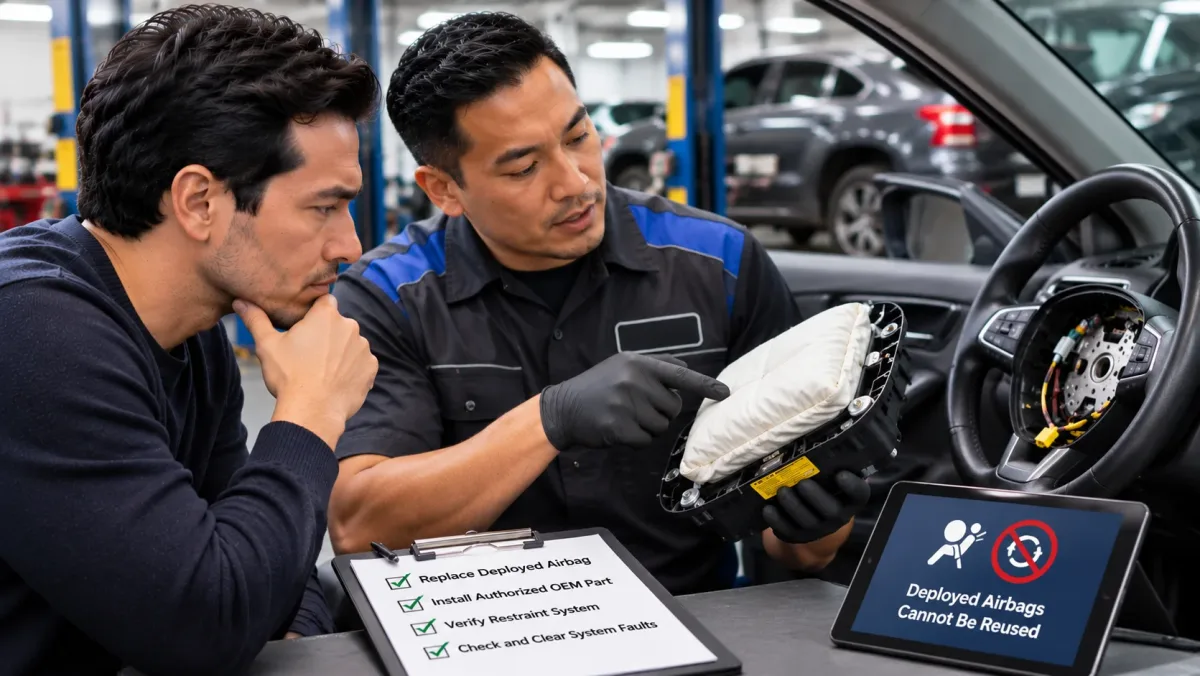
No. The National Highway Traffic Safety Administration, or NHTSA, states that a deployed airbag cannot be reused and must be replaced by an authorized service technician without delay.
That guidance applies to advanced frontal airbags and other airbag types. See NHTSA’s airbag guidance.
Do not confuse deployed airbag replacement with servicing a separate electronic control module. Ask the shop to identify exactly which component it proposes to replace, initialize, or otherwise service and which applicable procedure supports that operation.
A proposal described only as an “airbag reset” needs clarification. Ask whether the price includes replacement of every deployed airbag and the remaining required restraint-system work.
Why Does the Shop Need to Check More Than the Airbags?
An airbag deployment can trigger manufacturer requirements for inspecting or replacing other components. The shop should use the vehicle’s current repair information to determine the scope.
For example, Volvo’s SRS position statement calls for pre- and post-repair scanning when working with SRS systems. It also requires replacing the steering wheel following steering-wheel airbag deployment and replacing specified belt components at occupied seats following any airbag deployment.
Volvo’s statement also identifies inspections of steering, seating, and other components and directs repairers to its current technical information. These are Volvo instructions, not a replacement checklist for every make.
For your SRS inspection after collision, ask:
-
Which procedure applies to my vehicle and the airbags that deployed?
-
Which related components require replacement even if damage is not visible?
-
Which items require inspection before a decision?
-
Does the procedure call for diagnostic scans or initialization?
-
How will you document the completed work?
Tell the shop which seats were occupied and disclose any known earlier airbag repairs. Give the technician the history rather than trying to decide which components are reusable yourself.
How Should You Check Replacement-Part Sourcing?
Ask the shop to identify the replacement parts, their supplier, and the manufacturer instructions governing their use. A familiar logo or an inexpensive online listing does not establish that a safety component is suitable.
NHTSA has warned about dangerous replacement inflators marked DTN60DB. Its replacement-inflator guidance advises professional inspection for potentially affected vehicles and says a vehicle with one of these inflators should not be driven until it receives genuine original equipment replacement parts.
NHTSA also warns owners against trying to inspect the airbag themselves. Have a qualified professional investigate questionable parts or an uncertain replacement history.
Before approving airbag replacement after an accident, ask:
-
What manufacturer and part number will appear on the invoice?
-
Where will the shop obtain the component?
-
Is it new or previously used?
-
Does the vehicle manufacturer permit that part for this repair?
-
What sourcing information can the shop provide?
Volvo, for example, does not approve SRS replacements other than genuine Volvo replacement parts. Ask about your own manufacturer’s requirements rather than applying a general parts comparison to every restraint component.
Our OEM and aftermarket collision-parts guide covers broader parts terminology. Airbag decisions still require their own vehicle-specific review.
What Does California Require for Airbag Repairs?
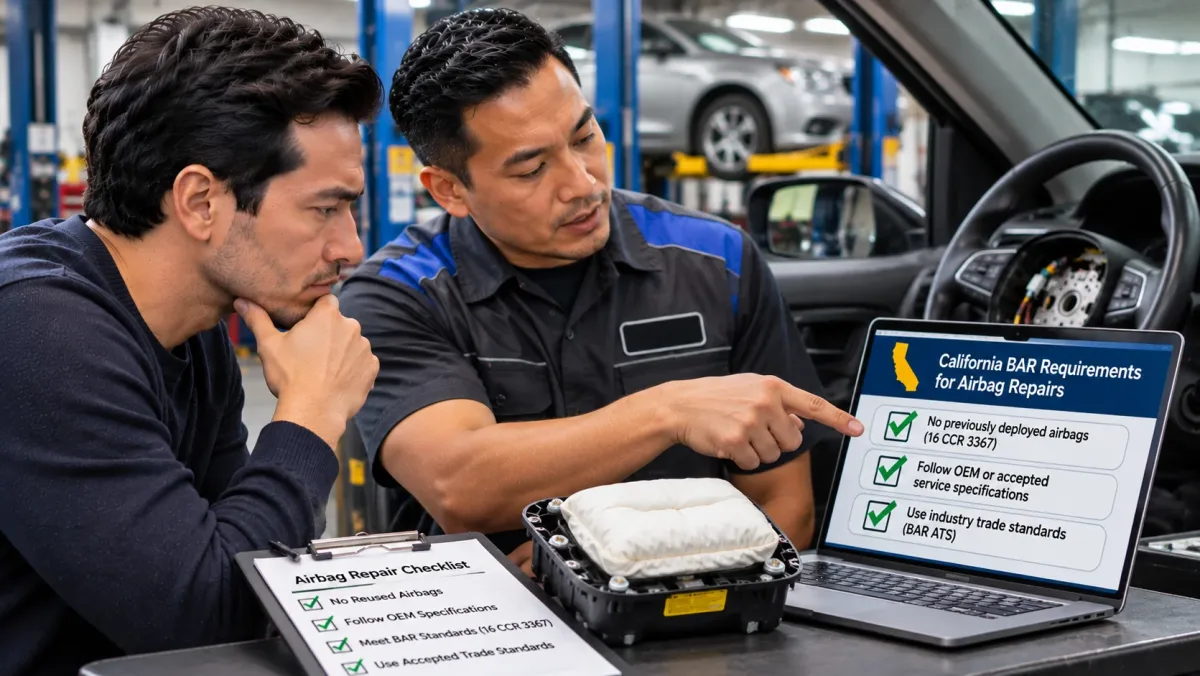
California’s current BAR guidance prohibits installing, reinstalling, distributing, or selling previously deployed airbags. It also states that restraint-system repairs must follow the applicable service specifications described in the regulation.
The California Bureau of Automotive Repair’s accepted trade standards explains the previously deployed airbag prohibition under 16 CCR 3367. Its repair guidance references OEM specifications or nationally distributed, periodically updated service specifications generally accepted by the autobody repair industry.
A separate regulatory proposal should not be described as an effective requirement. As checked on November 5, 2026, BAR’s regulatory actions page still lists its Airbag Safety amendment under proposed regulations, with a modified-text comment period that ended September 17, 2026.
The existing prohibition on previously deployed airbags and the applicable manufacturer instructions remain relevant to your repair discussion. Ask the shop to explain the basis for its parts and repair recommendations.
What Should You Confirm Before Authorizing Work?
Confirm the inspection scope, proposed parts, labor, outside work, and process for approving changes. Ask what remains unknown before agreeing to a complete price or pickup date.
BAR’s consumer repair guidance explains that customers are entitled to an estimate, must authorize repairs before work begins, and must authorize additional repairs. The shop must also provide a final invoice.
For airbag replacement after an accident, ask the shop to separate the restraint-system work from unrelated body repairs. If the scope changes, request an explanation of the added finding and operation.
If another business will perform part of the work, ask who will do it. BAR’s Write It Right guide, updated January 2026, requires customer consent and disclosure of sublet repairs with the estimate and explains that the repair dealer remains responsible.
Collision Assistant can help arrange an estimate with a vetted California collision shop. Ask the shop directly about its ability to perform the required restraint-system work and document completion. Insurers determine coverage and payment.
Which Airbag Replacement Documentation Should You Keep?
Keep the final invoice, authorized changes, and available records explaining the inspections, installed components, and completion procedures. Ask before repairs begin which supporting documents the shop will supply.
Request:
-
An itemized invoice identifying the work and replacement parts.
-
Copies of the estimate and approved revisions.
-
Available inspection findings and relevant photographs.
-
Part numbers and available sourcing information.
-
Applicable pre- and post-repair diagnostic reports.
-
Records of required initialization or other completion procedures.
-
Written warranty terms and instructions for reporting concerns.
A scan report documents diagnostic information. It does not, by itself, explain the sourcing of every installed part or show every physical inspection.
Hypothetical example: A final report shows no current SRS fault codes, but the invoice describes the job only as “airbag repair.” Ask for an itemized explanation of the replaced parts and related work so the documents describe more than the scan result.
Use our post-repair inspection checklist for the wider pickup review. A visual walkaround does not verify concealed restraint components.
Get the Complete Restraint-System Plan Explained
Airbag replacement after an accident should come with an explanation of the deployed units, related inspections, replacement parts, and final procedures. Ask for the plan before authorizing work and keep the completion records.
If you need help finding a suitable California collision shop, request a body shop recommendation from Collision Assistant. We match drivers with vetted shops and help arrange the estimate. Our referral and check-ins are free for drivers. Vehicle repairs and outside charges are separate, and you choose the shop.