Tow Yard Storage Fees After an Accident in California
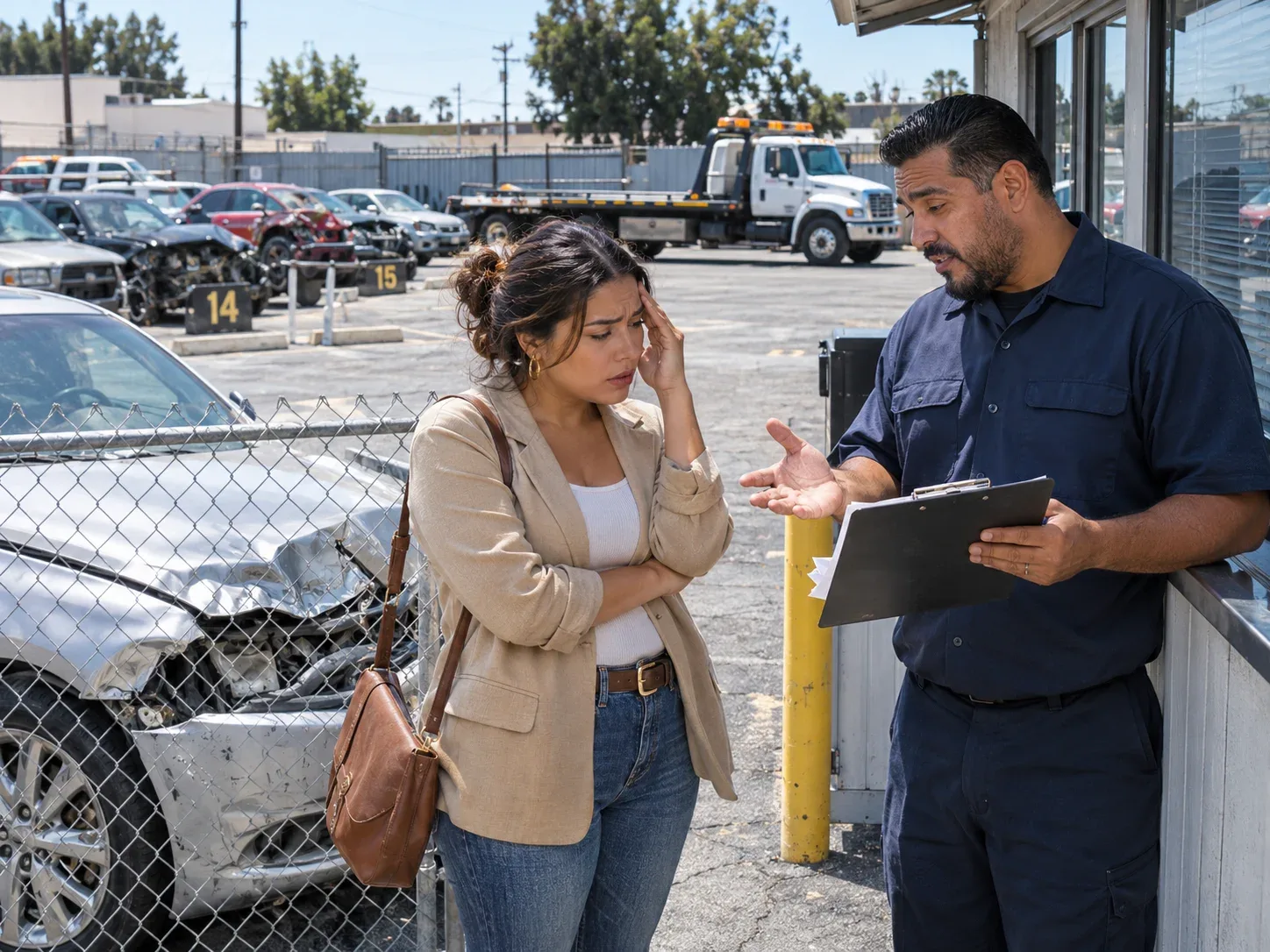
Tow yard storage fees after an accident are charges for keeping a damaged vehicle at a storage facility. In California, insurers must pay reasonable and necessary storage charges for covered losses, subject to applicable claim conditions. Drivers should confirm their daily storage rate, insurance payment cutoff, and vehicle release requirements to avoid additional expenses.
What Should You Do About Tow Yard Storage Fees After an Accident?
Contact the storage facility and the insurer handling your claim as soon as possible. Establish how much the yard has charged, whether the insurer will cover those expenses, and what needs to happen before the vehicle can be moved.
Start with these five questions.
|
Question |
Who to Contact |
|
What is the current daily storage rate? |
Tow yard |
|
What is the outstanding balance? |
Tow yard |
|
Which storage charges will insurance cover? |
Insurer |
|
Is there a scheduled date when insurance payments for storage will end? |
Insurer |
|
What documents, payments, or permissions are required to release the vehicle? |
Tow yard |
Keep the answers together with your claim number. If you receive conflicting information, request written confirmation from the party responsible for the disputed charge.
These details also help when arranging the next stage of the collision repair process.
How Are Tow Yard Storage Fees After an Accident Calculated?
Tow yard storage fees generally depend on the facility's applicable storage rate and the length of time it holds your vehicle. The total amount due may also include towing charges and other permitted services.
Ask for a breakdown that identifies:
-
The date and time the vehicle entered storage.
-
The daily storage rate.
-
The dates for which storage was charged.
-
The initial towing charge.
-
Any additional fees and their purpose.
-
The outstanding balance.
-
The amount required for release.
California's Bureau of Automotive Repair, or BAR, explains that comparable rates charged by nearby facilities and rates for similar public agency towing services can help establish whether charges are reasonable.
The location, services provided, and circumstances of the tow matter. Review BAR's guidance on automotive repair dealers and storage fees when questioning a charge.
How Quickly Can Storage Charges Accumulate?
Consider this hypothetical example using an illustrative daily storage rate of $65.
|
Storage Period |
Illustrative Storage Total |
|
3 days |
$195 |
|
7 days |
$455 |
|
10 days |
$650 |
|
14 days |
$910 |
These amounts demonstrate how daily charges accumulate. They are hypothetical figures, exclude towing and other charges, and do not represent an official California rate.
If your insurer announces a storage payment cutoff, calculate the potential additional cost based on your facility's actual rate and proposed release date.
Does Car Insurance Cover Tow Yard Storage Fees?
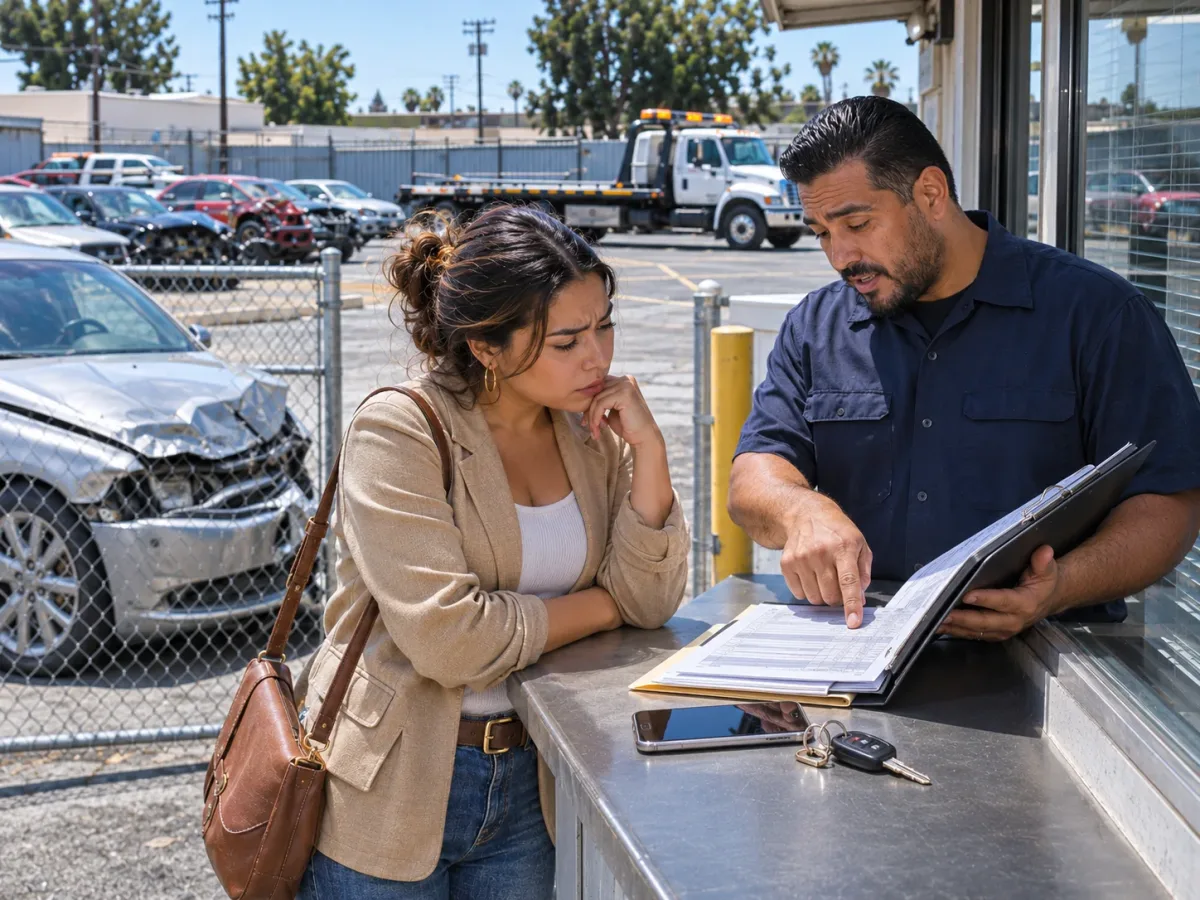
California insurance regulations require insurers to pay reasonable towing and storage expenses when those services are reasonably necessary to prevent further loss following a covered vehicle damage claim.
Under Title 10, California Code of Regulations, Section 2695.8(k), the requirement applies to covered automobile collision and physical damage claims. It also extends to third-party automobile liability claims, although payment may be adjusted according to comparative fault.
The regulation is available in California's additional standards applicable to automobile insurance.
If you have collision coverage and use your own insurance, contact your insurer about the applicable claim terms. When pursuing payment through another driver's insurer, confirm the claim status and which expenses that insurer has accepted.
Request confirmation of the following:
-
The storage charges currently approved for payment.
-
The dates covered by that approval.
-
How the tow yard will receive payment.
-
Whether you need to pay any amount before reimbursement.
-
Whether the insurer wants to inspect the vehicle before it is relocated.
Insurance storage fees can become especially complicated when responsibility for the accident or the extent of vehicle damage remains under review.
What Happens If Insurance Stops Paying Storage?
If insurance stops paying tow yard storage fees after an accident, contact your claims representative immediately to establish the cutoff date and your options for moving the vehicle.
California's insurance regulation, Section 2695.8(k), requires reasonable advance notice before applicable storage payments end so that the claimant has time to remove the vehicle.
The regulation uses a reasonable-notice standard. It does not establish one universal number of notice days for every situation.
Request the Storage Cutoff in Writing
A written request can help clarify the insurer's position and document your efforts to arrange the transfer.
You can send a message such as:
My vehicle remains at the storage facility following the accident. Please confirm the final date through which storage charges will be covered, the amount currently approved, and any instructions for transferring the vehicle. If an inspection is still pending, please clarify whether the vehicle can be relocated before it takes place.
Send the response to the tow yard or receiving repair facility when necessary to coordinate the move.
If an inspection or another unresolved issue prevents the transfer, explain the circumstances to your insurer and request further instructions. An extension remains subject to the applicable claim circumstances.
Which Towing and Storage Fees Should You Question in California?
California identifies certain towing and storage charges as presumptively unreasonable. These may be challenged, although the circumstances and applicable exceptions still need to be considered.
California Vehicle Code Sections 10652.5 and 22524.5 identify several charges under this standard.
|
Charge |
What to Check |
|
Administrative or filing fees |
Ask whether the fee relates to permitted DMV documentation or lien sale activities. |
|
Security fees |
Request the justification for the separate charge. |
|
Dolly fees |
Ask why the fee appears on the bill. |
|
Loading and unloading fees |
Request an explanation of the additional charge. |
|
Pull-out fees |
Ask the facility to explain the basis for charging it. |
|
Gate fees |
Determine whether you or your insurer requested release outside regular business hours. |
The California Bureau of Automotive Repair provides examples and applicable exceptions in its storage and towing fee guidance.
What Changed in January 2026?
Assembly Bill 987 expanded California's list of presumptively unreasonable towing and storage fees, effective January 1, 2026.
The changes include charges such as:
-
Storage fees on state holidays that exceed the posted standard daily rate.
-
Storage charges exceeding half the daily rate when a vehicle is recovered during the first four hours of storage.
-
Additional storage charges for days when a facility fails to release a vehicle after the owner requests release and pays all fees then due.
These changes give California drivers additional grounds for questioning certain charges.
See BAR's summary of laws taking effect in 2026 for further information.
What Are Tow Yard Release Fees?
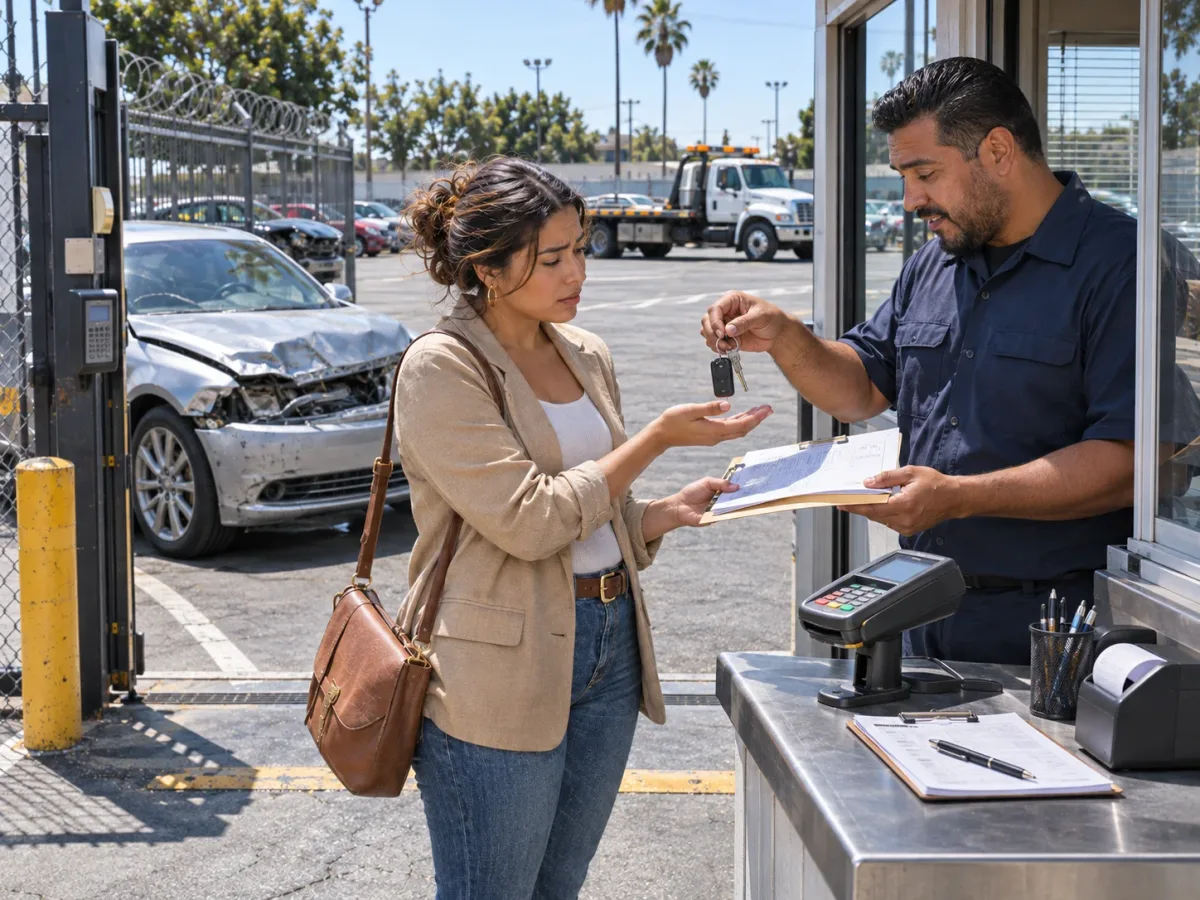
Tow yard release fees are charges associated with retrieving a vehicle from a storage facility. Before agreeing to pay a release-related charge, ask what service it covers and whether it applies to your particular circumstances.
For example, California treats gate fees as presumptively unreasonable unless the vehicle owner or insurer requests release outside normal operating hours.
The total amount needed to retrieve your vehicle may still include legitimate outstanding towing and storage expenses.
What Should You Confirm Before Vehicle Release?
Contact the facility before arriving or sending another tow operator. Ask about:
-
Proof of ownership or identification requirements.
-
Authorization needed if someone else retrieves the vehicle.
-
Outstanding charges and accepted payment methods.
-
Any law enforcement hold or other release restriction.
-
Operating hours and arrangements for vehicle collection.
-
Whether personal belongings can be collected separately.
Make sure the receiving repair facility or transportation provider understands these requirements.
Arranging transportation before confirming that the vehicle is available for release can lead to an unsuccessful collection and additional scheduling complications.
Can a Body Shop Charge Storage Fees During Repairs?
California distinguishes vehicle storage from authorized repair work. According to BAR, an automotive repair dealer generally cannot charge storage fees while the vehicle is undergoing authorized repairs or diagnostic teardown.
Storage charges may apply in certain other circumstances, including when a customer fails to authorize repairs or collect the vehicle within a specified period after receiving an estimate following an inspection or teardown.
Charges may also become applicable after completed repairs when the relevant lien and notification conditions are satisfied.
If a body shop includes storage charges on your bill, ask it to identify the dates and circumstances associated with those fees. Compare that information with your repair authorizations, completion notices, and estimates.
Our guide to collision repair estimates explains how to review repair charges and identify changes in the scope of work.
How Can You Limit Additional Storage Expenses?
Coordinate the vehicle release, insurance arrangements, and receiving facility before scheduling transportation.
Use the following checklist when preparing to move your vehicle.
-
Obtain the tow yard's current itemized balance.
-
Confirm the insurer's storage payment cutoff.
-
Ask whether the insurer has completed its inspection.
-
Choose the receiving facility.
-
Confirm that the facility can accept your vehicle.
-
Determine who will arrange and pay for transportation.
-
Obtain the final release receipt and retain it with your claim records.
If your vehicle may be declared a total loss, ask the insurer where it should be stored while the evaluation continues. The appropriate destination may differ from that of a vehicle undergoing repairs.
When coordinating property damage claims, Collision Assistant helps communicate vehicle location and transfer requirements to the appropriate repair facility and follows up on related documentation.
What Should You Do If You Dispute Storage Charges?
Request a written explanation of the disputed charges and determine whether the disagreement concerns the storage facility's billing or the insurer's payment decision.
For a billing dispute involving a California automotive repair dealer, contact the business directly and retain copies of its response.
If you cannot resolve the matter, you can submit an automotive repair complaint through the California Bureau of Automotive Repair.
If the dispute concerns an insurer's handling of storage payments, request assistance from the California Department of Insurance.
Useful supporting documents include:
-
Itemized towing and storage bills.
-
Insurance correspondence.
-
Storage payment cutoff notices.
-
Vehicle release requests.
-
Payment receipts.
-
Transportation arrangements.
Continue coordinating vehicle collection while addressing the disputed charges where possible. Ask the appropriate professional for guidance if restrictions or outstanding fees prevent its release.
Take Control of Your Vehicle's Storage Expenses
Understanding tow yard storage fees after an accident begins with knowing the daily rate, checking your insurance payment arrangements, and confirming how your vehicle can be released.
If you need help coordinating the next stage of your claim, contact Collision Assistant for property damage claim management in California. We help coordinate vehicle transfers, connect drivers with vetted collision repair shops, and follow up on relevant claim documentation.