What to Do After a Hit and Run in California
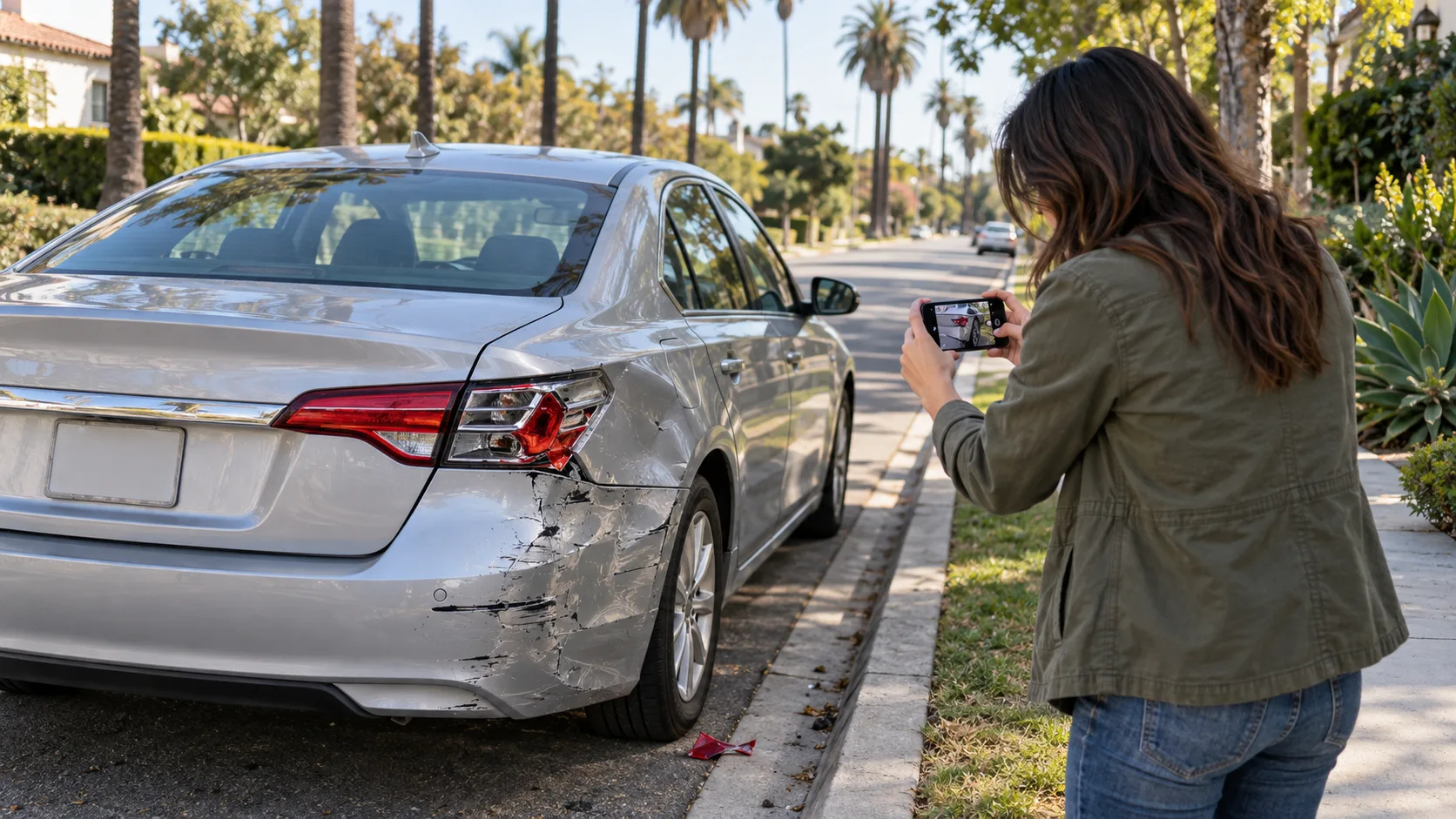
What to do after a hit and run in California: get to a safe place, call 911 if anyone is hurt, and report the crash to the police or the CHP right away. Then photograph the damage, look for witnesses and cameras, and call your own insurer. If the other driver is never found and you carry collision coverage, that coverage is usually the way your car gets fixed.
Collision Assistant works on the property damage side of California crashes, so this guide sticks to what protects your car claim: the reports, the deadlines and the coverage that applies when the other driver drives off.
Many drivers expect their uninsured motorist coverage to pay for the car. California's uninsured motorist property damage statute, Insurance Code 11580.26, applies only when the other car's owner or driver is identified, or the car is identified by its license plate.
The statute does not mention hit-and-run crashes by name. But when neither the driver nor the plate is ever identified, that condition is not met, so this coverage is unlikely to pay for your car, and your policy wording and your insurer make the final call. Knowing that on day one helps you open the right claim.
What counts as a hit and run in California?
A hit and run in California is a crash where a driver leaves without meeting the legal duty to stop and share information. The rules differ for crashes with injuries and crashes with only property damage.
Injury crashes: Vehicle Code 20001
Under California Vehicle Code 20001, a driver in a crash that injures or kills anyone must stop at the scene right away. Vehicle Code 20003 says that driver must give a name, address and registration number, show a license on request, and give reasonable help, including a ride to medical care if needed. Leaving an injury crash can bring state prison or up to one year in county jail, a fine of $1,000 to $10,000, or both.
Property damage only: Vehicle Code 20002
Under Vehicle Code 20002, a driver who hits a parked car or other property must stop at the nearest safe spot and give a name and address to the owner or leave a note where the owner will see it. That driver must also tell city police or the CHP without unnecessary delay. A violation is a misdemeanor with up to six months in county jail, a fine up to $1,000, or both.
What to do after a hit and run: step by step
The first hour after a hit and run in California shapes what evidence you will have later. Work through these steps in order.
- Check yourself and your passengers, and call 911 if anyone is hurt. Do not chase the other car.
- Write down the other car's make, model, color, any plate letters or numbers, and the direction it went.
- Photograph your car, paint transfer, broken parts on the road and the whole scene. Our guide to photos and information to get at the scene lists the shots that matter.
- Get the names and phone numbers of anyone who saw the crash.
- Ask nearby stores and homes with cameras to save their video the same day.
- Report the crash to the police or the CHP, and write down the report number.
- Call your insurer to open a claim, and write down the claim number.
- File an SR-1 with the DMV within 10 days if the crash qualifies.
How do you report a hit and run in California?
Report a hit and run by calling 911 if anyone is hurt, or the police non-emergency line if no one is hurt. In a city, that is usually the city police. Outside city limits, Vehicle Code 20002 names the CHP for unincorporated areas.
In Los Angeles, for example, the LAPD gives 1-877-ASK-LAPD (1-877-275-5273) as the number for reporting a no-injury hit and run, on its traffic collision questions page.
The 24-hour rule when someone is hurt
When someone is hurt in a hit and run, two 24-hour clocks run at once. Vehicle Code 20008 requires a written report to the CHP or city police within 24 hours of an injury crash. Insurance Code 11580.2 also makes a police or CHP report within 24 hours a condition of uninsured motorist bodily injury coverage when the driver is unknown.
Our car accident police report guide explains how to get a copy.
Do you still need to file an SR-1?
Yes, if the hit and run meets the DMV threshold. California Vehicle Code 16000 requires a report to the DMV within 10 days when property damage is over $1,000 or anyone is hurt or killed. The DMV driver handbook says each driver must file, and that law enforcement will not file it for you.
Our California SR-1 form guide covers how to file it.
Which insurance pays for a hit and run in California?
When the hit-and-run driver is never found, the collision coverage on your own policy, if you carry it, is usually what pays to repair your car, minus your deductible. Uninsured motorist property damage is unlikely to help unless police later identify the driver or the license plate.
| Coverage | What it pays | The hit-and-run catch |
|---|---|---|
| Collision | Damage to your car from contact with another vehicle or an object (California Department of Insurance) | You pay your deductible. If you do not carry collision, this path is closed. |
| Uninsured motorist property damage (UMPD) | Damage to your car from an at-fault uninsured driver, capped at $3,500 (or the car's actual cash value, if lower, when you have no collision coverage) under Insurance Code 11580.26 | Needs physical contact, an identified owner, driver or license plate, and a report to your insurer within 10 business days. An unknown driver and plate do not meet the identification condition. |
| Uninsured motorist bodily injury (UMBI) | Injuries to you and your passengers caused by an uninsured or unknown driver (Insurance Code 11580.2) | Needs physical contact, a police or CHP report within 24 hours, and a sworn statement to your insurer within 30 days. Does not pay property damage. |
Why uninsured motorist property damage is unlikely to pay
California Insurance Code 11580.26 lists three conditions for uninsured motorist property damage: physical contact, an identified owner or driver (or a car identified by its license number), and a report to your insurer within 10 business days. The statute does not use the words "hit and run," so this is a reading of its identification condition, not a separate rule. If neither the driver nor the plate is ever identified, the condition is not met.
Myth: "My uninsured motorist coverage will fix my car." In a hit and run where the driver and plate stay unknown, the claim for the car usually runs through collision coverage instead, if you carry it. If you have no collision coverage, read your declarations page and ask your insurer to confirm in writing what applies.
What about injuries?
Under Insurance Code 11580.2, uninsured motorist bodily injury coverage can apply to an unknown driver only if three conditions are met. The injury must come from physical contact with you or your car, the crash must be reported to police or the CHP within 24 hours, and you must file a sworn statement with your insurer within 30 days.
Get checked by a doctor even if you feel fine. MedlinePlus says whiplash pain may take hours to weeks to develop, and the CDC says some concussion symptoms may not appear for hours or days; this is not medical advice. Our guide to delayed injury after a car accident covers the warning signs, and a licensed California attorney can answer injury claim questions.
What if police find the driver later?
If police identify the hit-and-run driver, your claim options can change. You may then have a claim against that driver's liability insurance, or an uninsured motorist property damage claim if that driver has no insurance. Tell your insurer the same day you learn the driver's name or plate.
A claim against the other driver can also open items your own collision coverage generally does not pay, such as a diminished value claim. Our not-at-fault accident guide covers how third-party claims work.
Deadlines keep running while police search. Under Code of Civil Procedure 338(c), a lawsuit for damage to a car must be filed within three years, and under CCP 335.1, a personal injury lawsuit must be filed within two years. An uninsured motorist property damage arbitration must be started within one year of the accident under Insurance Code 11580.26.
Getting your car repaired after a hit and run
You choose the repair shop after a hit and run. Even when your own insurer is paying, California Insurance Code 758.5 bars it from requiring a specific repair shop.
Hit-and-run damage often goes deeper than the dent you can see. Shops find more damage at teardown and send a supplement to the insurer, as our guide to hidden damage after a car accident explains.
A parked car can be hit while its owner is far away. One parent set up the repair of a daughter's parked car from two hours away:
"My daughter's car got hit while it was parked and I was handling it from two hours away. Being able to find a trustworthy shop near her, check it out, and set it up without driving down there myself saved me a whole day off work."
Lorena M., Bakersfield
Common mistakes after a hit and run
The costliest hit-and-run mistakes are missed reports and wrong guesses about which coverage applies.
- Waiting to report an injury. Missing the 24-hour police or CHP report can close the uninsured motorist bodily injury path under Insurance Code 11580.2.
- Assuming uninsured motorist coverage will fix the car. Without an identified driver or plate, the car claim usually goes through collision coverage, if you carry it.
- Skipping the SR-1. The DMV report is due within 10 days when damage is over $1,000 or anyone is hurt, no matter who caused the crash.
- Leaving a non-drivable car at the tow yard. Under 10 CCR 2695.8(k), the insurer pays reasonable storage but may stop after giving reasonable notice.
More errors to watch for are in our list of car accident mistakes to avoid.
How Collision Assistant helps
Collision Assistant handles the vehicle side of a hit and run in California, and the service is free for drivers. Here is what our property damage claim management covers:
- Intake: we collect your photos, police report number, claim number and vehicle details, and confirm which coverage the repair runs through, which is usually collision when the other driver is not found.
- Shop placement: through our body shop recommendation, we match your car with a shop in our vetted California network. Every shop we recommend holds an active Bureau of Automotive Repair registration, and you keep the final choice of shop.
- Tracking and rental: we track supplements, parts delays and completion dates, and coordinate the rental with the paying insurer, asking for extensions ahead of the cutoff.
- One file: estimates, invoices, photos and insurer emails stay under one case number, with status updates until you have your keys back.
Getting Back on the Road After Someone Drove Off
Being left behind by another driver adds insult to a bad day, and the stacked deadlines make it feel heavier than it should. Take them one at a time. Boiled down, what to do after a hit and run is this: police within 24 hours, insurer within 30 days, DMV within 10 if the damage or injury triggers it. The rest is logistics.
When you're ready for the repair, we'll help you find and connect with a vetted, verified California shop and request a repair quote, all for free, from people who know how to document hit-and-run damage properly before they fix it. Reach out through our site whenever you're ready, and let us take at least one thing off your list.