How to Find a Collision Repair Shop in California
Here is how to find a collision repair shop in California: start with your right to pick any licensed shop. Then check the shop's license with the Bureau of Automotive Repair (BAR) and compare written, itemized estimates. Your insurer can recommend a shop, but California Insurance Code 758.5 says it cannot require you to use one.
If your car was just damaged, shop names may be coming at you from the insurer, the tow driver and a search engine all at once. This guide from Collision Assistant walks through the search one step at a time. It uses the California rules that apply on the vehicle side of a claim.
Collision Assistant is free for drivers. We check a shop's BAR registration before we recommend it, we match shops to the make and the type of damage, and you keep the final say on where your car goes.
Key takeaways
- California law bars an insurer from requiring repairs at a specific shop, and once you name your shop, the insurer may not suggest a different one (Insurance Code 758.5).
- Acting as an auto repair dealer without a valid registration is unlawful in California (Business and Professions Code 9884.6), and you can check any shop's license status online in a few minutes.
- For collision work, the written estimate must list parts and labor separately and label each crash part as OEM or non-OEM aftermarket (Business and Professions Code 9884.9(c)).
- An insurer may not make you travel more than 15 miles in an urban area of 100,000 people or more, or 25 miles elsewhere, to get an estimate or repair at a shop it names (10 CCR 2695.8(e)(4)(A)).
Do I have to use the shop my insurance company picks?
No. California Insurance Code 758.5 states that "No insurer shall require that an automobile be repaired at a specific automotive repair dealer." You can read the statute on the California Legislative Information site.
Under Insurance Code 758.5(b), an insurer may recommend a shop only if you ask for a referral or you have been told in writing that you have the right to choose. After you name your shop, the insurer may not suggest a different one, and it may not limit or discount reasonable repair costs based on what its own preferred shop would charge.
Myth: "I have to use the insurer's shop." Drivers repeat that belief to us often, and California law says otherwise. The insurer's suggestion is an option, not a requirement, and the Auto Body Repair Consumer Bill of Rights from the California Department of Insurance lists shop choice as your first right.
What is a direct repair program (DRP) shop?
A direct repair program (DRP) shop is a shop that has a repair program arrangement with an insurer. California's Fair Claims Settlement Practices Regulations name DRP shops directly: once you choose your own shop, the insurer may not require you to have the car inspected at a DRP shop or any other shop it names (10 CCR 2695.8(e)(5)).
A DRP shop and an independent shop you pick yourself can both do good work. The real difference is which rules protect you, as the table below shows. The full regulation text is on the Cornell LII copy of 10 CCR 2695.8.
| Question | Insurer-recommended (DRP) shop | Shop you choose yourself |
|---|---|---|
| Can the insurer require it? | No. Insurance Code 758.5(a) bars requiring a specific shop. | Your choice stands. The insurer may not suggest a different shop after you name yours (758.5(c)). |
| When can the insurer bring it up? | Only if you ask for a referral, or after you get written notice of your right to choose (758.5(b)(1)). | Not applicable. |
| What repair standard applies? | If you accept the insurer's shop, the insurer must cause the car to be restored to pre-loss condition at no added cost, other than what the policy or law allows (758.5). | The insurer's estimate must allow repair to accepted trade standards. If your shop's estimate is higher, the insurer must pay the difference, name a shop that will do the job for its price, or make itemized, reasonable adjustments (10 CCR 2695.8(f)). |
| Where does the inspection happen? | If you accept that shop, the inspection can happen there. | The insurer may not require an inspection at a DRP shop or another shop it names (10 CCR 2695.8(e)(5)). |
| How far can you be asked to drive? | No more than 15 miles in urban areas of 100,000 or more, or 25 miles elsewhere (10 CCR 2695.8(e)(4)(A)). | The same distance limits apply. |
How do I check that a body shop is licensed in California?
Look the shop up on the Department of Consumer Affairs BAR license search. BAR says the lookup shows a shop's license status and any disciplinary history. Business and Professions Code 9884.6 makes it unlawful to act as an automotive repair dealer without a currently valid registration.
To build a short list, BAR's Auto Shop Locator finds licensed repair dealers near an address, a ZIP code or your current location. The locator has an "Auto Body" service filter, and each result shows the license number, address, phone and distance, with a flag such as "Accusation Filed" or "On Probation" when one applies. BAR's consumer line is (800) 952-5210, Monday to Friday, 8:00 AM to 5:00 PM.
Confirm that the name and address on the license match the shop you are visiting. A license search takes a few minutes, and it is the one check that every collision repair shop in California should pass before you hand over your keys.
How do I compare collision repair shops?
Compare collision repair shops on three things: fit for your car, track record and logistics. Price matters, but the lowest total can hide missing steps, so compare what each estimate includes, not only the bottom line.
Match the shop to your car
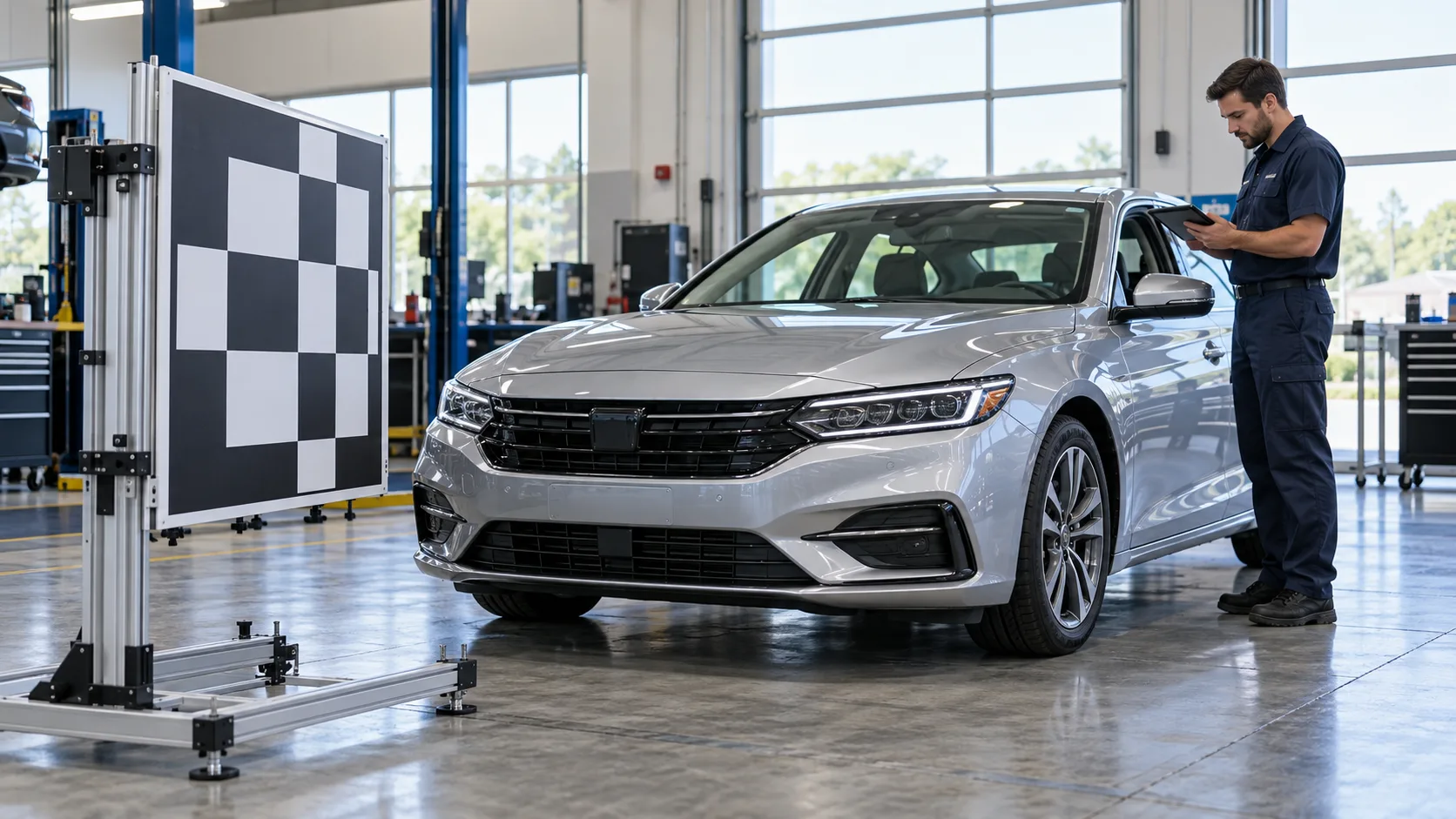
Newer cars often carry aluminum panels, electric drivetrains or driver-assist cameras and radar. Ask whether the shop follows the vehicle maker's repair procedures and how it handles scans and sensor work. Our guide to ADAS calibration after a collision covers the sensor questions, and our page on OEM vs aftermarket parts covers the parts questions.
Read reviews side by side
Reviews mean more when you read two or three shops next to each other. One of our customers almost skipped that step:
"I almost went with the first shop that popped up on Google. Glad I didn't, that one had some rough reviews I only saw because Collision Assistant had them side by side with two others. Went with a higher-rated one a few miles further out. Worth the extra drive."
Kevin B., Modesto
Plan the logistics
Think about where the car is now, how it gets to the shop and who will drop it off. If the car is not drivable, move it out of the tow yard quickly. Under 10 CCR 2695.8(k), the insurer must pay reasonable towing and storage charges, but it may stop paying storage after giving reasonable notice.
"My daughter's car got hit while it was parked and I was handling it from two hours away. Being able to find a trustworthy shop near her, check it out, and set it up without driving down there myself saved me a whole day off work."
Lorena M., Bakersfield
What should a California collision repair estimate include?
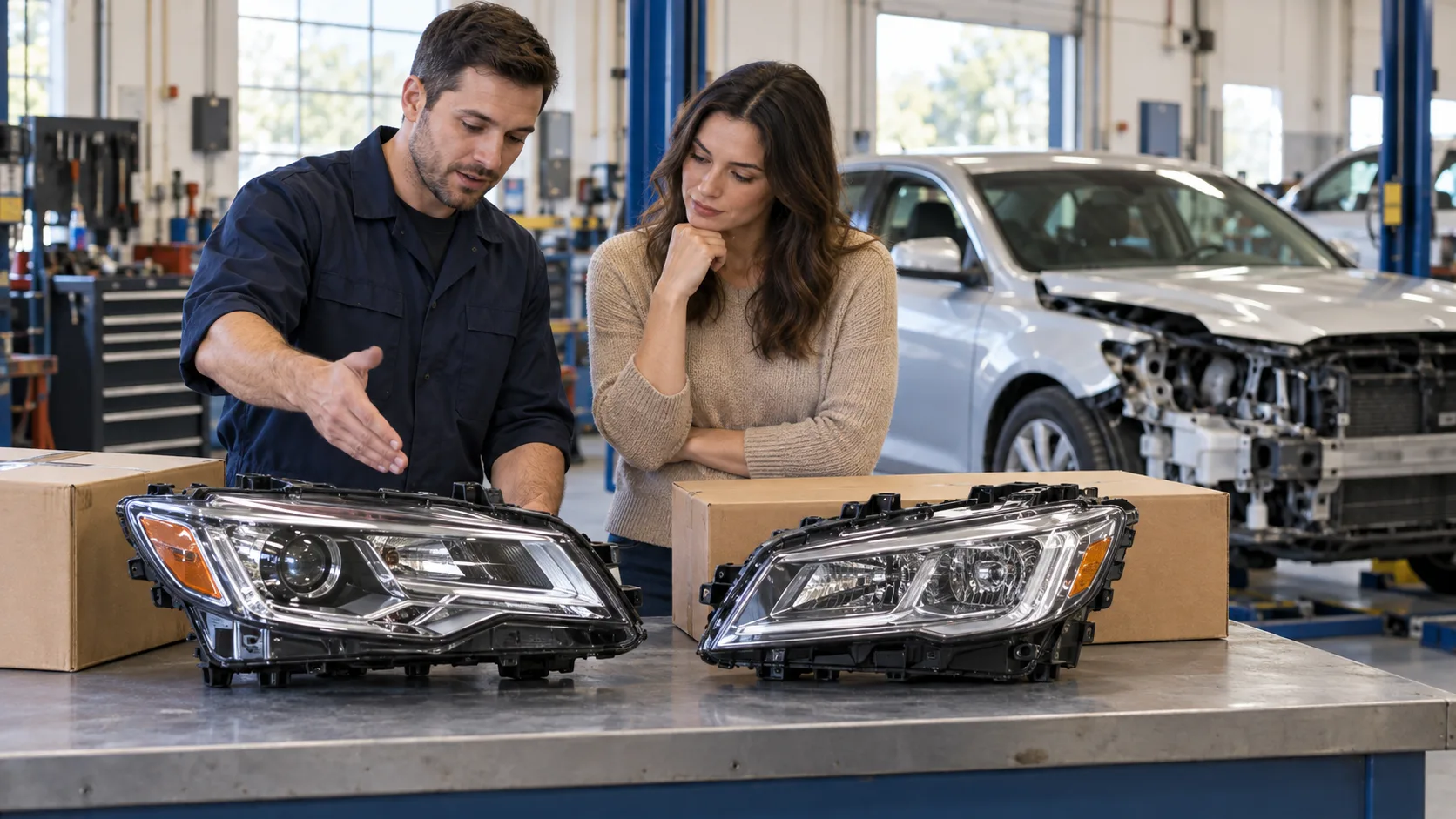
A California collision repair estimate must be written and itemized. Business and Professions Code 9884.9(c) requires parts and labor to be listed separately, each part to be marked as new, used, rebuilt or reconditioned, and each crash part to be identified as OEM or non-OEM aftermarket. The statute is on the California Legislative Information site.
When you compare shops, ask each one how it writes estimates when parts must come off to see the damage. BAR's teardown rule, 16 CCR 3353(c) in the version operative July 1, 2025, requires a separate written teardown estimate first, and a shop that explains that step clearly is easier to work with.
The first estimate is often not the final price, because hidden damage can show up at teardown and the shop then sends a supplement. Under Business and Professions Code 9884.9(a), a shop may not charge more than the estimate without your consent. Our guide on how to read a collision repair estimate explains each line, and our article on hidden damage after a car accident explains supplements.
Step by step: how to find a collision repair shop in California
Finding a collision repair shop in California takes eight steps, from deciding who picks the shop to keeping the paperwork. Steps 1 to 6 happen before the car goes in, and steps 7 and 8 keep the claim on track.
- Decide whether you want the insurer's suggestion or your own pick. Either way, the choice is yours under Insurance Code 758.5.
- Build a short list of two or three shops from the BAR Auto Shop Locator, people you trust, or a free body shop recommendation.
- Check each shop's license status and disciplinary history on the DCA license search.
- Ask each shop whether it works on your make and your type of damage, including aluminum, EV batteries and driver-assist sensors.
- Read reviews for all the shops on your list side by side, not one at a time.
- Get a written, itemized estimate and check the parts labels (new, used, OEM or non-OEM aftermarket).
- Tell the insurer in writing which shop you chose, and keep a copy for your records.
- Approve any supplement only after the shop explains the added damage, and keep every estimate, supplement and invoice in one folder.
Common mistakes when picking a collision repair shop
The biggest shop-picking mistakes happen under time pressure, right after the crash. Slow down long enough to avoid these.
- Choosing the first search result. The first listing is not a quality signal. Compare at least two licensed shops.
- Not asking about supplements up front. Ask every shop on your list how it documents added damage and when it calls you for approval.
- Comparing totals only. A lower total may use different parts or skip a scan. Compare line by line.
- Leaving a non-drivable car at a tow yard. Storage charges build daily, and the insurer may stop paying after reasonable notice (10 CCR 2695.8(k)).
- Skipping the license check. The DCA search takes minutes and shows disciplinary history.
How Collision Assistant helps
Collision Assistant makes the shop search simple. Through our body shop recommendation, we connect you with one vetted shop from our California network. Every shop we recommend holds an active BAR registration that we check first, and we weigh your make, the damage type and your location when we match.
If you want help with the whole claim, our property damage claim management service covers intake, the written estimate, supplement tracking, rental coordination and status updates until you have your keys back. Everything stays in one file under one case number.
Collision Assistant is free for drivers. You keep your shop choice, and we never steer you away from a licensed shop you already picked. We coordinate, document and follow up; the insurer decides coverage and payment.
Frequently asked questions
How many collision repair estimates should I get?
No California rule sets a number, but two written estimates from licensed shops give you a fair comparison. The Auto Body Repair Consumer Bill of Rights says you may get an independent estimate directly from a registered auto body shop, even while your insurance claim is open. Compare the parts labels, labor lines and scan or calibration items, not only the total.
Can I pick a shop before I file an insurance claim?
Yes. You can choose a licensed shop at any point, and the shop can start a written estimate before or after you report the claim. Tell the insurer which shop you chose once the claim is open, and after you name your shop, Insurance Code 758.5(c) bars the insurer from suggesting a different one.
Can my insurer make me drive far to get an estimate?
No. Under 10 CCR 2695.8(e)(4)(A), an insurer may not require you to travel more than 15 miles in a city or urban area of 100,000 people or more, or more than 25 miles elsewhere in California. The distance is measured from where the car is located and available for inspection, and it applies to first-party and third-party claims.
Is the closest collision repair shop the right choice?
Not always: distance matters for drop-off and pickup, but fit for your car and a clean license record matter more. Our customer Kevin B. in Modesto chose a shop a few miles farther away after comparing reviews side by side. A short extra drive can pay off when the shop handles your make and damage type.
What if I am unhappy with the repair after I pick up the car?
Go back to the shop you chose first, and put the problem in writing with photos so there is a record. If the shop does not fix it, you can ask BAR's Auto Body Inspection Program for a free inspection or file a complaint at bar.ca.gov/complaint. Our post-repair inspection checklist helps you catch problems before you drive away.
Does Collision Assistant charge drivers for a shop recommendation?
No. Collision Assistant is free for drivers, and that includes the body shop recommendation, the license check and claim coordination. Repair costs are between you, the shop and any insurer that is paying. You can request a free quote online or call 562-800-6904, and you stay free to choose any licensed shop, even one we did not suggest.
Find a licensed shop without the guesswork
When you are ready, Collision Assistant can check licenses, match a shop to your car and set up the estimate. Get a free quote or call 562-800-6904.
This article is general information, not legal, insurance or medical advice. Collision Assistant is not a law firm, insurer or medical provider.