Collision Repair Warranties and What They Cover
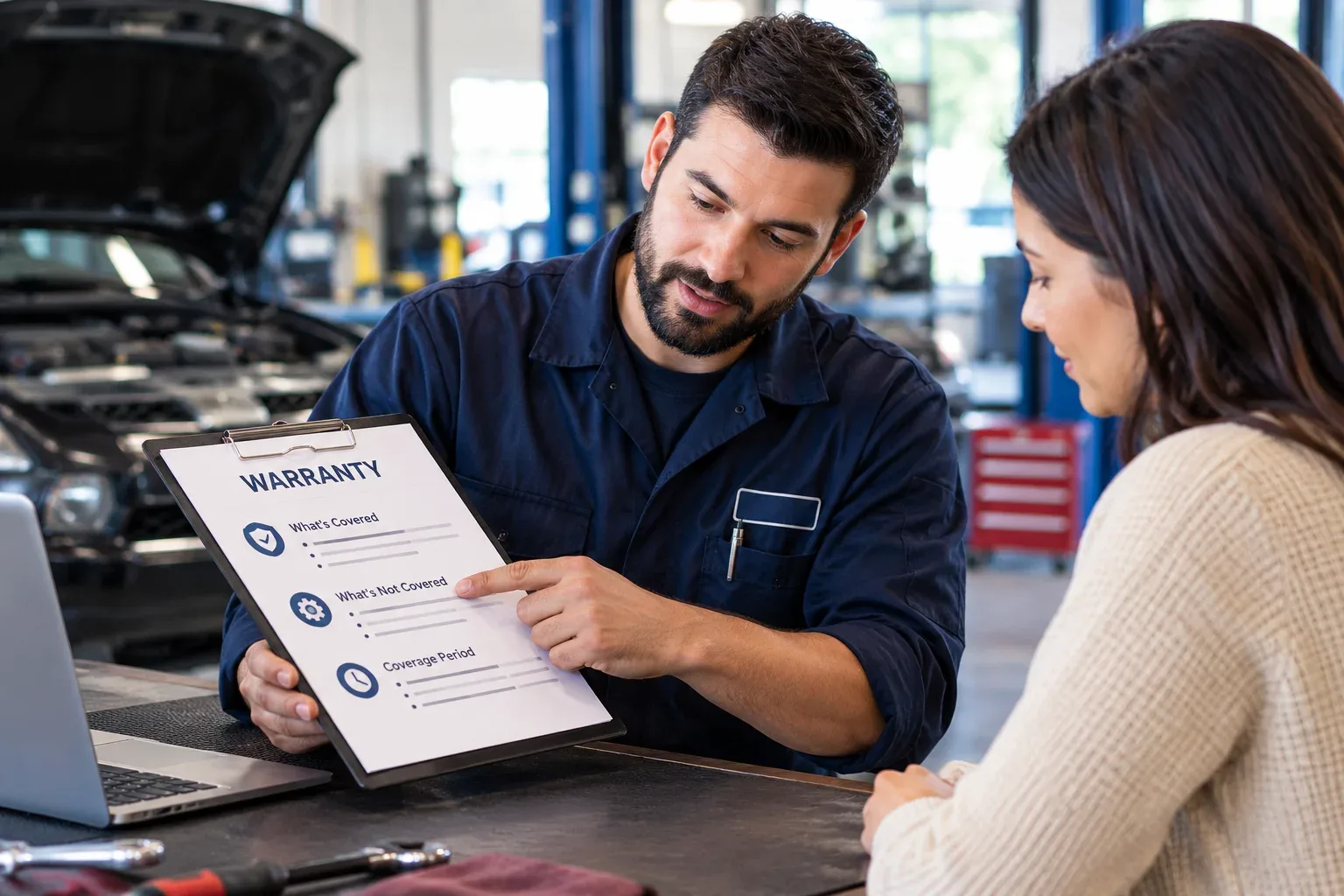
Collision repair warranties are promises to address specified problems with completed repair work or supplied parts, subject to written terms. Coverage depends on the provider, covered operations, duration, exclusions, and claim process. A lifetime label does not mean every future problem is covered. Ask for the complete warranty before choosing a shop.
Paint concerns, a replacement-part fault, and damage from a second accident raise different coverage questions. The useful question is not simply whether a shop offers a warranty, but who promises to fix which problem and under what conditions.
At Collision Assistant, we help California drivers understand repair decisions and connect with vetted shops. This guide explains how to compare written coverage and what to do if a concern appears after pickup. For the full repair process, see our guide to collision repair in California.
What Are Collision Repair Warranties
Collision repair warranties describe a provider’s responsibility for specified defects after work is completed. The written terms identify what is covered, how long coverage lasts, and what the customer must do to request service.
Workmanship means how the repair was performed. A parts warranty concerns a supplied component. Ask whether the same business handles both, and whether a covered replacement also includes removal, installation, paint work, or other associated labor.
Do not assume one document covers every item on the estimate. A useful comparison starts with the repaired area, the type of concern, and the provider responsible for reviewing it.
What Does a Collision Warranty Cover
A collision warranty covers only the work, components, and remedies described in its terms. Ask the shop to identify covered operations rather than relying on a phrase such as complete coverage.
Use this editorial checklist to compare the actual documents:
|
Area to Review |
Question to Ask |
Why the Answer Matters |
|
Bodywork and assembly |
Which repaired areas and workmanship defects are included? |
A broad warranty heading may not describe every operation |
|
Paint and finish |
Which finish problems are covered, and what damage is excluded? |
A finish defect and later external damage may be treated differently |
|
Replacement parts |
Who provides coverage for each part? |
The parts supplier and installing shop may have different responsibilities |
|
Associated labor |
Does coverage include diagnosis, removal, installation, or refinishing? |
A replacement component alone may not resolve the full cost question |
|
Outside services |
Who handles a concern with glass, alignment, or calibration work? |
You need a clear contact when another business performed part of the job |
|
Remedy |
Will the provider repair, replace, or refund? |
Warranty service does not automatically mean a cash payment |
|
Duration and ownership |
When does coverage start, and who remains eligible? |
Time, mileage, and ownership conditions affect eligibility |
The checklist is a way to read coverage, not a promise that every listed item is included. Request written answers where the warranty is unclear.
What Does a Lifetime Repair Guarantee Mean
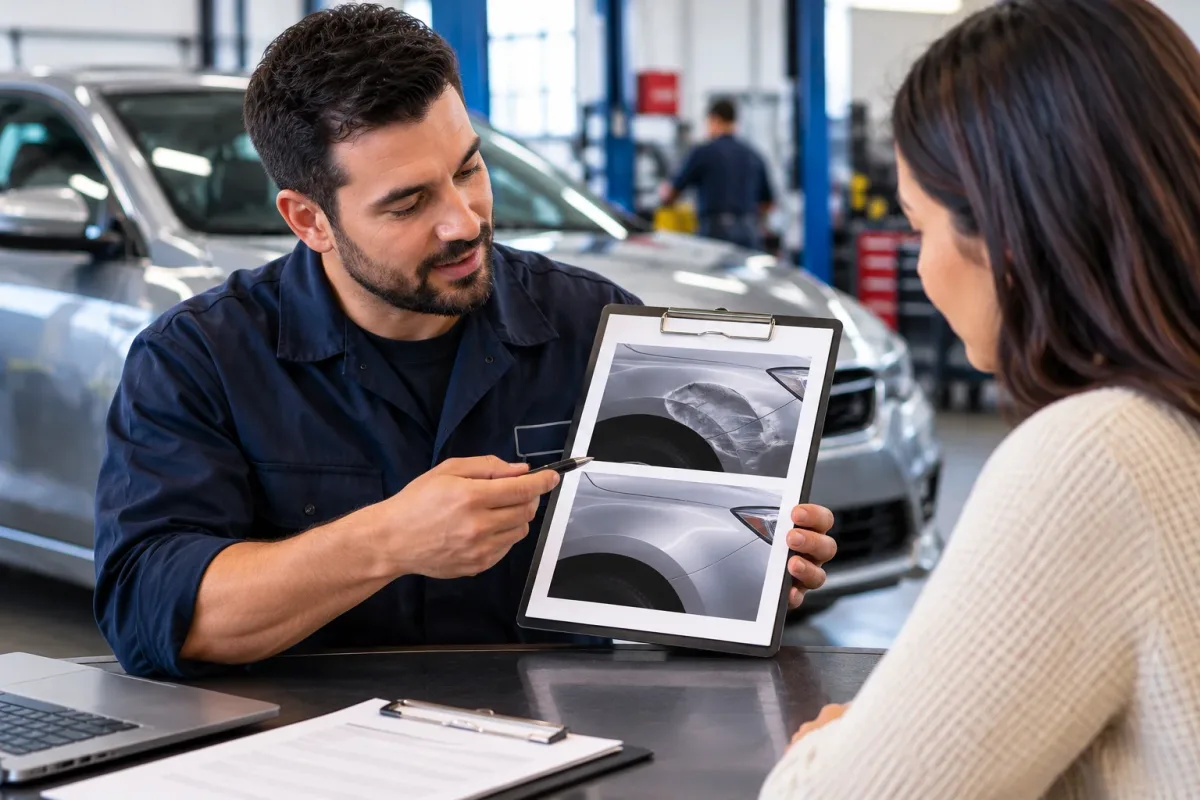
A lifetime repair guarantee needs a definition of whose lifetime or ownership period applies and which work remains covered. The word lifetime does not remove exclusions or claim conditions.
As a provider-specific example, Gerber Collision & Glass’s published guarantee covers defects in workmanship reflected in the final estimate for as long as the customer owns the vehicle. Its exclusions include rust, a subsequent collision, stone chips, scratches, and improper care or maintenance.
That example illustrates why the complete terms matter. It is not a description of Collision Assistant’s coverage, an endorsement of that provider, or a universal rule for other shops.
When comparing collision repair warranties, ask whether coverage ends when you sell the car, whether another branch can perform the work, and whether moving affects where you must take the vehicle.
Does California Require a Body Shop Warranty
California BAR’s Fall 2024 guidance says automotive repair dealers are not required under the Business and Professions Code and California Code of Regulations to offer a repair warranty. A warranty they choose to offer must comply with the applicable disclosure requirements.
The same BAR warranty guidance distinguishes that voluntary promise from the requirement for good and workmanlike repairs meeting accepted trade standards.
A missing warranty document therefore does not, by itself, answer whether work was performed properly or what remedies may be available. For a specific dispute, ask BAR about the repair concern and obtain legal advice when needed.
What Must a Written Warranty Explain
California’s repair-guarantee disclosure rule requires written information about the coverage, duration, conditions, remedy, and identity of the business making the promise.
Title 16, California Code of Regulations section 3376 requires a legible copy with the invoice itemizing the parts, components, and labor represented as covered. The disclosure must describe exclusions, what the customer must do, and whether the provider will repair, replace, refund, or use another stated option. BAR links to the rule in its guidance on repair warranties.
Read the named provider and address carefully. A logo on the paperwork may not tell you which business is responsible for handling the request.
BAR also states that a website link alone does not satisfy the written warranty-documentation requirement for an electronic transaction. Ask for a copy you can retain with the invoice, such as an attached PDF.
Is a Parts Warranty the Same as a Workmanship Warranty
A parts warranty and a workmanship warranty address different questions. One concerns the component’s coverage, while the other concerns the work performed. Check the actual promises rather than assuming one covers the other.
For a replacement lamp, for example, ask who reviews a component failure and who reviews an installation concern. This is a hypothetical question to discuss with the shop, not a prediction about which provider must pay.
Before authorizing the initial repair, ask the estimator to connect the parts description to the applicable coverage. Our guide to reading a collision repair estimate explains how to identify the planned operations and part categories.
Collision Assistant can help you connect with repair options, but the shop or named warranty provider must explain its own terms. A referral through us should not be treated as a warranty for the shop’s repairs.
What Should You Do If a Problem Appears After Pickup
Document the concern and contact the shop or named warranty provider promptly. Ask for an inspection and a written explanation of the next step before assuming that the problem is covered or excluded.
Follow this sequence:
-
Record the Symptoms. Note the date, mileage, affected area, and when the concern occurs. Take clear photos or video when safe.
-
Collect the Documents. Find the final invoice, warranty, approved estimate changes, and previous correspondence.
-
Contact the Provider. Describe what you observed without guessing the cause. Ask how to submit a warranty request.
-
Confirm Inspection and Charges. Ask whether diagnosis is covered and what happens if the concern falls outside the warranty. Request authorization details before chargeable work starts.
-
Request the Decision. If coverage is denied, ask which term applies and what findings support that decision.
-
Keep the Follow-Up Invoice. Retain a record of what was inspected or corrected, including work completed at no charge.
BAR’s Write It Right guide, updated January 2026, confirms that warranty repairs and no-charge repairs must be recorded on an invoice. Its authorization guidance also requires customer approval before repairs begin.
For pickup checks that may help identify concerns early, use our post-repair inspection checklist. A visual walkthrough does not establish whether hidden work was completed correctly.
What If the Shop Will Not Resolve the Concern
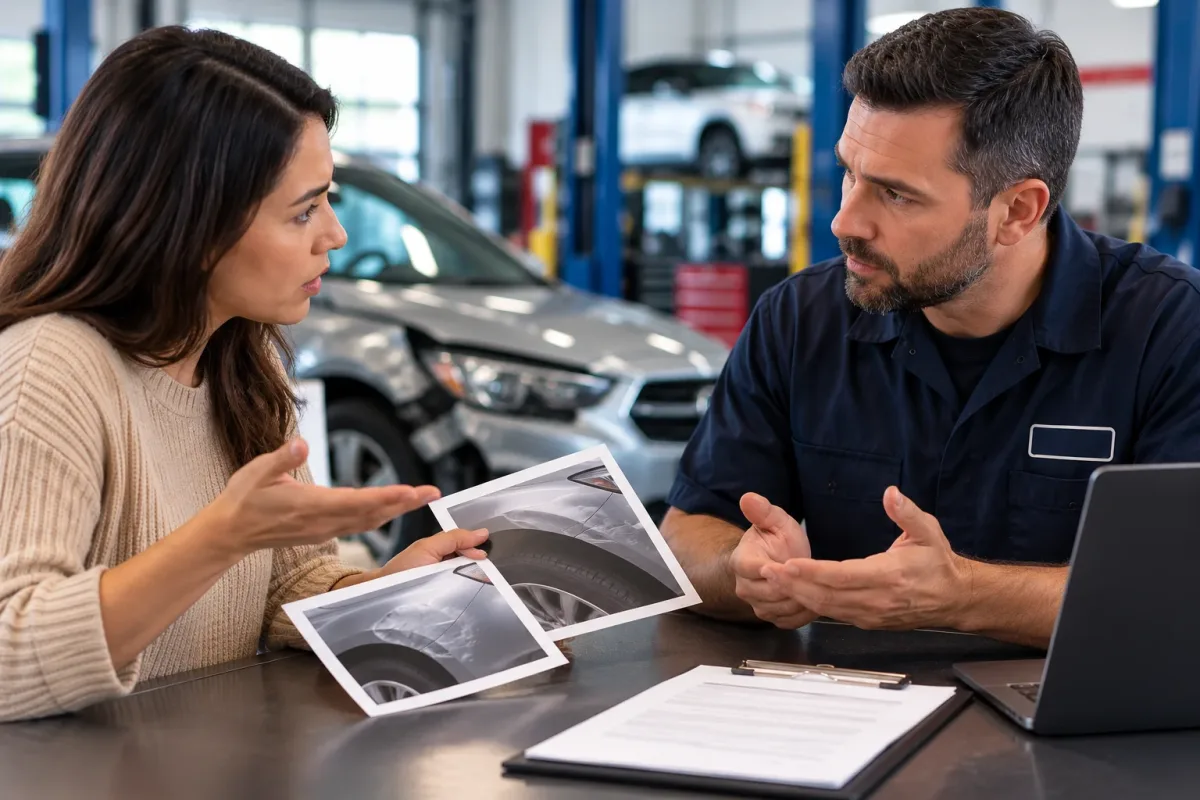
Start with the shop’s manager and a written description of the unresolved issue. If direct discussion does not resolve a California repair concern, BAR may be able to help mediate.
The California Bureau of Automotive Repair complaint process covers auto body and collision repair complaints. BAR reviews the facts and documents, but filing a complaint does not establish a violation or guarantee enforcement or a refund.
Keep the coverage discussion separate from the repair-quality question. A shop may dispute that a particular condition fits its warranty while you still have questions about the work listed on the invoice.
If steering, braking, or another safety-related concern develops, do not use an ordinary drive to test it. Stop somewhere safe and seek professional guidance about inspection or transport. A warranty decision is not a determination that the vehicle is safe to drive.
Compare the Promise Before You Need It
Collision repair warranties are easier to evaluate when you have the written terms, a clear list of covered work, and a named contact. Before approving a repair, confirm the exclusions, any possible charges, and the process for requesting service.
If you need help connecting with a repair shop, request a repair quote through Collision Assistant. Ask the shop for its own warranty details before deciding. Our assistance is separate from the shop’s repair charges and warranty obligations.