Frame and Unibody Repair and What Vehicle Owners Should Ask
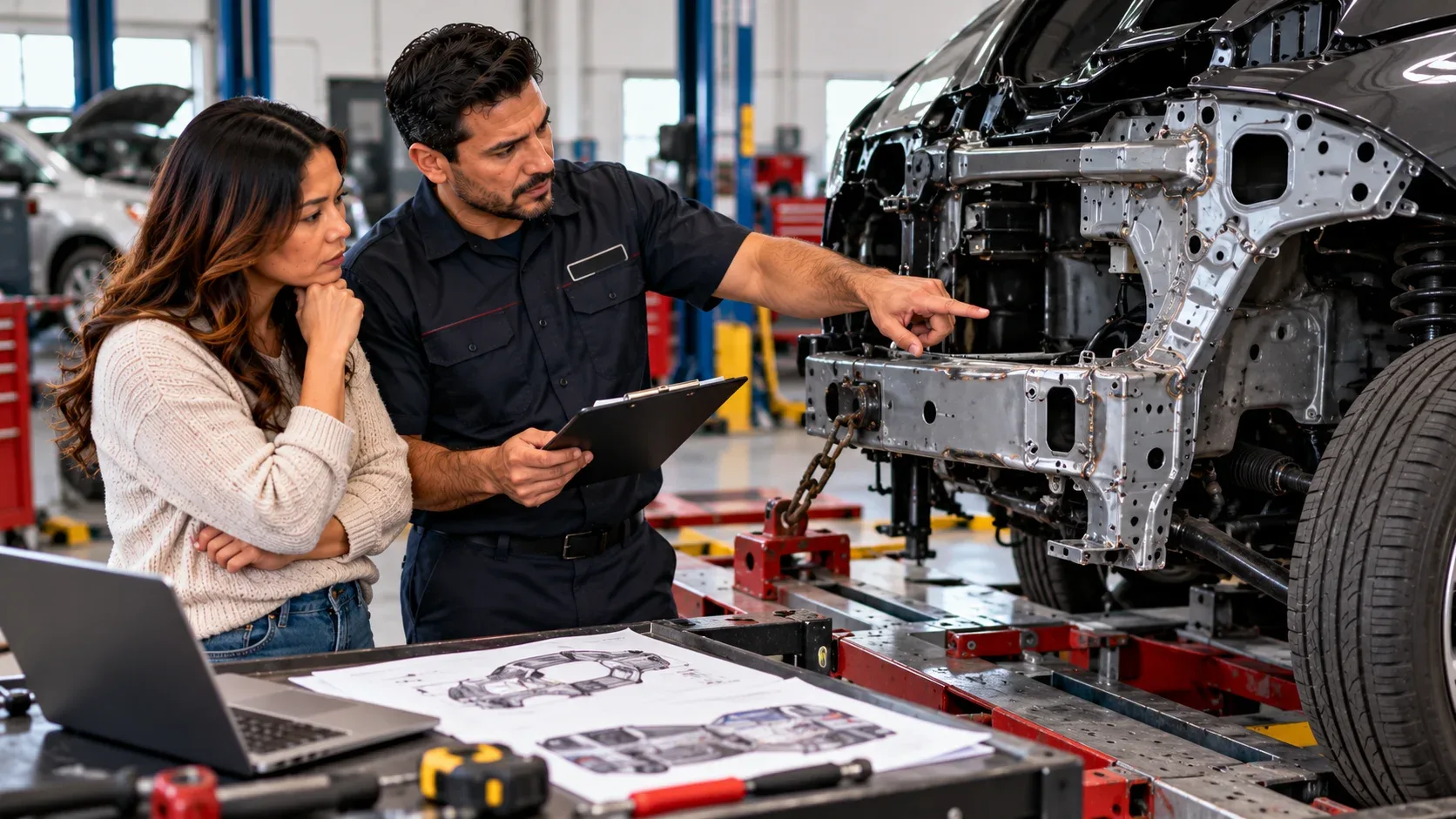
Frame and unibody repair addresses damage to a vehicle’s supporting structure, using methods permitted for its design, materials, and affected components. A useful recommendation explains the inspection findings, measurements, proposed repairs or replacements, and final checks. Ask a qualified collision repair shop to document that plan before authorizing structural work.
By Collision Assistant
If an estimate mentions a rail, pillar, structural panel, or frame correction, ask the shop to show you the affected area and explain the proposed operation. The term structural damage alone does not describe the full repair.
Collision Assistant helps California drivers connect with vetted collision repair shops. We do not perform structural repairs or certify a vehicle’s safety. This guide helps you understand a recommendation and assess the facility proposing it. Our collision repair guide explains the wider process.
What Is the Difference Between a Frame and a Unibody?
A body-on-frame vehicle has its body attached to a separate supporting frame. A unibody vehicle integrates the body and structural members into a combined load-carrying structure. The construction affects which components are inspected and how the repair is planned.
Ford’s vehicle glossary describes body-on-frame construction as a body attached to a separate frame. Honda’s 2020 Ridgeline construction guide provides an example of unit-body construction with an integrated frame. Vehicle category alone is not a reliable way to identify the structure.
Ask the shop which design your vehicle uses and which exact members are affected. A discussion of frame and unibody repair should move beyond the general label to the specific parts and proposed work.
What Should a Frame and Unibody Repair Assessment Explain?
A frame repair assessment should connect each finding to a proposed operation and a way to check the result. Request an explanation you can follow, supported by photographs, measurements, and the applicable repair information.
Use this table during the estimate discussion.
|
Part of the Assessment |
What the Shop Should Explain |
Evidence to Request |
|
Vehicle construction |
Which structure and materials are involved |
Identification of the affected components |
|
Damage findings |
What is deformed, cracked, displaced, or otherwise damaged |
Inspection photographs and findings |
|
Measurements |
Which reference points were checked and against what specifications |
Initial measurement results and an explanation |
|
Repair method |
Why correction, partial replacement, or full replacement is proposed |
Applicable procedure and itemized estimate |
|
Supporting operations |
What joining, protective coatings, or related work is required |
Explanation of the complete repair plan |
|
Completion checks |
How the shop will verify the work it performed |
Final measurements and other applicable completion records |
You do not need to interpret technical drawings yourself. Ask the estimator to identify the damaged location on the vehicle or a diagram, then explain how the documents support the recommendation.
Why Do Structural Measurements Matter?

Measurements help a repairer compare selected vehicle reference points with specified dimensions. They provide information for damage assessment and checking dimensional correction that exterior appearance alone cannot supply.
Nissan’s Frame and Unibody Pulling position statement, dated December 12, 2018, calls for measurements before and after frame or structural repairs. It directs repairers to model-specific Electronic Service Manual dimensions and notes that component removal may be necessary for accurate measurement. Those instructions are Nissan-specific.
Ask which points were measured, what reference information was used, and whether anything remains inaccessible. Also ask how the final report will relate to the original findings.
A measurement report documents the dimensions checked. It does not, by itself, establish that every weld, adhesive joint, protective coating, or related system was correctly restored. Review measurement results as part of the complete repair record.
For signs that justify further inspection, see our guide to hidden damage after a car accident.
Can Structural Damage Always Be Straightened?
No. The permitted method depends on the component, material, damage, and applicable manufacturer instructions. A shop should explain whether correction is allowed or whether part replacement is required.
Do not assume that a frame machine makes every structural part repairable. Tesla’s structural repair guidelines for the Model 3 manual covering 2017 through 2023 vehicles, for example, do not support pulling or pushing components with frame-straightening equipment. The manual distinguishes this from permitted cosmetic panel work. That restriction should not be generalized to other manufacturers.
Ask the estimator which procedure supports its recommendation. If a proposal changes after inspection or measurement, request the new findings and revised plan.
Hypothetical example: An initial estimate lists a structural part for correction. Further inspection identifies damage that the applicable procedure requires the shop to address through replacement. The useful explanation identifies the part, the finding, and the procedure behind the change.
What Do Sectioning and Replacement Mean?
Replacement removes a damaged component and installs another. Sectioning replaces less than the whole component by joining into it at a non-factory seam. A permitted sectioning location cannot be chosen simply because it appears convenient.
The California Bureau of Automotive Repair, or BAR, explains in its accepted trade standards guidance that sectioning must follow original equipment manufacturer service specifications or nationally distributed specifications for the vehicle’s make, model, and year. Its guidance also addresses repair procedures and corrosion protection under 16 CCR 3365.
For structural collision repair, ask the shop to explain:
-
Whether the estimate proposes an entire component or a specified portion.
-
Which procedure permits the proposed joint location.
-
What joining methods the procedure calls for.
-
How disturbed corrosion protection will be restored.
These questions help you understand the plan. They do not require you to select welding methods or direct the technician’s work.
How Do You Choose a Suitable Structural Repair Shop?
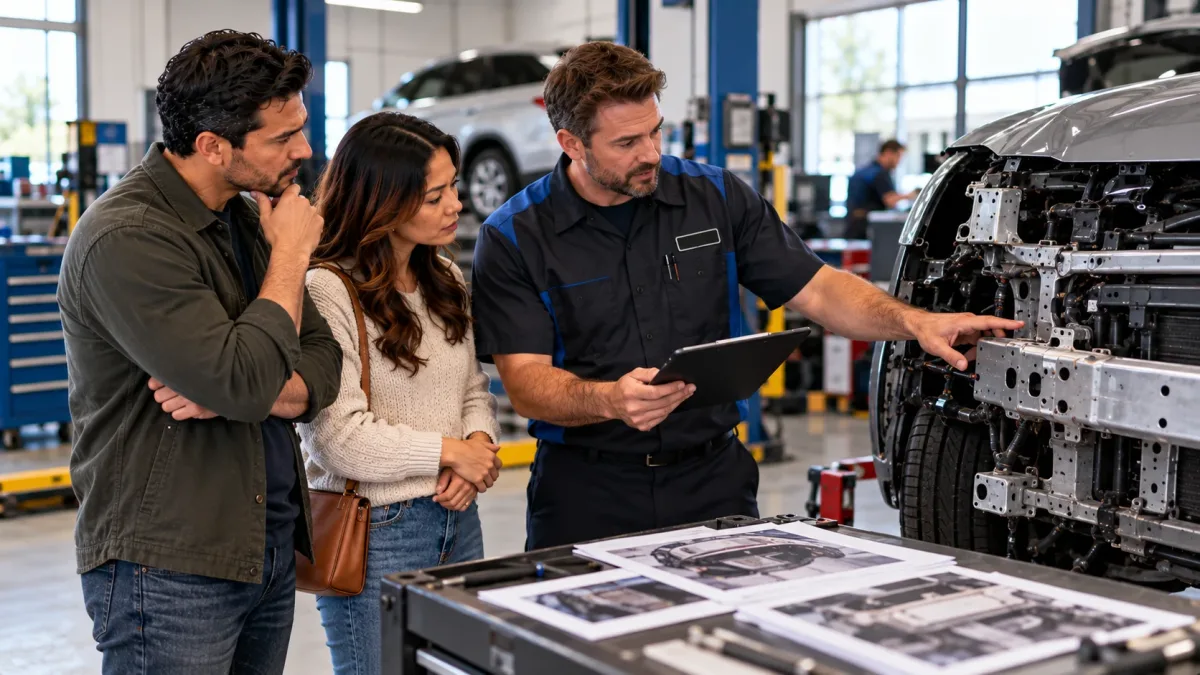
Choose a facility that can substantiate its suitability for your vehicle and the proposed structural work. Registration, training, vehicle-specific procedures, equipment, and documentation answer different questions, so check them separately.
Start by checking the business’s registration and disciplinary history through BAR’s consumer resources. Then ask about the people and equipment assigned to your repair.
When choosing a structural repair shop, ask:
-
Do you have current repair information for my model and production version?
-
Who will assess and perform the structural work, and what relevant training do they have?
-
What measuring and holding equipment does the procedure require?
-
Does your facility have the joining equipment needed for the proposed work?
-
Will any part of the job go to another business?
-
Which records will you provide when the repair is complete?
Collision Assistant considers the vehicle, damage, and location when matching a driver with a vetted California shop. We check BAR registration before recommending a facility and help arrange the estimate. The repair shop remains responsible for its assessment and work.
What Should You Approve Before Structural Work Begins?
Approve an explained, itemized plan, and clarify what inspection remains before the scope is confirmed. Your repair authorization and the insurer’s payment decision are separate matters.
BAR’s Write It Right guide, updated January 2026, explains that diagnostic teardown requires an estimate first. After teardown, the shop must provide an itemized estimate and obtain authorization for repair or reassembly. Discuss teardown and reassembly charges before disassembly.
If frame and unibody repair adds operations to an earlier estimate, ask what changed, what the added cost covers, and what amount the insurer has approved. Keep your approval and the revised estimate.
Our guide to reading a collision repair estimate explains the paperwork in greater detail.
Which Records Should You Request at Completion?
Request the final invoice and the records that explain how the identified damage was addressed. Ask the shop to connect the initial assessment, completed operations, and final checks.
Useful records to discuss include:
-
Initial and final structural measurements.
-
Photographs documenting affected areas and completed work.
-
The final itemized invoice and approved revisions.
-
Applicable alignment, scan, or calibration results.
-
Written warranty terms and instructions for reporting concerns.
Confirm in advance which documents the shop will supply. A measurement sheet, paint match, or successful wheel alignment should not be treated as a substitute for explaining the whole structural repair.
At pickup, use our post-repair inspection checklist for the visible condition and paperwork. A walkaround is not a structural inspection.
Get the Assessment Explained Before You Decide
Frame and unibody repair should come with a clear explanation of the damage, permitted methods, proposed cost, and completion checks. Ask for the supporting records and clarify changes before authorizing work.
If you need help finding a suitable California facility, request a body shop recommendation from Collision Assistant. We connect drivers with vetted repair shops and help arrange the estimate. Our referral is free, while repair costs and outside charges are separate