Does Insurance Pay Me or the Body Shop in California?
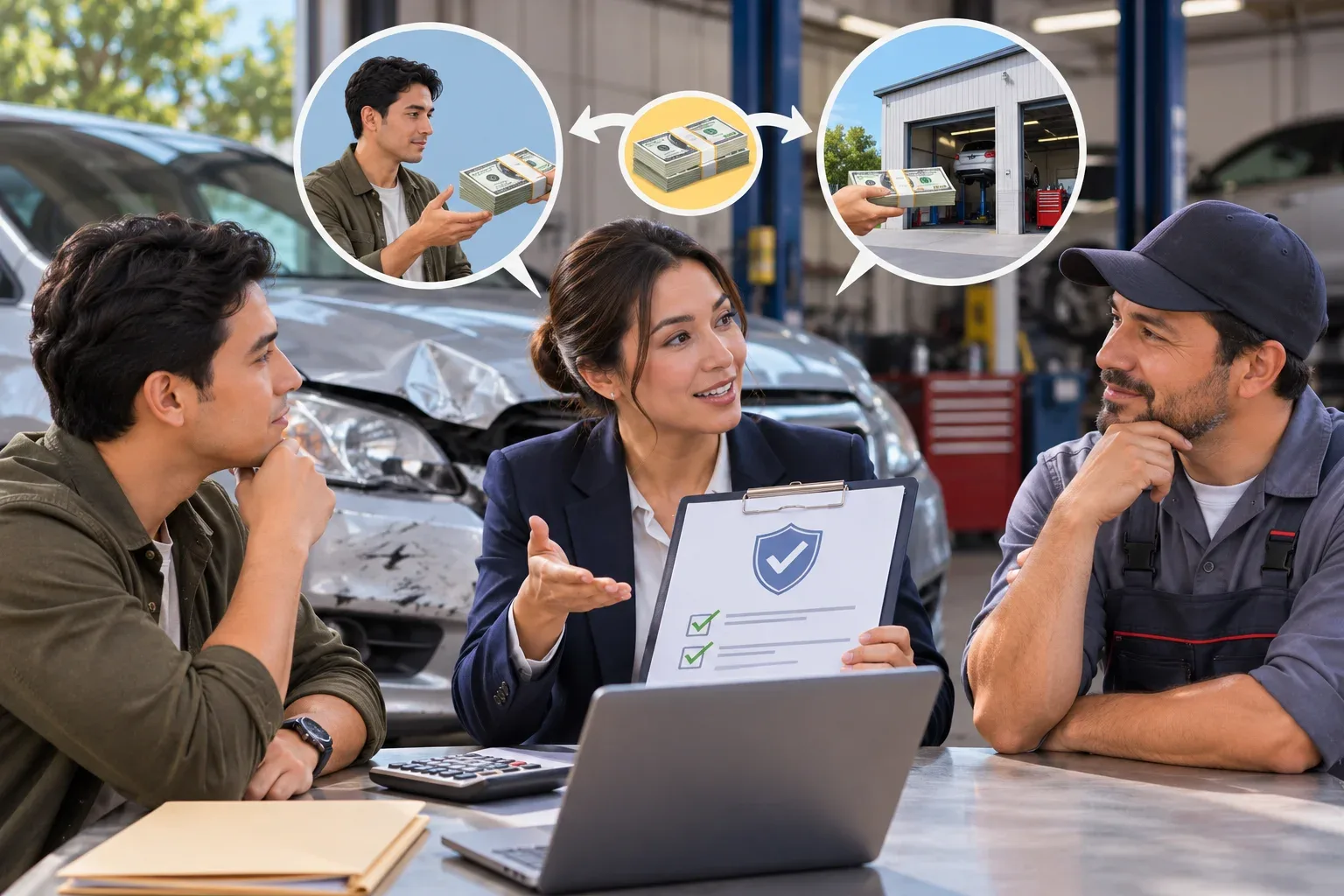
Does insurance pay me or the body shop after an accident? In California, either may receive payment, or the insurer may name multiple payees on a check. The arrangement depends on whose insurance covers the damage, whether repairs are proceeding, the applicable payment rules, and any lender requirements.
A check arriving in your mailbox does not necessarily mean the body shop has been paid. Collision Assistant helps California drivers coordinate the vehicle side of their claims and find repair shops. Understanding where the money goes can help you avoid an unexpected balance when you collect your car.
Does Insurance Pay Me or the Body Shop Under California Law?
California Insurance Code Section 560 establishes a specific payment procedure for qualifying repairs under an insured driver's collision or automobile physical damage policy. It does not mean every claim check must be sent directly to a repair shop.
When the insurer knows the vehicle will be repaired, and you have received actual notice that the repairer is working under an insurer-approved contract, the law calls for payment to the repair facility, a joint check naming the insured and the facility, or an electronic transfer to the facility with its consent.
Under those conditions, payment is due within 10 days of the insurer receiving a detailed invoice for insurer-authorized work that has been satisfactorily completed. See the enacted amendment to Insurance Code Section 560, effective January 1, 2020.
This is not a 10-day deadline measured from the accident, the first estimate or the day you drop off the car. If payment is delayed, ask the shop when the qualifying invoice was submitted and ask the insurer when it was received.
If you claim against another driver's liability insurance rather than your own physical damage policy, do not assume this particular statutory payment procedure applies. Confirm the payee and payment arrangement with that insurer before committing to repairs.
Who Can Receive Your Car Insurance Repair Check?
The common payment arrangements involve the owner, the repair shop, a lender or a combination of them. Check the actual payee line rather than assuming that whoever receives the envelope controls the money.
|
Payment Arrangement |
What It Means for You |
|
Payment to you alone |
Confirm whether you must use it to pay the repair invoice and whether any restrictions apply. |
|
Payment to the shop |
Ask the shop to confirm the amount received and your remaining balance. |
|
Joint check to you and the shop |
Arrange the required endorsements and confirm how the shop will credit the payment. |
|
Joint check to you and the lender |
Ask the lender how it releases repair funds and what documents it needs. |
The California Department of Insurance's accident claim guide explains that a lender and, for repairable vehicles, the repair facility may also be named as payees.
If your insurer sends an initial payment before the repair starts, save the payment details. That amount must be accounted for alongside any later payments to the shop.
How Can You Calculate What You Will Owe at Pickup?
Start with the final authorized shop invoice, then subtract the payments and credits the shop has actually applied. An insurance estimate or payment still being processed does not count as money received by the shop.
Consider this hypothetical example of a claim under your own collision coverage. All repair operations in this example are covered, and there are no additional charges.
|
Repair and Payment Record |
Amount |
|
Initial approved repair cost |
$4,000 |
|
Additional approved repairs |
$1,200 |
|
Final authorized invoice |
$5,200 |
|
Applicable deductible |
$500 |
|
Initial insurance payment sent to you |
$3,500 |
|
Additional payment sent to the shop |
$1,200 |
If the shop has received only $1,200, its outstanding balance is $4,000. You would need to apply the $3,500 insurance payment you received and pay the $500 deductible. If you already gave the initial check to the shop and it credited the full amount, the remaining balance should be $500.
Do not subtract the deductible twice. Ask the insurer to confirm which payment already reflects it. Our guide to reading a collision repair estimate explains where to find the deductible and other totals.
Is a Two-Party Insurance Check the Same as Direct Repair Payment?
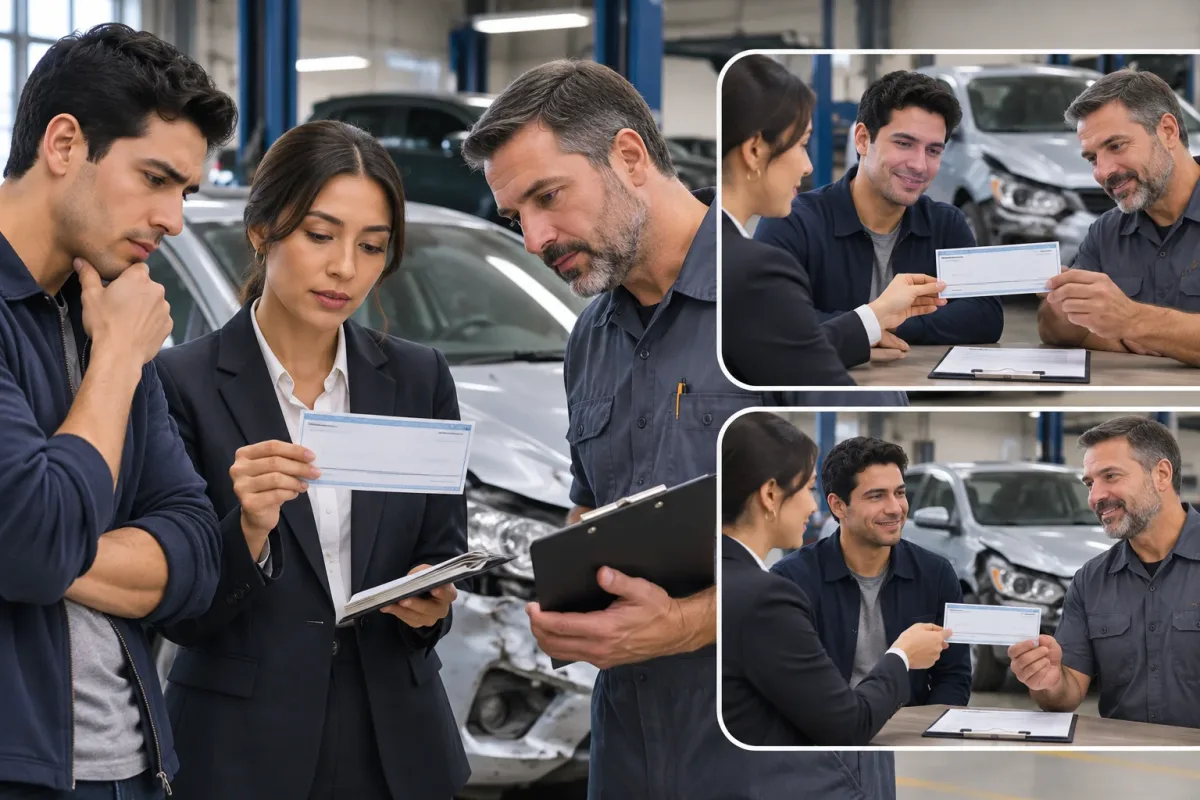
No. A two-party insurance check identifies two payees, while direct repair payment sends the repair funds to the facility. The practical difference is whether you need to participate in processing the payment.
If the check names you and the shop jointly, contact the shop and your bank to establish how both parties must endorse it. Do not sign another person's or company's name or attempt to deposit a joint check without the required authorization.
If you have a financed or leased car, the question “Does insurance pay me or the body shop?” may also involve your lender. Ask the finance company whether it wants the repair estimate, final invoice or other proof before releasing funds. Request its instructions before mailing an original check, and retain a copy for your records.
Do You Have to Use the Insurer's Preferred Shop to Receive Direct Payment?
No. In California, your right to select a repair facility does not depend on whether the insurer recommends that facility. Direct payment is a way of settling the repair invoice, while a preferred repair network is an arrangement between an insurer and participating shops.
The California Auto Body Repair Consumer Bill of Rights confirms your shop choice and your right to obtain an independent repair estimate from a registered facility.
Ask the insurer and your chosen shop if they can coordinate payments directly and what happens if their estimates differ. For an overview of the repair process and the decisions involved, see our California collision repair guide.
What Happens When the Repair Cost Increases?
If additional damage is discovered, the shop may submit a revised estimate, called a supplement, to request additional insurance payment. The insurer may need to examine the added work before deciding whether it is covered.
Insurance approval does not replace your authorization. The California Bureau of Automotive Repair's Write It Right guidance requires the shop to disclose the revised work and cost and obtain customer authorization before performing additional repairs or incurring additional charges.
Ask whether each supplement is approved, paid, still pending or excluded from coverage. If an item is not covered, request an explanation from the insurer and discuss the price with the shop before authorizing it. Our guide to collision repair delays explains how to follow up on a pending supplement.
Collision Assistant can coordinate repair updates and supporting paperwork when helping with a California property damage claim. We do not determine whether an insurer must cover a particular charge.
Can You Keep the Insurance Check Instead of Repairing Your Car?
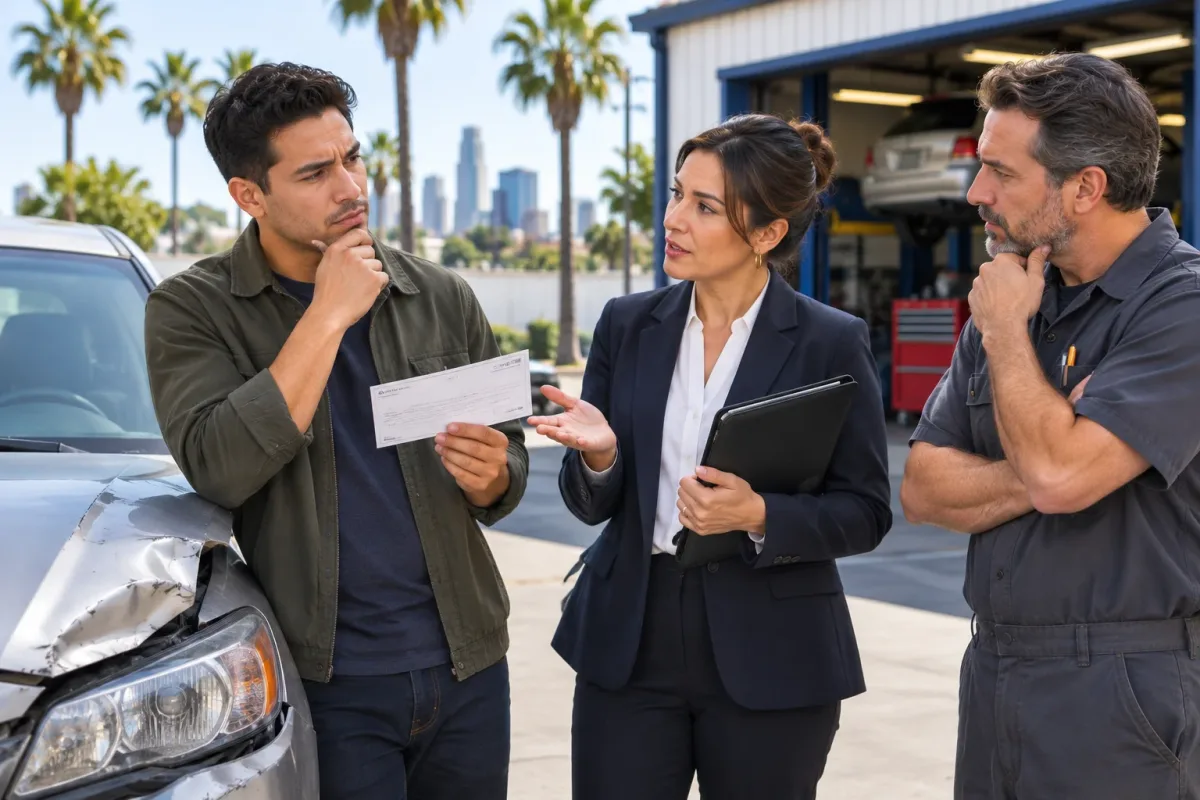
California Insurance Code Section 560 generally preserves an insured driver's option to decline repairs and receive reasonable repair benefits otherwise payable under the policy. That option has important limits.
According to the Bureau of Automotive Repair's summary of AB 1538, the law also permits insurers to condition payment on repairs when damage seriously compromises safety features in the vehicle's operating systems. Suspected fraud and permitted lender payee requirements can also affect payment.
Before choosing not to repair, check the insurer's written terms and any loan or lease agreement. Have a qualified repair professional assess potential safety-related damage rather than assuming a dent or scrape is only cosmetic.
What Should You Confirm Before Collecting Your Car?
Ask the repair shop for a written breakdown of the invoice and its payment status before you arrange pickup. A completed vehicle and a fully paid invoice are two different things.
-
Request the final itemized invoice, including all authorized additional work.
-
Ask which insurance payments the shop has received and applied to your account.
-
Check whether any checks sent to you or your lender still need processing.
-
Confirm the deductible and any authorized amounts not covered by insurance.
-
Ask what remains due and which payment methods the shop accepts.
For your own records, keep the claim number, payment amounts, dates, payees, check or transfer references and final invoice together. BAR's documentation guidance requires a customer invoice even when insurance pays for the repairs.
Get Clarity on Your Repair Payment Before Pickup
If you're still asking, “Does insurance pay me or the body shop?” request confirmation of the payee, payment status and your remaining responsibility before authorizing or collecting the vehicle.
If you need help organizing the repair paperwork and tracking updates, Collision Assistant offers property damage claim coordination in California at no charge to drivers. Repair costs and outside charges remain separate.
This article provides general information, not personalized legal or insurance advice.